
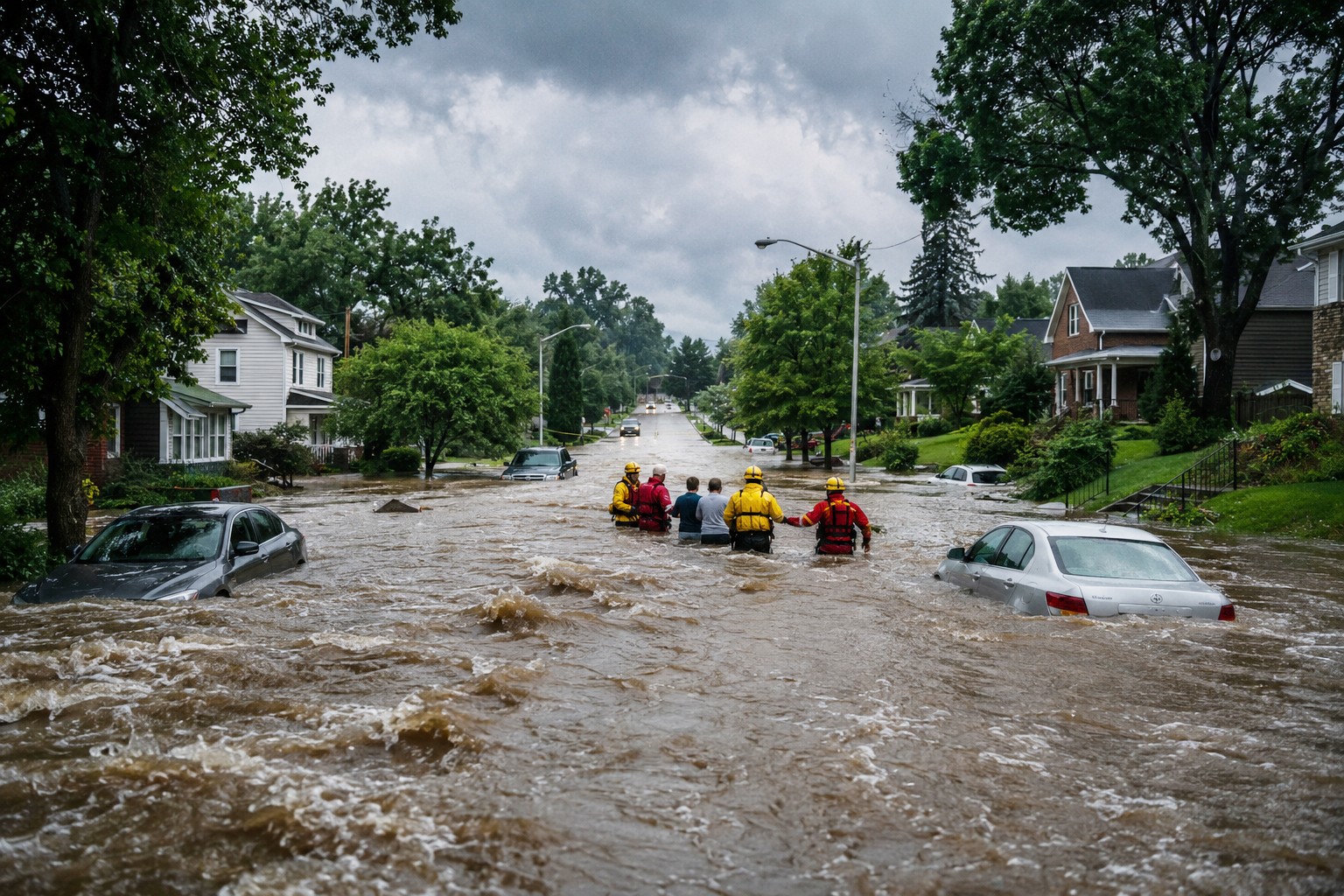
Climate change is increasing the frequency and intensity of extreme rainfall across the United States, creating conditions for more destructive and deadly flash floods. Scientists warn that warmer air and oceans are loading storms with greater quantities of moisture, while ageing infrastructure and continued development in flood-prone areas leave communities increasingly exposed.
A month of destructive rainfall
States including Texas, Missouri, Alaska, Utah and New York have experienced severe rainfall and flash flooding during the past month. Roads have been submerged, homes damaged and residents trapped as rivers and drainage systems struggled to absorb intense downpours.
In Texas, some areas received as much as 20 inches of rain over two days. Flooding swept away vehicles, closed dozens of roads and required hundreds of emergency rescues. Authorities deployed helicopters, boats and thousands of personnel as rivers approached or exceeded major flood levels.


The latest storms followed the catastrophic Texas Hill Country floods of July 2025, which killed 135 people, including 27 children and staff at Camp Mystic.
In Utah, five members of one family died after being caught in a sudden flood while hiking in a canyon near Bicknell. Heavy rain also inundated streets in New York City, disrupted public transport and forced delays at airports.
Warmer air carries more water
Climate scientists emphasise that global warming does not create every individual storm. However, it changes the environment in which storms develop and increases the likelihood that they will produce extreme rainfall.
Warmer oceans accelerate evaporation, placing more water vapour in the atmosphere. Air can hold approximately 7% more moisture for every degree Celsius of warming, providing storms with additional water that can be released rapidly over a limited area.
When thunderstorms move slowly or repeatedly pass over the same location, the result can be enormous rainfall totals within a few hours. Hard, dry ground, steep terrain and areas previously damaged by wildfires can further increase runoff, causing water to rise with little warning.
Cities struggle to absorb rainfall
Urban areas face additional risks because roads, car parks and buildings prevent water from soaking naturally into the ground. Drainage systems in many American cities were designed using historical rainfall patterns that no longer reflect current conditions.
Scientists and engineers are calling for larger storm drains, restored wetlands, more permeable surfaces and stricter controls on construction in floodplains. Some cities are experimenting with “sponge city” designs that use parks, ponds, green roofs and planted spaces to temporarily retain stormwater.
Federal flood maps are also being revised as previous assessments increasingly underestimate the intensity of rainfall and the number of properties at risk.
Adaptation remains too slow
Upgrading infrastructure across the country will require considerable investment and years of planning. Political resistance to climate regulation and restrictions on development has also slowed adaptation in several vulnerable states.
Emergency warnings and rescue capabilities remain essential, but experts say they cannot replace long-term prevention. Flash floods develop rapidly, particularly at night, and motorists frequently account for a significant proportion of fatalities when vehicles enter water-covered roads.
Without substantial reductions in greenhouse gas emissions, extreme rainfall is expected to become still more intense. Scientists warn that communities must prepare for conditions outside their historical experience, as storms once considered exceptional become a recurring feature of a warmer climate.
Newshub Editorial in North America – 20 July 2026

Ask NF GPT
If you have an account with ChatGPT you get deeper explanations,
background and context related to what you are reading.
Climate change is increasing the frequency and intensity of extreme rainfall across the United States, creating conditions for more destructive and deadly flash floods. Scientists warn that warmer air and oceans are loading storms with greater quantities of moisture, while ageing infrastructure and continued development in flood-prone areas leave communities increasingly exposed.
Recent Comments