
Belize is strengthening its position as a commercial and cultural bridge between Central America, Mexico and the Caribbean. Its location, English-speaking legal system and membership of regional organisations give the small economy an unusual opportunity to connect mainland producers with the wider Caribbean market.
A country belonging to several regions
Belize occupies a distinctive position on the north-eastern coast of Central America. It shares land borders with Mexico and Guatemala, faces the Caribbean Sea and maintains maritime connections with Honduras and the island economies further east.
The country is geographically Central American but historically, politically and culturally Caribbean. English is its official language, while Spanish, Belizean Creole, Garifuna and several Maya languages are widely spoken.


This identity is reinforced by membership of both the Caribbean Community, or CARICOM, and the Central American Integration System. Belize is also part of the Commonwealth, giving its companies access to legal, diplomatic and commercial networks extending beyond the immediate region.
Few countries possess comparable institutional access to both Central American and Caribbean markets.
Trade corridor gains attention
Belize and the Mexican state of Quintana Roo are promoting their shared border as a logistics, industrial and commercial corridor. At the IX AMERIC Business Summit in 2026, officials presented the region around Chetumal and northern Belize as a potential gateway for Mexican companies seeking access to CARICOM.
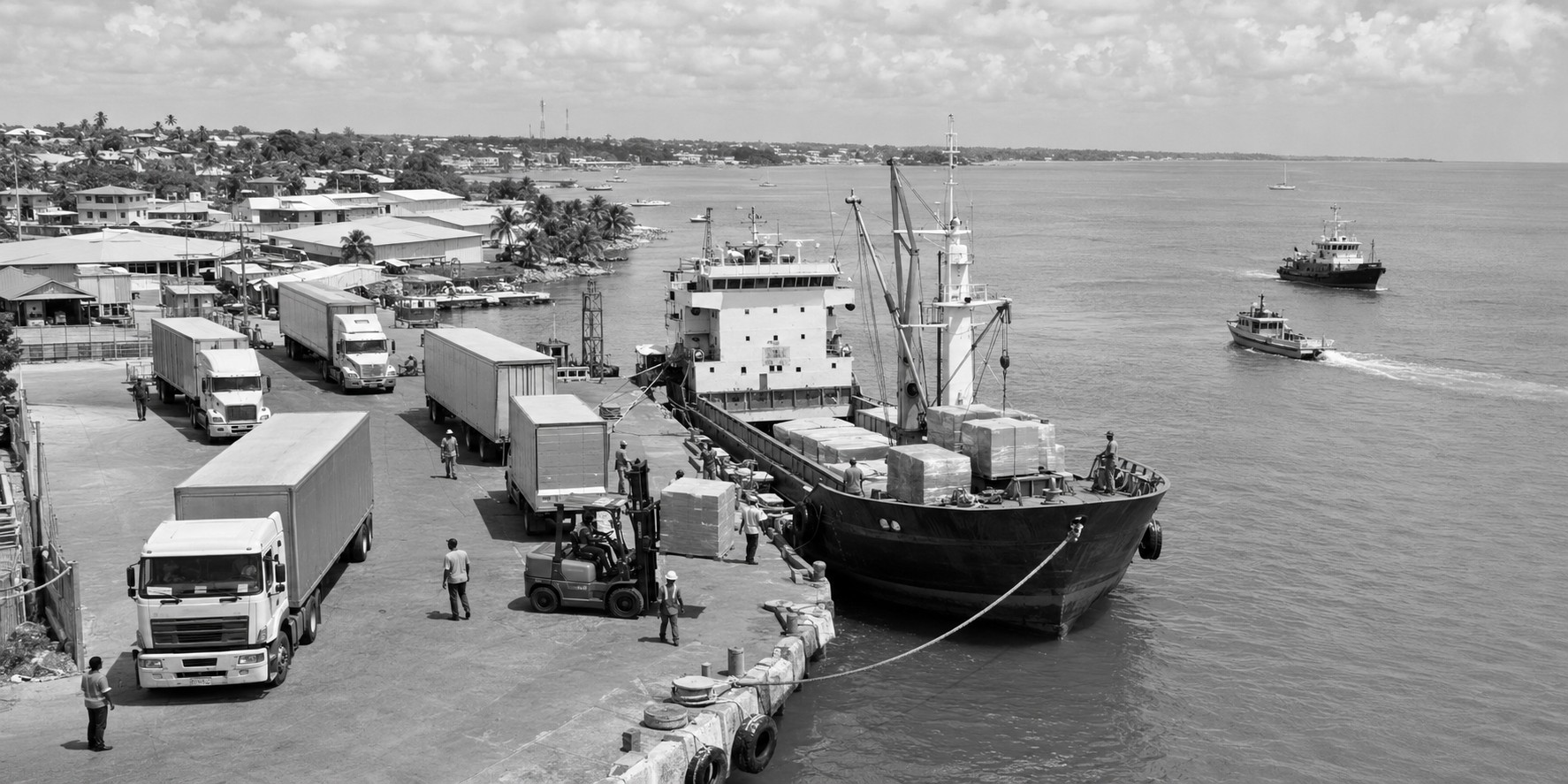
Improved roads, customs facilities, ports and warehousing could allow goods produced in southern Mexico and Central America to reach Caribbean markets through Belize. The same infrastructure could help Caribbean businesses reach mainland consumers.
Belize’s participation in regional mobility and logistics planning also creates opportunities for investment in transport, cold storage, renewable energy and digital customs systems.
The country’s small domestic market limits the scale of businesses focused only on local consumers. Its strategic value instead depends on becoming an efficient platform through which goods, services and investment can move between larger markets.
Tourism demonstrates regional potential
Tourism already illustrates Belize’s ability to combine Caribbean and Central American strengths. The country offers a Caribbean coastline and coral reef alongside rainforests, Maya archaeological sites and established connections with Mexico and Guatemala.
This allows Belize to participate in cruise tourism, eco-tourism and multi-country travel. Stronger air and maritime links could support itineraries combining Caribbean destinations with mainland cultural and environmental attractions.
Tourism remains the country’s principal source of foreign currency, but policymakers are seeking greater economic diversity. Agriculture, digital services, sustainable industries and the blue economy have all been identified as priority sectors.
Belize produces sugar, citrus, bananas, seafood and other agricultural goods with export potential. Processing more of these products domestically could help the country capture additional value before they enter regional markets.
Infrastructure remains the central challenge
Belize’s strategic location does not automatically make it a regional hub. Road quality, port capacity, energy costs, customs efficiency and access to financing must improve if the country is to compete with established logistics centres.
Climate vulnerability also creates substantial risks. Hurricanes, coastal erosion and damage to transport infrastructure can disrupt tourism and trade across the economy.
Closer regional integration will therefore require investment that is resilient, environmentally responsible and capable of benefiting local communities.
If Belize can modernise its infrastructure while preserving the natural assets supporting its tourism industry, it could become more than a small economy positioned between regions. It could develop into a practical link connecting Mexico and Central America with the Caribbean’s businesses, institutions and consumers.
Newshub Editorial in Central America and the Caribbean – 19 July 2026

Ask NF GPT
If you have an account with ChatGPT you get deeper explanations,
background and context related to what you are reading.
Belize is strengthening its position as a commercial and cultural bridge between Central America, Mexico and the Caribbean. Its location, English-speaking legal system and membership of regional organisations give the small economy an unusual opportunity to connect mainland producers with the wider Caribbean market.
Recent Comments