
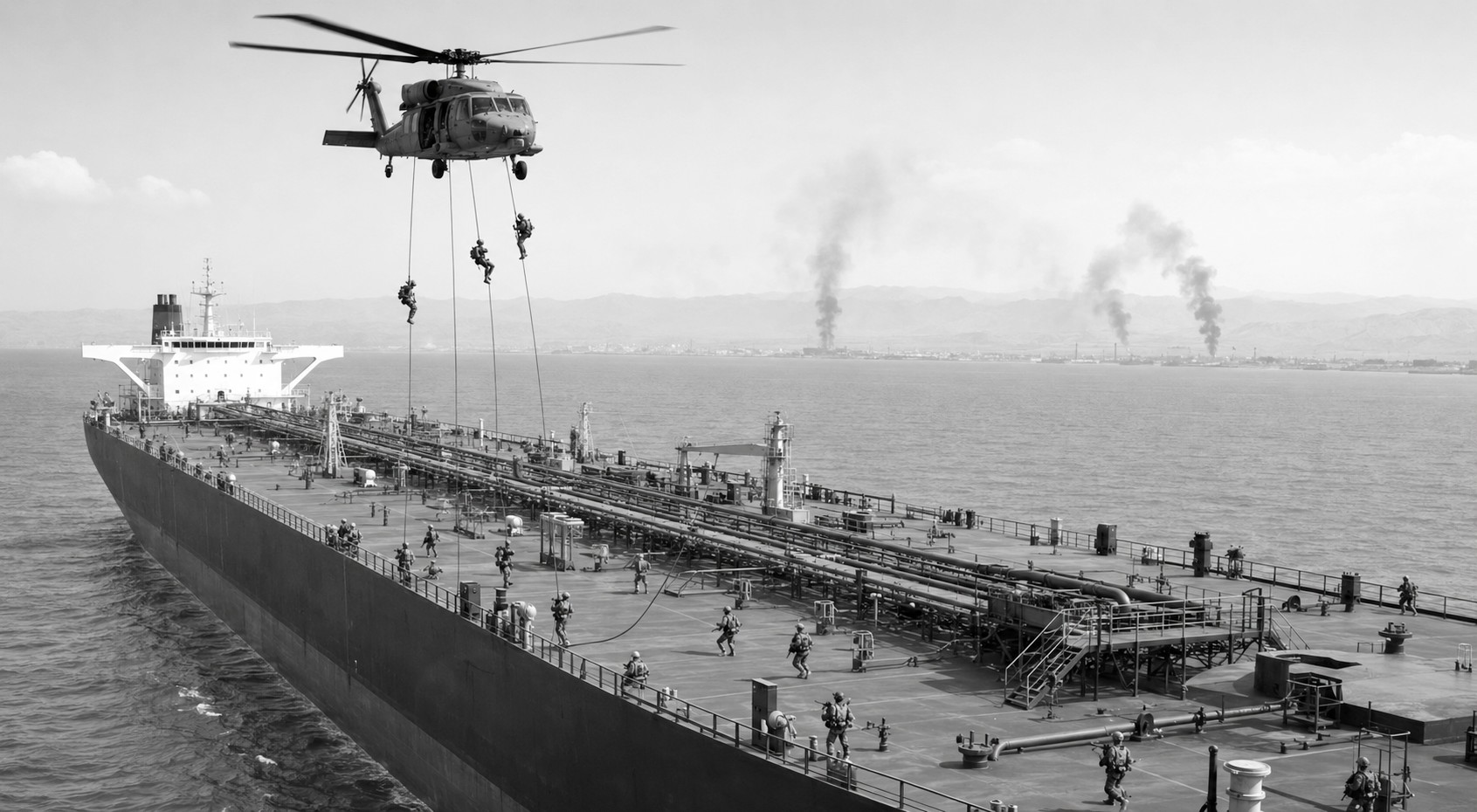
US Marines have boarded the tanker M/T Wen Yao in the Gulf of Oman as Washington intensifies enforcement of its naval blockade against Iranian ports. The operation coincided with an expanded American air campaign that struck five bridges and other transport infrastructure across southern Iran, marking a further escalation in the renewed conflict.
Tanker intercepted in Gulf of Oman
Marines from the 11th Marine Expeditionary Unit conducted what US Central Command described as a “verification boarding” aboard the M/T Wen Yao on Thursday. The military said the operation was intended to ensure compliance with the blockade reimposed after fighting between Washington and Tehran resumed.
The tanker was reportedly carrying Iranian oil and had previously been subject to US sanctions. Central Command released images showing armed personnel boarding the vessel from helicopters, demonstrating Washington’s willingness to enforce the blockade directly at sea.

US forces have redirected three commercial ships suspected of attempting to reach Iranian ports, boarded one vessel and disabled another that allegedly refused to comply. An American aircraft opened fire on the non-compliant tanker earlier in the week, although the vessel was reported to have been unladen.
Strikes target bridges and transport routes
The maritime operation came as American aircraft expanded their targets beyond military installations. Iranian media reported that five bridges were struck overnight, together with a railway station at the coastal city of Bandar Khamir and Iranshahr Airport in south-eastern Iran.
Attacks were also reported around Bandar Abbas, a strategically important port and naval centre overlooking the Strait of Hormuz. The bridges are believed to form part of supply routes supporting Iranian military and maritime operations in the region.
A surveillance tower at Chabahar port was also reported to have collapsed following an American strike. Iranian state television said at least seven people were killed in Bandar Khamir, although the casualty figures could not immediately be independently confirmed.
The broader targeting of transport infrastructure represents a significant development in the campaign. Previous American attacks had concentrated primarily on air defences, missile facilities, naval installations and military logistics.
Iran responds across the Gulf
Iran launched fresh missile and drone attacks against US facilities in Bahrain and Kuwait early on Friday. Explosions were also reported in Doha, where Qatari authorities said a child was injured by falling debris from an intercepted projectile.
Tehran has warned that the conflict could spread further and has continued to assert control over the Strait of Hormuz. The waterway carries approximately one-fifth of internationally traded oil, making any sustained disruption a major risk to the global economy.
Commercial shipping through the area has fallen sharply, while some vessels have remained in port, changed course or stopped transmitting location data.
Blockade raises economic and legal risks
The blockade is designed to isolate Iran economically and place additional pressure on Tehran to return to negotiations. However, boarding commercial vessels and striking bridges create substantial risks of miscalculation, civilian casualties and disputes over international law.
Oil prices rose as markets assessed the possibility of prolonged disruption. With neither side showing signs of retreat, the boarding of the M/T Wen Yao illustrates how the conflict is expanding simultaneously across the air, land and maritime domains.
Newshub Editorial in Middle East – 17 July 2026

Ask NF GPT
If you have an account with ChatGPT you get deeper explanations,
background and context related to what you are reading.
Recent Comments