
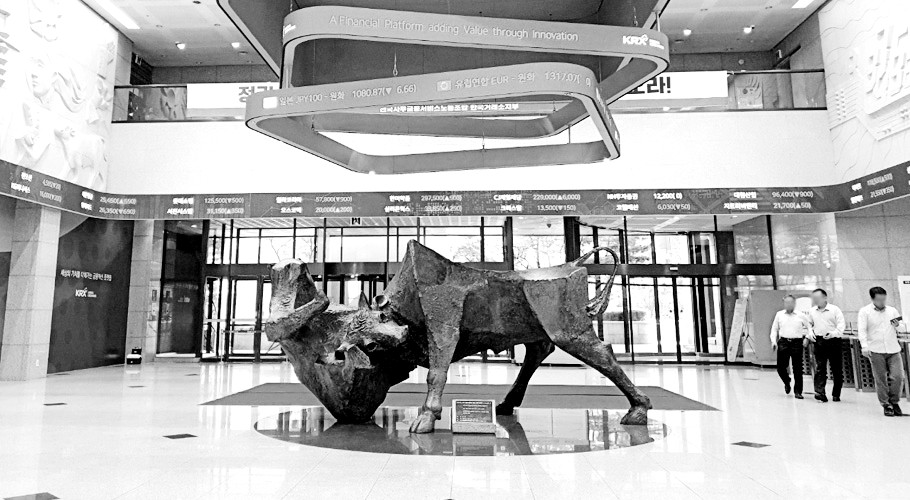
South Korea’s stock market did not open on Friday, with the Korea Exchange closed for Constitution Day after the national holiday was reinstated for the first time in 18 years. The pause arrived at a particularly sensitive moment for investors following Thursday’s severe technology-led decline and the introduction of tighter restrictions on leveraged exchange-traded funds.
Constitution Day suspends trading
Trading in shares, derivatives and other exchange-based financial instruments was suspended for the public holiday. The market is scheduled to reopen on Monday, leaving investors with an extended period in which to assess the consequences of one of the most turbulent sessions of the year.
Thursday’s trading ended with the Kospi down 6.4 per cent at 6,820.60. The benchmark opened at 6,960.50 before losses intensified as investors sold South Korea’s dominant semiconductor companies.

SK Hynix fell approximately 12 per cent after advancing strongly in the previous session, while Samsung Electronics declined nearly 9 per cent. Their considerable weight within the Kospi amplified the movement across the wider market.
Interest-rate increase adds pressure
Sentiment was also affected by the Bank of Korea’s decision to raise its benchmark interest rate by 25 basis points to 2.75 per cent. It was the central bank’s first rate increase in more than three years and represented an important change in the monetary outlook.
Higher rates can support the won and help control inflation, but they also increase borrowing costs for companies and households. The decision therefore added pressure to highly valued growth shares already facing doubts about the durability of artificial intelligence-related demand.
Despite its recent correction, the Kospi remains substantially higher for the year. That combination of large accumulated gains and extreme daily movements has made the market particularly vulnerable to profit-taking and leveraged trading.
Regulators tighten ETF controls
South Korean authorities announced new restrictions covering leveraged exchange-traded funds linked to individual shares. New listings are being halted, advertising is being restricted and the minimum deposit required from retail investors is being raised from 10 million won to 30 million won.
The minimum trading unit will also increase, while additional risk education will be required. Regulators are attempting to prevent products offering amplified exposure to Samsung Electronics and SK Hynix from intensifying already substantial market swings.
The measures follow repeated trading interruptions and growing concern that leveraged products have encouraged excessive retail speculation.
Monday’s reopening carries added risk
The holiday provides temporary relief from the rapid selling, but it also means South Korean equities cannot immediately respond to Friday’s movements in overseas semiconductor stocks, oil or currencies.
When Seoul reopens on Monday, prices may need to absorb several days of international developments simultaneously. Investors will be watching whether foreign funds return to Korean technology shares, whether retail selling continues and whether the regulatory measures can reduce volatility without damaging market liquidity.
Newshub Editorial in Asia – 17 July 2026

Ask NF GPT
If you have an account with ChatGPT you get deeper explanations,
background and context related to what you are reading.
Recent Comments