
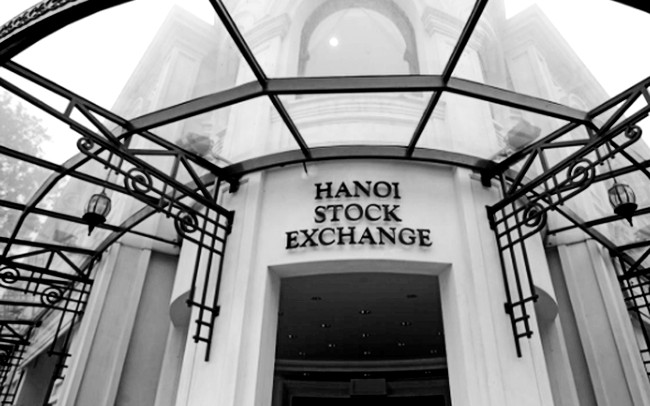
Vietnamese equities opened Tuesday under renewed pressure as investors continued to reduce exposure following a sharp and broad-based decline in the previous session. The country’s principal VN-Index moved below the psychologically important 1,800-point level during Tuesday’s trading, while sentiment surrounding the Hanoi Stock Exchange remained fragile after the HNX-Index suffered a 3.9 per cent fall on Monday.
Monday’s losses shape the opening
The VN-Index entered Tuesday after falling 27.8 points, or 1.5 per cent, to 1,800.54 on Monday. Selling pressure affected most major sectors, with 27 of the 30 companies in the VN30 large-cap index declining.
The HNX-Index, representing shares listed on the Hanoi Stock Exchange, performed even more weakly. It dropped 11.86 points to 291.90, equivalent to a daily decline of 3.9 per cent.

That sharp retreat left the northern market vulnerable to further volatility when trading resumed at 9am local time on Tuesday. The Hanoi exchange operates a morning session until 11.30am, followed by afternoon trading between 1pm and 3pm.
Selling pressure remains dominant
Vietnam’s benchmark equity market continued to weaken during Tuesday’s session, with the VN-Index trading near 1,782 points, approximately 1 per cent below Monday’s close. The movement indicated that investors had not yet found a convincing short-term support level after the previous day’s sell-off.
The weakness came despite Vietnam’s comparatively strong long-term economic growth outlook. Short-term trading, however, has become increasingly sensitive to profit-taking, valuation concerns and global geopolitical risks.
Rising oil prices also created additional uncertainty. Vietnam is both an energy producer and an increasingly important manufacturing economy, meaning higher crude prices can support listed petroleum companies while increasing costs for transport, industry and consumers.
Market restructuring adds context
The opening came as Vietnam proceeds with a significant restructuring of its securities markets. Nearly 300 listed companies are expected to transfer from the Hanoi Stock Exchange to the Ho Chi Minh City Stock Exchange by the end of 2026.
The plan is designed to establish a clearer division of responsibilities between the country’s exchanges. Under the restructuring, HoSE will increasingly become the central venue for listed equities, while HNX will concentrate on government bonds, derivatives and the UPCoM market for unlisted public companies.
HNX also placed RCC shares under warning status from Tuesday because the company had not published its annual shareholders’ meeting resolution within the required period. The shares were already subject to trading restrictions following delays in submitting audited financial statements.
Support around key levels
Investors are now watching whether Vietnam’s principal index can recover above 1,800 and whether the HNX-Index can stabilise after Monday’s unusually steep loss.
A sustained move below these levels could trigger additional technical selling. Conversely, selective buying in banking, energy and established industrial companies could help the market identify a new equilibrium after several sessions of volatility.
Newshub Editorial in Asia – 14 July 2026

Ask NF GPT
If you have an account with ChatGPT you get deeper explanations,
background and context related to what you are reading.
Recent Comments