
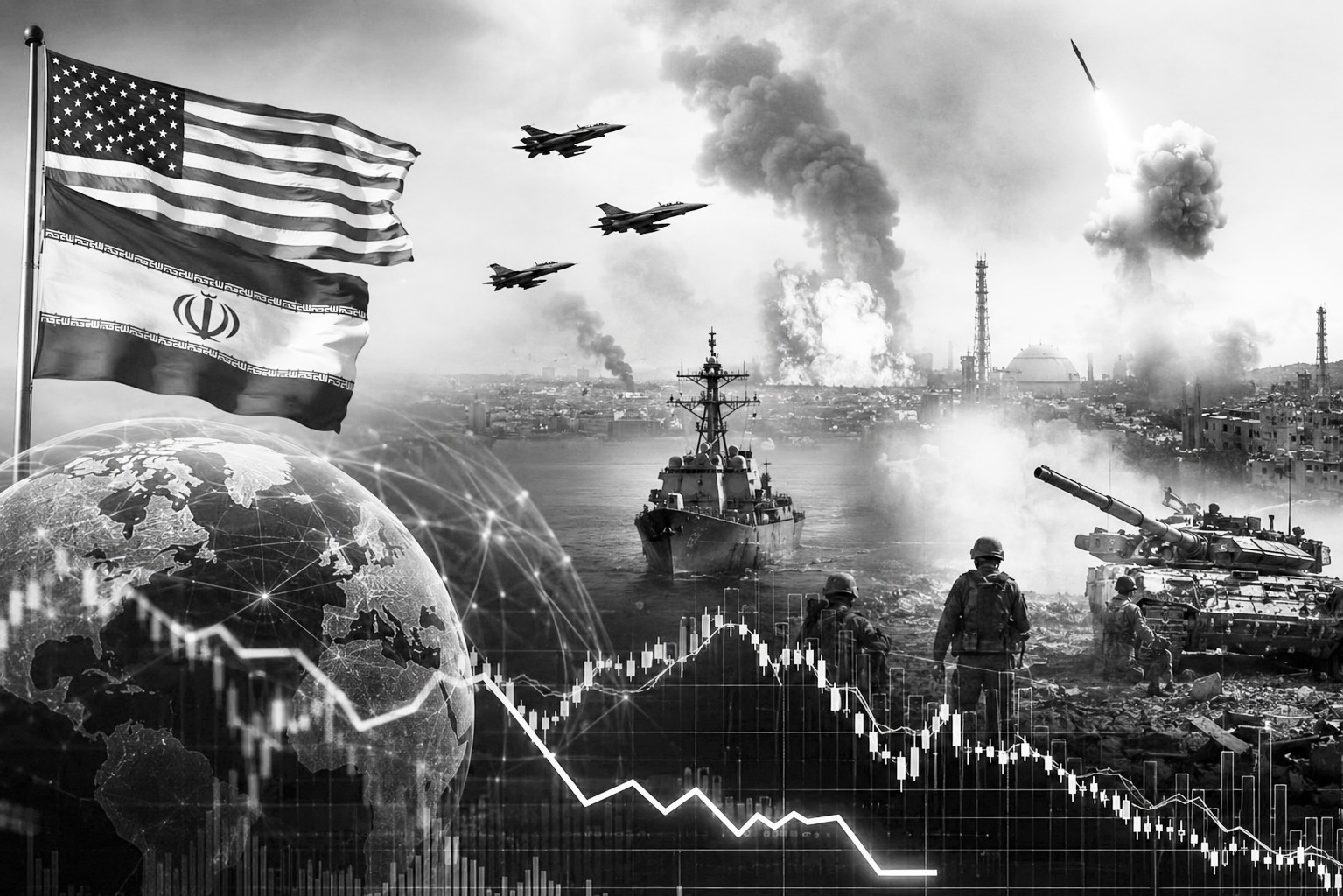
Global financial markets are expected to open under pressure on Monday as renewed fighting between the United States and Iran threatens shipping through the Strait of Hormuz, while Ukrainian battlefield gains add further uncertainty to the war with Russia. Investors are likely to move towards oil, gold, government bonds and other defensive assets as they assess the risk of a wider military escalation and further disruption to global trade.
Asia likely to open lower
Asian markets will provide the first indication of investor sentiment. Equities in Japan, South Korea, Hong Kong and Australia are expected to begin cautiously, with energy-dependent economies particularly exposed to any renewed surge in crude prices.
India could face additional pressure because of its reliance on imported energy. A sustained increase in oil prices would raise inflation risks, weaken the rupee and increase costs for transport, manufacturing and consumer companies.

Energy producers may advance, while airlines, shipping-dependent manufacturers and travel-related shares are likely to face selling pressure. Chinese markets could prove more resilient if investors expect Beijing to introduce measures to protect economic growth.
Oil returns to the centre of the market
The Strait of Hormuz will be the principal focus. Iran has again declared the strategic waterway closed after attacking a commercial vessel it accused of using an unauthorised route. The United States responded with strikes intended to reduce Iran’s ability to threaten civilian shipping.
Even if vessels continue to pass through parts of the strait, insurance premiums, freight costs and security risks are likely to rise. Oil traders may price in a larger geopolitical premium when electronic trading resumes.
A sharp rise in crude would revive concerns that energy inflation could delay interest-rate reductions and weaken consumer spending across major economies.
Europe faces a defensive opening
European shares are expected to open lower, led by pressure on airlines, chemicals, automotive manufacturers and other energy-intensive industries. Oil companies, defence contractors and selected mining groups could outperform.
Ukraine’s reported progress against Russian forces may support European defence shares, but it also raises the possibility of a stronger Russian military response. Markets will watch for attacks on energy infrastructure, transport routes or neighbouring countries that could widen the economic consequences of the conflict.
Wall Street prepares for renewed volatility
US index futures are likely to come under pressure when trading begins, although Wall Street’s recent technology-led strength may limit broader losses. Investors have repeatedly returned to artificial intelligence and semiconductor shares after geopolitical sell-offs, but another major escalation could challenge that resilience.
Defence and energy shares are expected to attract buyers, while airlines, cruise operators, retailers and companies dependent on global supply chains may weaken. US government bonds, the dollar and gold could benefit from demand for perceived safe-haven assets.
A fragile global opening
Monday’s direction will depend less on corporate fundamentals than on military and diplomatic developments during the hours before Asian trading begins. Confirmation that commercial shipping remains active could contain losses. Further attacks on vessels, Gulf states or energy infrastructure would probably trigger a deeper global sell-off.
The most likely opening is therefore defensive and volatile, with oil and geopolitical headlines determining sentiment throughout the trading day.
Newshub Editorial in Global – 12 July 2026

Ask NF GPT
If you have an account with ChatGPT you get deeper explanations,
background and context related to what you are reading.
Recent Comments