
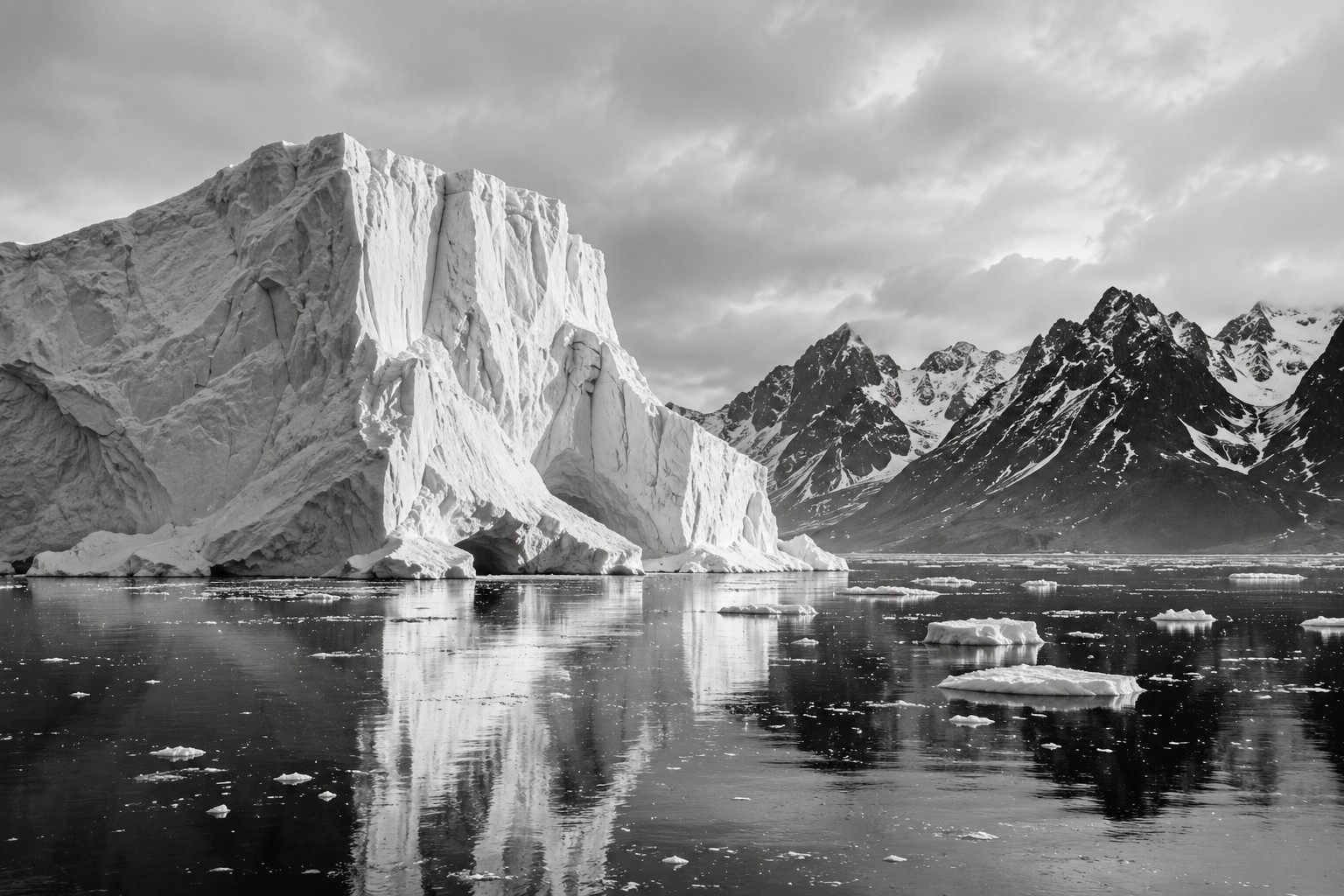
US President Donald Trump renewed his call for the United States to take control of Greenland as he arrived for the NATO summit, while also warning that Washington could reconsider its military presence in Europe and criticising allies over their response to the recent conflict with Iran. His remarks immediately overshadowed efforts by alliance leaders to present a united front on defence and security.
Greenland returns to the centre of the debate
Speaking shortly after arriving at the summit, Trump argued that Greenland should be under American rather than Danish control, describing the Arctic territory as strategically vital for US national security. He repeated previous claims that Denmark has not invested sufficiently in Greenland’s defence and cited growing Chinese and Russian activity in the Arctic as justification for a stronger American role.
The comments revived one of the most contentious issues in transatlantic relations. Denmark has consistently rejected any suggestion that Greenland could be transferred to another country, maintaining that the island’s future rests with Greenland’s own people within the Kingdom of Denmark. Danish Prime Minister Mette Frederiksen again stated that Greenland is not for sale and reaffirmed Denmark’s commitment to defending every part of its territory.

Fresh pressure on Nato allies
Trump also suggested that the United States could reduce or even withdraw its military presence from Europe if allies failed to shoulder a greater share of the continent’s defence burden. The remarks echoed his long-standing criticism that European members rely too heavily on American military support while underinvesting in their own armed forces.
Although the possibility of troop reductions has been raised before, the comments added fresh uncertainty at a summit intended to showcase alliance unity amid growing security challenges.
Iran conflict deepens divisions
Another source of tension was Trump’s criticism of NATO members over their limited support during the recent military confrontation with Iran. He expressed disappointment that many European allies did not provide stronger backing for the US-led operation, arguing that Washington had carried a disproportionate share of the burden.
European leaders have generally supported efforts to protect regional stability while remaining cautious about becoming directly involved in military operations against Iran. That difference in approach has exposed continuing divisions within the alliance over how future crises should be managed.
Alliance seeks to maintain unity
Despite the sharp rhetoric, NATO leaders continued discussions focused on strengthening collective defence, increasing European military investment and adapting the alliance to evolving global threats. Officials highlighted new defence procurement initiatives and reiterated their commitment to the alliance’s principle of collective security.
Trump’s remarks nevertheless underscored the political challenges facing NATO as it balances differing national priorities with the need for a unified strategic posture. As the summit continues, leaders will seek to prevent disagreements over Greenland, defence spending and the Middle East from overshadowing broader efforts to reinforce the alliance during an increasingly uncertain geopolitical period.
Newshub Editorial in Europe – 8 July 2026

Ask NF GPT
a
If you have an account with ChatGPT you get deeper explanations,
background and context related to what you are reading.
Open an account:
Recent Comments