
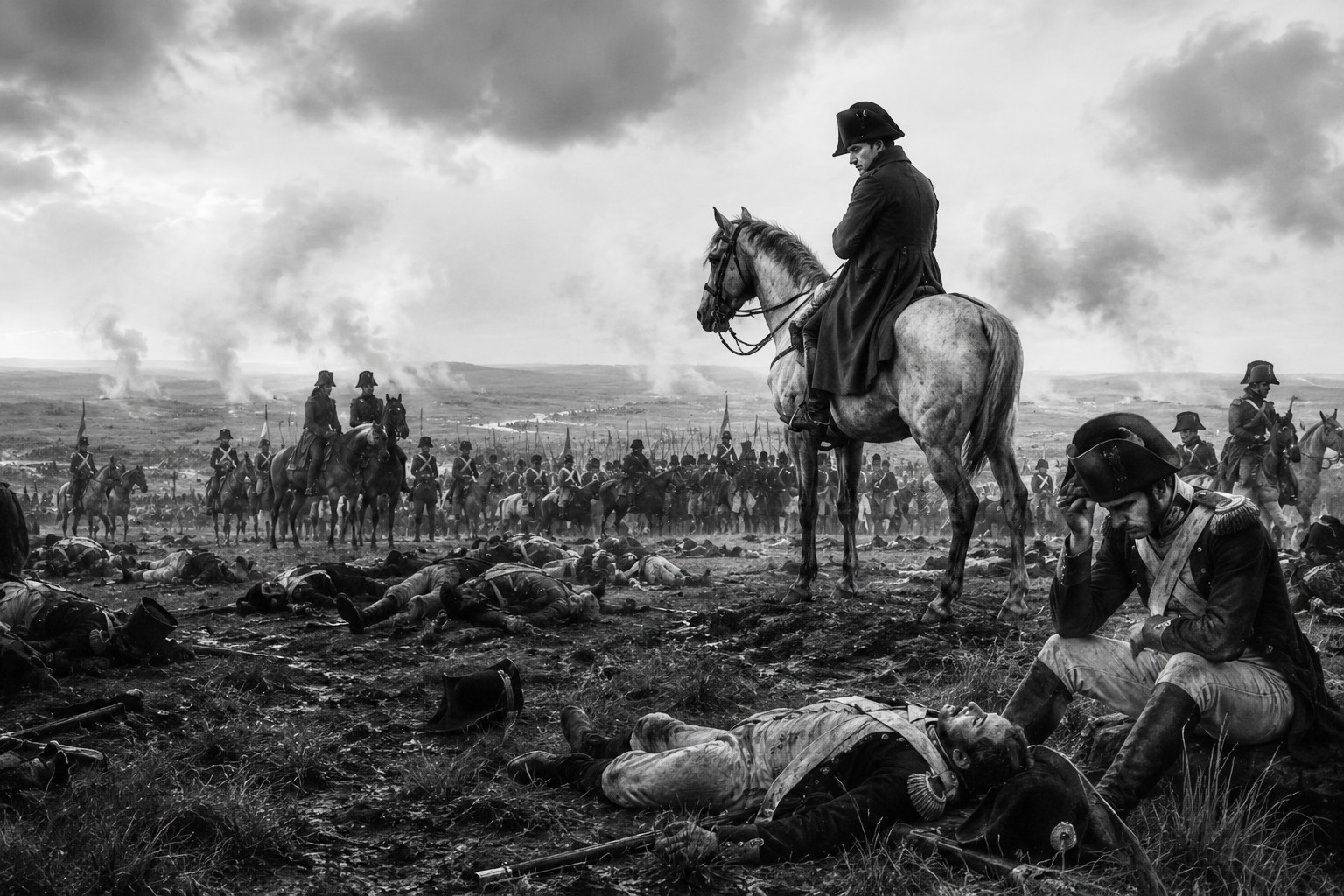
On 18 June 1815, Napoleon Bonaparte suffered his final and most decisive defeat at the Battle of Waterloo in present-day Belgium. The battle ended more than two decades of conflict that had reshaped Europe and brought an end to Napoleon’s attempt to reclaim the French throne during the period known as the Hundred Days. Waterloo remains one of the most influential military engagements in modern history, marking the collapse of the French Empire and the beginning of a new European political order.
The road to Waterloo
After escaping exile on the island of Elba in early 1815, Napoleon returned to France and quickly regained power. His dramatic comeback alarmed the major European powers, including Britain, Prussia, Austria and Russia, which formed the Seventh Coalition with the objective of removing him from power once and for all.
Napoleon sought to defeat the coalition armies before they could unite. His strategy initially achieved some success, but it ultimately led him to confront British-led forces under the command of the Arthur Wellesley, Duke of Wellington near the village of Waterloo.

A decisive confrontation
The battle began on the morning of 18 June following heavy overnight rain that slowed troop movements and artillery effectiveness. Throughout the day, French forces launched repeated assaults against Allied defensive positions.
The arrival of the Prussian army, commanded by Gebhard Leberecht von Blücher, proved decisive. Their intervention placed increasing pressure on Napoleon’s right flank while Wellington’s forces held their ground despite sustained attacks.
As evening approached, the French Imperial Guard—considered Napoleon’s elite troops—made one final assault. When the attack failed, the French army lost cohesion, and a full retreat followed.
The end of an era
Waterloo effectively ended Napoleon’s military career. Days later, he abdicated for a second time and surrendered to British authorities. Rather than returning him to Elba, the British exiled him to the remote South Atlantic island of Saint Helena, where he remained until his death in 1821.
The defeat also brought an end to the Napoleonic Wars, which had dominated European politics since the early nineteenth century and caused widespread political upheaval across the continent.
A lasting historical legacy
The victory allowed the coalition powers to restore relative stability through the decisions of the Congress of Vienna. The resulting balance of power helped prevent another continent-wide conflict for several decades.
Today, Waterloo has become synonymous with a decisive and irreversible defeat. The battlefield attracts hundreds of thousands of visitors annually and remains an important site for military historians, reflecting both the brilliance and limitations of one of history’s most renowned commanders.
More than two centuries later, the Battle of Waterloo continues to symbolise the moment when military ambition collided with united international opposition, forever altering the course of European history.
Newshub Editorial in Europe – 18 June 2026

If you have an account with ChatGPT you get deeper explanations,
background and context related to what you are reading.
Open an account:
Open an account
Recent Comments