
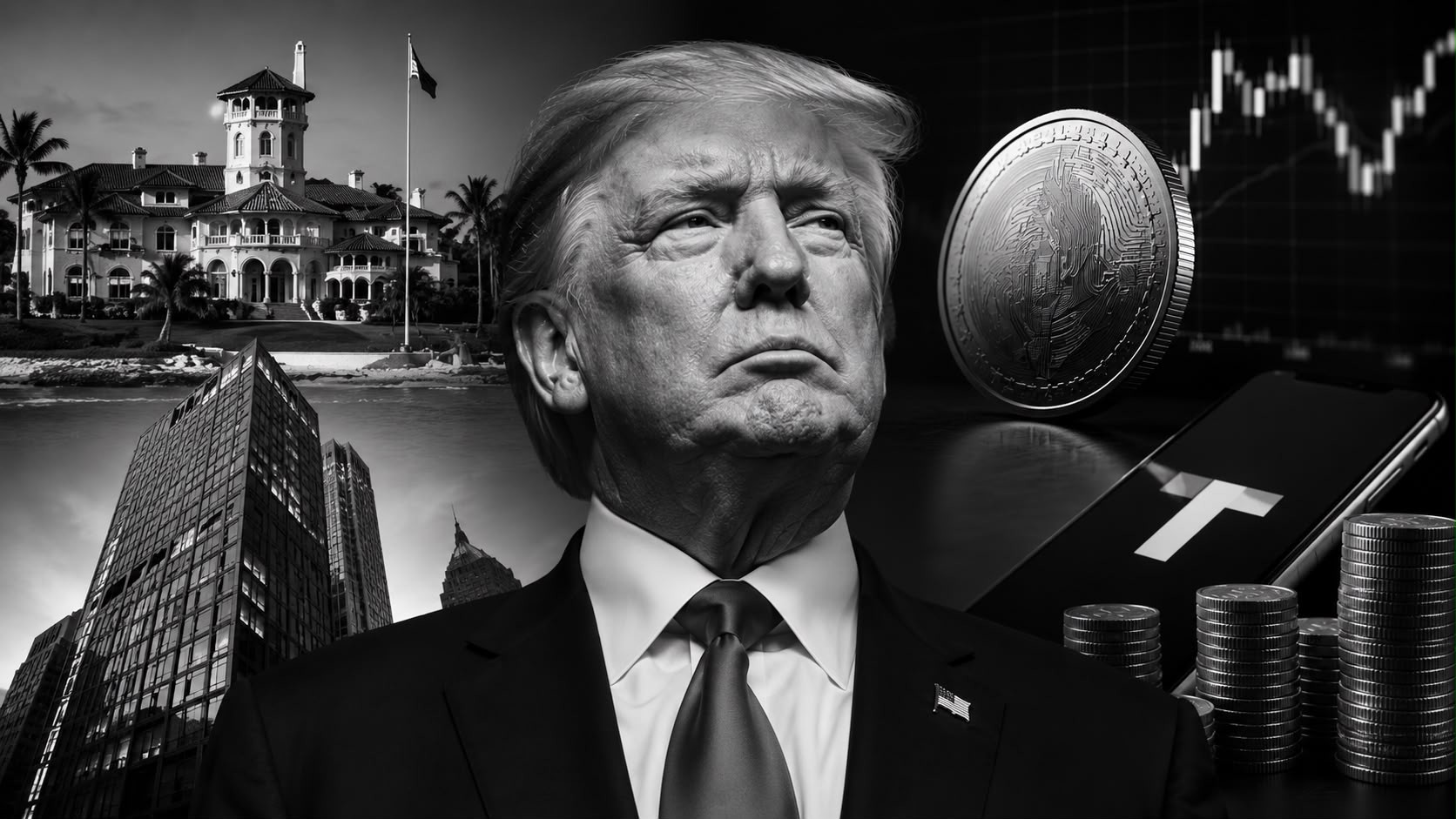
Few business figures in modern history have reinvented their personal balance sheet as dramatically as Donald J. Trump. For decades, Trump was known primarily as a real estate developer whose wealth was tied to office towers, golf courses, hotels, and licensing agreements. His business empire was often heavily leveraged, with large debts secured against premium real estate assets. Critics argued that his fortune was overstated, while supporters pointed to his ability to survive multiple economic cycles and emerge stronger.
Today, however, Trump’s financial profile looks fundamentally different. According to recent estimates, Trump’s net worth now exceeds $6 billion, making him one of the wealthiest political figures in modern American history. More importantly, the composition of that wealth has changed dramatically.
The old Trump: real estate and debt

For most of the past forty years, Trump’s wealth was concentrated in physical assets.
His empire was built around:
• Commercial real estate
• Luxury residential properties
• Golf resorts
• Hotels
• Brand licensing agreements
Like many major property developers, Trump relied extensively on debt financing. Properties were acquired, improved, refinanced, and leveraged to fuel further expansion.
This approach created enormous wealth but also exposed him to significant financial risk during market downturns.
The Trump business model was classic American real estate entrepreneurship: use leverage aggressively, increase asset values, refinance, and repeat.
The transformation
The last several years have witnessed a remarkable shift.
Trump’s financial ecosystem now includes three entirely new pillars:
1. Digital media
The launch of Truth Social transformed Trump from a real estate entrepreneur into a media owner.
While the company’s valuation has fluctuated significantly, it created a publicly traded vehicle directly tied to Trump’s personal brand and political influence.
Unlike real estate, media businesses can scale rapidly without requiring billions of dollars in physical infrastructure.
2. Cryptocurrency
Perhaps the most surprising development has been Trump’s entry into digital assets.
The emergence of Trump-related cryptocurrency projects, including the $TRUMP meme coin and World Liberty Financial, created entirely new revenue streams that would have been unimaginable only a few years ago.
While cryptocurrency remains highly controversial, it has undeniably generated substantial value for Trump-affiliated businesses and entities.
3. Brand monetisation at scale
Trump’s greatest asset has never been a building.
It has been the Trump brand itself.
Over the last decade, that brand evolved from a real estate label into a global political, media, and commercial platform.
Today, the Trump name functions as a business ecosystem capable of generating value across multiple industries simultaneously.
The $TRUMP coin phenomenon
No discussion of Trump’s financial transformation would be complete without examining the $TRUMP meme coin.
The token experienced one of the most dramatic launches in cryptocurrency history.
After reaching extraordinary valuations shortly after launch, the token later declined sharply from its peak.
Critics point to the collapse in price as evidence of excessive speculation.
Supporters argue that the project demonstrated the enormous power of political branding in digital finance.
Regardless of one’s view, the economic significance is undeniable.
The project generated global attention, billions of dollars in trading volume, and created one of the most discussed financial events of the year.
A new type of billionaire
What makes Trump’s financial story unique is not simply the size of his fortune.
It is the diversification of its sources.
Historically, Trump’s wealth depended heavily on physical assets.
Today, his economic footprint spans:
• Real estate
• Media
• Social networks
• Digital assets
• Licensing
• Political branding
Few entrepreneurs have successfully bridged all of these sectors.
Lessons for business leaders
Whether one agrees with Trump politically or not, several business lessons emerge from his financial evolution.
Adaptability matters
Trump repeatedly shifted into new industries as opportunities emerged.
Branding has value
Strong brands can create economic opportunities far beyond their original markets.
Multiple revenue streams reduce dependency
The diversification of Trump’s assets has reduced his dependence on any single business sector.
Technology changes wealth creation
Digital assets and media platforms can create value at a speed traditional industries rarely match.
Final analysis
Donald Trump’s financial journey is likely to be studied for years to come.
From highly leveraged real estate developer to media owner, cryptocurrency participant, and global political brand, his evolution represents one of the most unusual wealth transformations in modern business history.
Critics will continue to question valuations and business practices.
Supporters will point to the undeniable growth of his financial position.
But one fact is difficult to dispute:
Donald Trump successfully transformed his personal brand into a multi-industry economic engine that extends far beyond the skyscrapers that originally made him famous.
Regardless of political views, the scale of that transformation is remarkable—and it may ultimately become one of the defining business stories of the twenty-first century.
Newshub Editorial in North America – 11 June 2026

If you have an account with ChatGPT you get deeper explanations,
background and context related to what you are reading.
Open an account:
Open an account
Recent Comments