
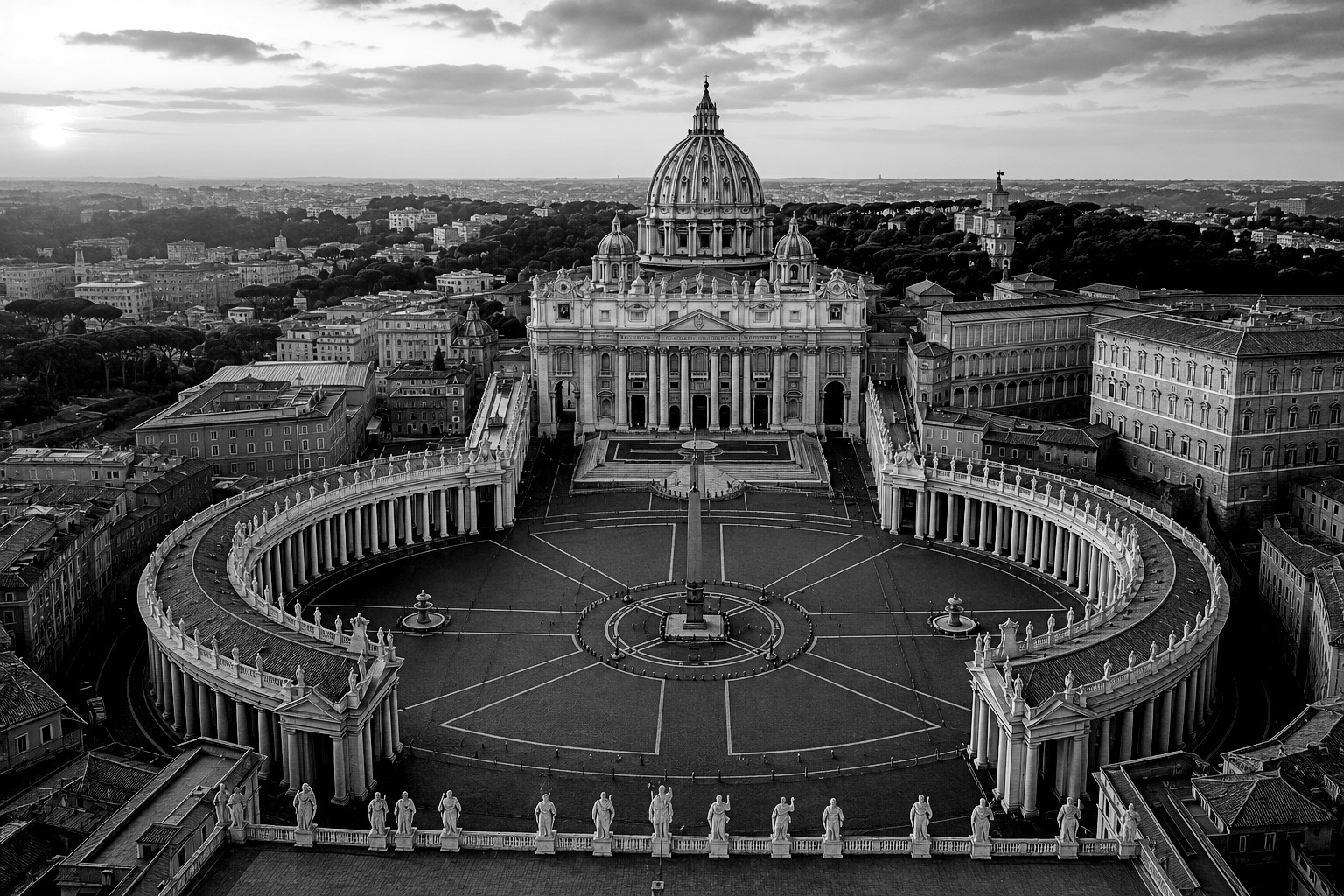
On this day, 7th June, we look back at one of the most significant diplomatic events of the twentieth century: the creation of the sovereign state of Vatican City. Although the formal establishment came through the signing of the Lateran Treaty on 11 February 1929, its impact continues to resonate across the world today.
The Roman Question
The origins of Vatican City’s independence can be traced to the unification of Italy during the nineteenth century. For centuries, the Popes had ruled extensive territories known as the Papal States. However, as Italy unified, these lands were gradually absorbed into the new nation.

When Italian troops entered Rome in 1870, the Papal States effectively ceased to exist. Popes subsequently refused to recognise the authority of the Italian state over Rome and considered themselves confined within the Vatican. This dispute became known as the Roman Question and remained unresolved for nearly six decades.
A diplomatic breakthrough
The deadlock ended in 1929 when the Holy See and the Italian government negotiated the Lateran Treaty. Signed by representatives of both parties, the agreement recognised Vatican City as an independent sovereign state under the authority of the Pope.
The treaty established the borders of the new nation, covering approximately 44 hectares, making it the smallest internationally recognised state in the world. It also provided financial compensation for territories previously lost by the Church and normalised relations between Italy and the Holy See.
The agreement guaranteed that the Pope would exercise authority free from interference by any secular government, ensuring the independence of the Catholic Church’s leadership.
A unique state
Vatican City remains unlike any other nation. It exists primarily to support the mission and independence of the Holy See rather than to serve a conventional resident population.
Despite its small size, the state operates many functions associated with sovereignty. It maintains diplomatic relations worldwide, issues passports, operates its own postal system, and mints euro coins. The Pope serves as head of state, combining spiritual leadership with temporal authority.
The city-state is also home to globally renowned landmarks, including St. Peter’s Basilica and the Sistine Chapel, attracting millions of visitors each year.
A lasting legacy
The creation of Vatican City resolved one of Europe’s most unusual political disputes and established a framework that has endured for nearly a century. Today, the Holy See continues to play a significant diplomatic and humanitarian role on the global stage while maintaining its independence through the sovereignty secured in 1929.
The story of Vatican City stands as a reminder that some of history’s most enduring solutions are achieved not through conflict, but through negotiation and diplomacy.
Newshub Editorial in Europe – 7th June 2026

If you have an account with ChatGPT you get deeper explanations,
background and context related to what you are reading.
Open an account:
Open an account
Recent Comments