
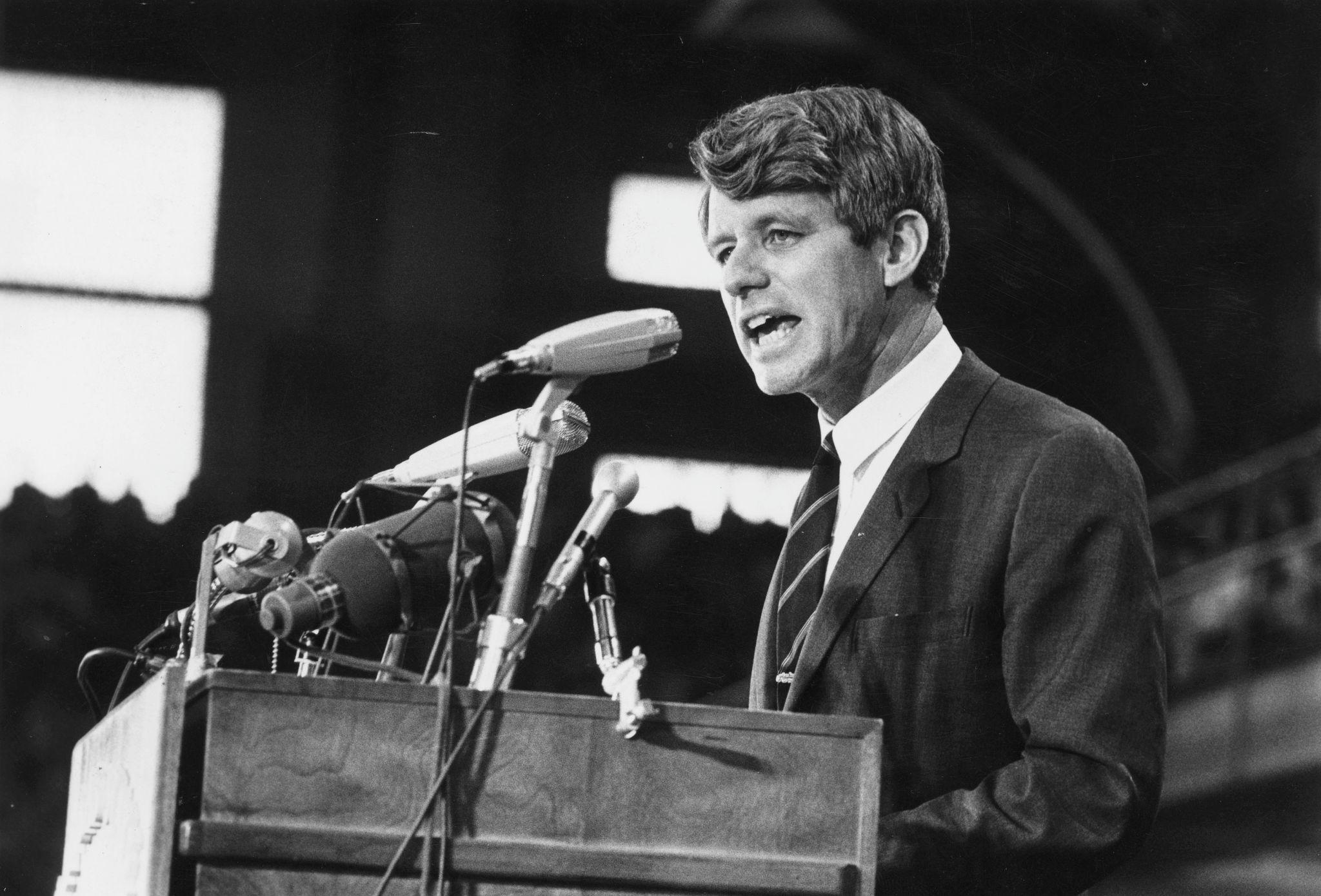
On 5 June 1968, Senator Robert F. Kennedy was fatally shot at the Ambassador Hotel in Los Angeles moments after celebrating a major victory in the California Democratic presidential primary. His assassination came less than five years after the murder of his brother, President John F. Kennedy, and further deepened a period of political violence and social unrest in the United States.
A campaign built on hope and reform
Robert Francis Kennedy, commonly known as RFK, entered the 1968 presidential race amid growing divisions over the Vietnam War, civil rights, and economic inequality. Having served as Attorney General under his brother’s administration and later as a United States Senator from New York, Kennedy emerged as a leading voice for social justice and national reconciliation.
His campaign attracted support from a broad coalition of voters, including young Americans, minority communities, and those seeking an end to the Vietnam conflict. Many viewed him as a unifying figure capable of healing a deeply fractured nation.

The shooting at the Ambassador Hotel
Shortly after midnight on 5 June 1968, Kennedy addressed supporters following his victory in California. As he passed through the hotel’s kitchen pantry on his way to a press conference, he was shot multiple times by Sirhan Sirhan, a 24-year-old Palestinian-born Jordanian immigrant.
Several other people were wounded during the attack. Kennedy was rushed to hospital, where surgeons fought to save his life. Despite extensive medical efforts, he died approximately 26 hours later on 6 June at the age of 42.
A nation mourns once again
The assassination sent shockwaves across the United States and around the world. Coming only two months after the assassination of civil rights leader Martin Luther King Jr., it intensified concerns about political violence and instability in America.
Hundreds of thousands of mourners paid their respects as Kennedy’s funeral train travelled from New York City to Washington, D.C. Images of Americans lining the railway tracks became enduring symbols of national grief.
Political and historical consequences
Kennedy’s death dramatically altered the course of the 1968 presidential election. Many historians believe he had a realistic chance of securing the Democratic nomination and potentially winning the presidency.
His assassination also reinforced public distrust in institutions and fuelled decades of debate surrounding political violence in the United States. Numerous investigations concluded that Sirhan Sirhan acted alone, although questions and alternative theories have persisted among some researchers and observers.
Today, Robert F. Kennedy is remembered not only for his political career but also for his advocacy on behalf of civil rights, poverty reduction, and social justice. His vision of a more equitable society continues to influence political discourse nearly six decades after his death.
Newshub Editorial in North America – 5 June 2026

If you have an account with ChatGPT you get deeper explanations,
background and context related to what you are reading.
Open an account:
Open an account
Recent Comments