
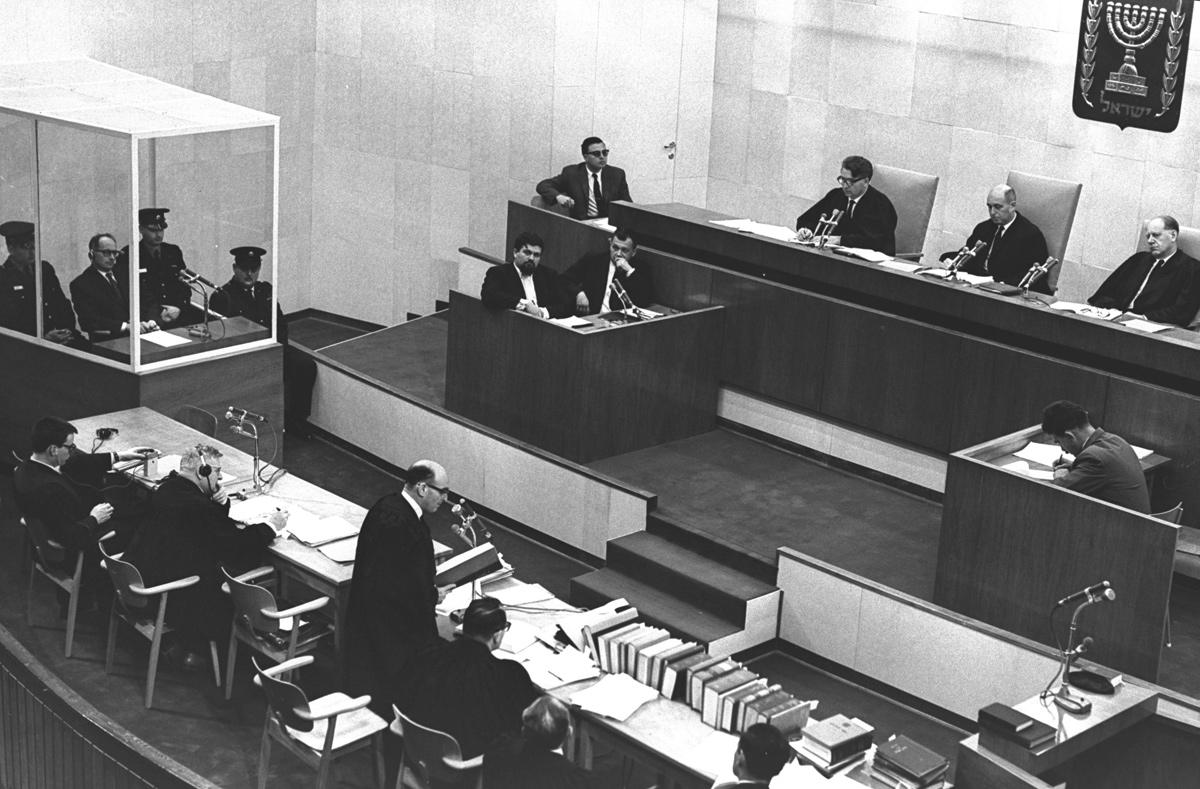
On 31 May 1962, the State of Israel carried out the execution of Adolf Eichmann, one of the principal organisers of the Holocaust. The hanging marked the end of one of the most significant war crimes trials of the twentieth century and became a defining moment in the world’s confrontation with the crimes of Nazi Germany.
From architect of deportations to fugitive
Adolf Eichmann was a senior SS officer who played a central role in coordinating the deportation of millions of Jews from across Europe to ghettos, concentration camps and extermination camps during the Second World War. Although he was not among the highest-ranking Nazi leaders, his administrative efficiency and commitment to implementing the so-called “Final Solution” made him one of the most notorious figures of the Holocaust.
Following Germany’s defeat in 1945, Eichmann initially evaded capture. Using false identities and escape networks that helped former Nazis flee Europe, he eventually settled in Argentina under the alias Ricardo Klement. For years he lived quietly while many survivors and investigators continued searching for those responsible for Nazi atrocities.


A dramatic capture
In 1960, Israeli intelligence agency Mossad located Eichmann near Buenos Aires. After extensive surveillance, agents abducted him and secretly transported him to Israel. The operation attracted worldwide attention and sparked diplomatic tensions between Israel and Argentina.
The capture was significant not only because it brought a major Nazi criminal to justice but also because it demonstrated Israel’s determination to pursue accountability for Holocaust crimes, regardless of where perpetrators had fled.
The trial that educated the world
Eichmann’s trial began in Jerusalem in April 1961. It was one of the first major international legal proceedings to be extensively televised, allowing audiences around the world to witness testimony from Holocaust survivors.
The proceedings documented in detail the machinery of genocide that had operated across Nazi-occupied Europe. Survivors recounted deportations, mass killings and the destruction of entire communities. The trial transformed public understanding of the Holocaust, particularly among younger generations who had not lived through the war.
Eichmann was convicted on multiple charges, including crimes against humanity, war crimes and crimes against the Jewish people. He was sentenced to death, the only civilian execution ever carried out by the State of Israel.
Execution and historical significance
Shortly after midnight on 31 May 1962, Eichmann was hanged at Ramla Prison. His body was cremated and his ashes were scattered at sea outside Israeli territorial waters to prevent any burial site from becoming a place of pilgrimage for Nazi sympathisers.
The execution closed a chapter in the pursuit of justice after the Holocaust but also opened broader discussions about responsibility, obedience and morality. Eichmann’s defence that he had merely followed orders was widely rejected by the court and has since become a central topic in debates about individual accountability under authoritarian regimes.
A lasting legacy
More than six decades later, the Eichmann trial remains a landmark event in international justice. It reinforced the principle that individuals can be held accountable for crimes against humanity regardless of rank, nationality or the passage of time.
The trial also ensured that the voices of Holocaust survivors were heard on a global stage. Their testimony helped preserve historical memory and strengthened efforts to combat antisemitism, genocide denial and historical revisionism.
The execution of Adolf Eichmann remains one of the most powerful symbols of post-war justice and the determination of societies to remember the victims of one of history’s darkest chapters.
Newshub Editorial in Asia, 31 May 2026

If you have an account with ChatGPT you get deeper explanations,
background and context related to what you are reading.
Open an account:
Open an accountOn 31 May 1962, the State of Israel carried out the execution of Adolf Eichmann, one of the principal organisers of the Holocaust. The hanging marked the end of one of the most significant war crimes trials of the twentieth century and became a defining moment in the world's confrontation with the crimes of Nazi Germany.
Recent Comments