
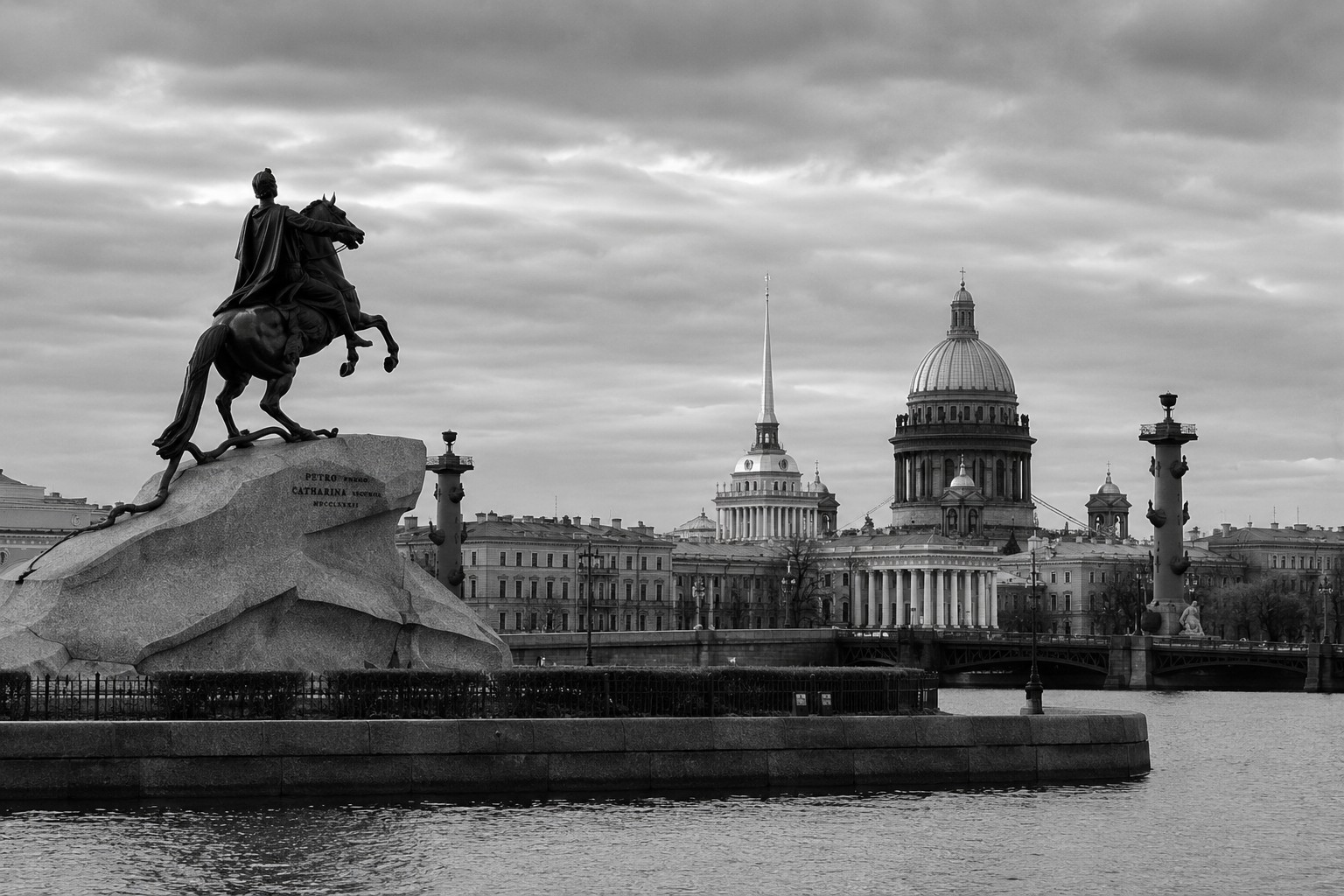
Founded on 27 May 1703 by Peter the Great, St. Petersburg became far more than a new city on the Neva River. It was designed as Russia’s “window to Europe”, a Baltic capital built to project imperial power, modernisation and cultural ambition.
A city built for power
Peter chose the site after Russia gained access to the Baltic during the Great Northern War. The Peter and Paul Fortress became the city’s first anchor, and in 1712 St. Petersburg replaced Moscow as the imperial capital. From the start, it was both a military statement and a political project: Russia would no longer look only inward, but westward.
A European capital in Russia
Over the 18th and 19th centuries, St. Petersburg became the centre of imperial administration, diplomacy, science, literature and architecture. Its canals, palaces and broad avenues reflected Peter’s ambition to build a European-style capital, while institutions such as the Academy of Sciences helped connect Russia to wider intellectual currents.

The stage of revolution
The city’s role in history reached a turning point in 1917. Then known as Petrograd, it became the scene of both the February Revolution, which led to the abdication of Tsar Nicholas II, and the October Revolution, when the Bolsheviks seized power. Afterward, the capital moved back to Moscow in 1918.
A symbol beyond politics
St. Petersburg has changed names, identities and regimes: Petrograd, Leningrad and again St. Petersburg after 1991. Yet its historical meaning remains unusually dense. It represents Russia’s imperial rise, its European ambitions, its revolutionary rupture and its cultural depth.
More than three centuries after its founding, St. Petersburg remains one of the most important historical cities in Europe — a place where architecture, empire, revolution and memory meet on the banks of the Neva.
Newshub Editorial in Europe – 27 May 2026

If you have an account with ChatGPT you get deeper explanations,
background and context related to what you are reading.
Open an account:
Open an account
Recent Comments