
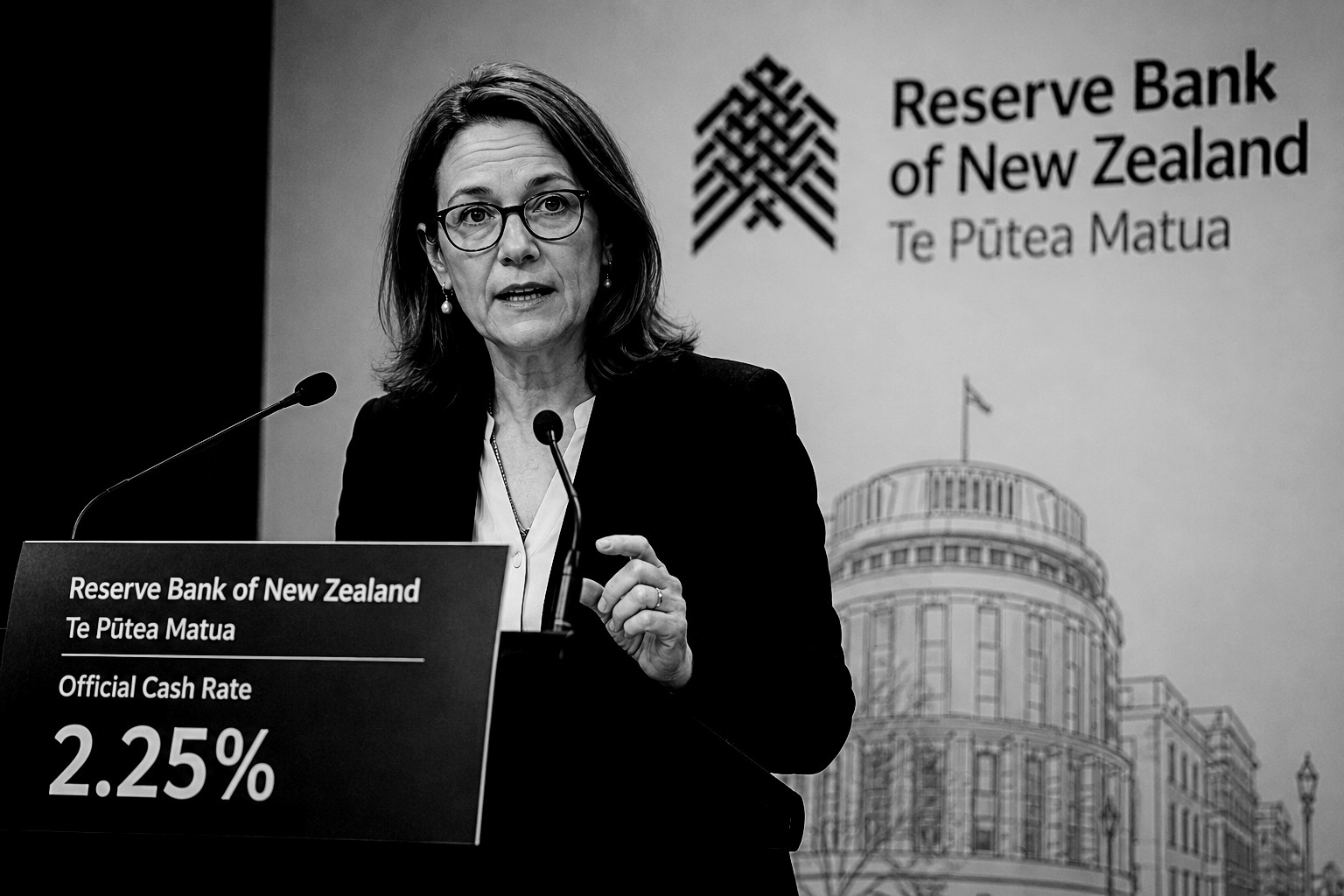
New Zealand’s central bank kept its official cash rate unchanged at 2.25 per cent on Wednesday, but the decision was unusually close. The Reserve Bank of New Zealand’s monetary policy committee split three to three, forcing governor Anna Breman to use her casting vote in favour of holding rates steady.
A hold with a hawkish signal
The decision was not a simple pause. The RBNZ warned that interest rates may need to rise sooner and by more than previously expected, as inflation pressure remains above target and global energy risks feed into the outlook.
Inflation remains the problem
The bank is balancing weak domestic growth against renewed price pressure. Inflation is still running above the target band, and the RBNZ now expects stronger upward pressure from energy and imported costs. That makes the next policy meetings more important for households, mortgage borrowers and businesses.

Markets react quickly
The New Zealand dollar strengthened after the announcement, as investors interpreted the split vote as a signal that rate increases are now firmly on the table. Market pricing also moved toward a higher probability of a near-term hike.
Breman’s first major test
For Anna Breman, the decision marks an important early test of leadership at the RBNZ. By using her casting vote, she avoided an immediate rate increase, but the message from the committee was clear: the pause may be temporary.
The result is a central bank decision that looks cautious on the surface but tighter underneath. New Zealand has not raised rates yet, but the direction of travel has shifted, and markets are now preparing for higher borrowing costs later this year.
Newshub Editorial in Oceania – 27 May 2026

If you have an account with ChatGPT you get deeper explanations,
background and context related to what you are reading.
Open an account:
Open an account
Recent Comments