
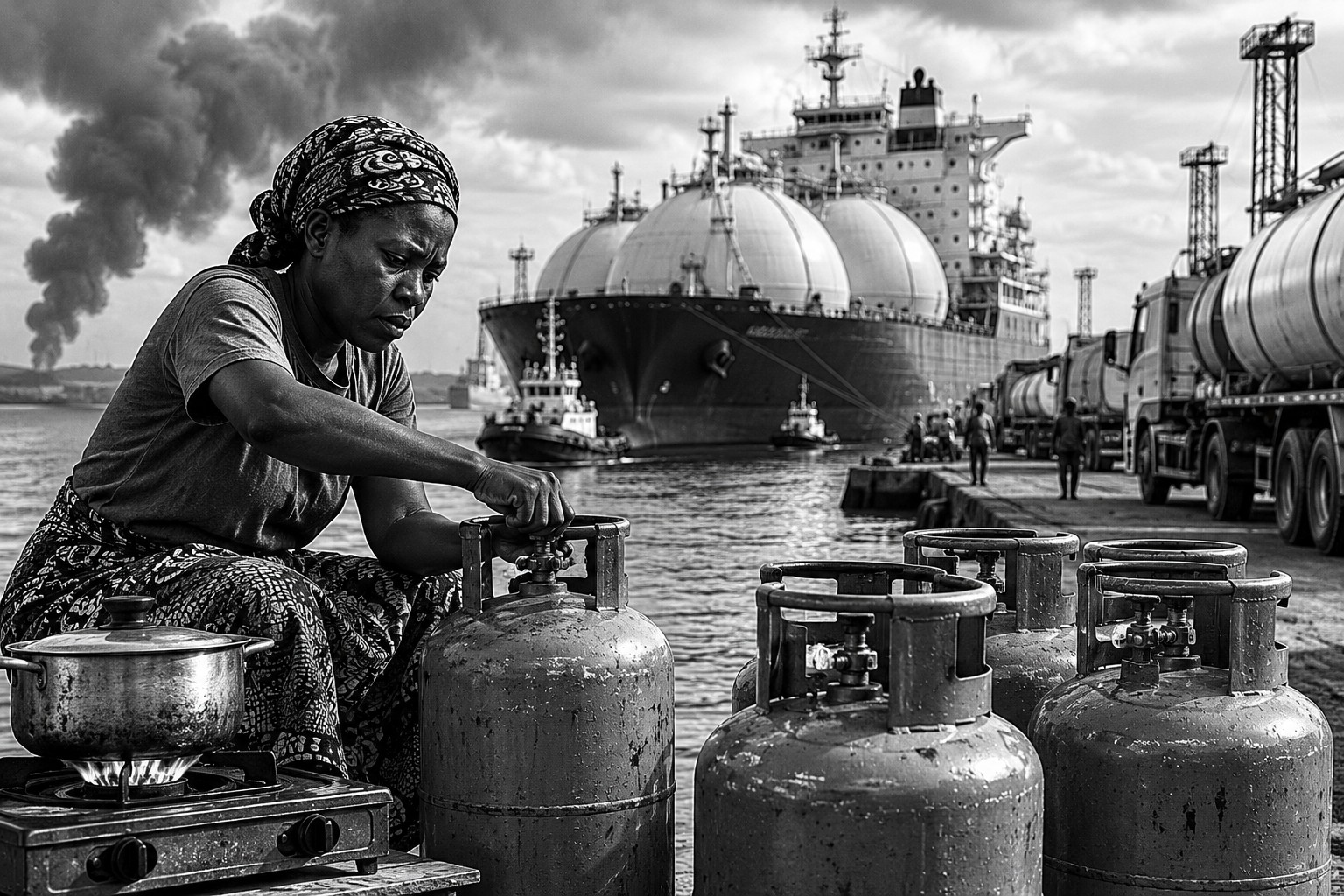
The continued closure of the Strait of Hormuz has triggered a sharp rise in liquefied petroleum gas prices, putting pressure on households and businesses that rely on LPG as a cleaner cooking fuel. The shock is being felt especially in parts of Africa, where LPG has become central to efforts to reduce reliance on charcoal, wood and kerosene.
A critical fuel under pressure
LPG is not only an energy commodity. For many households, it is the practical bridge between traditional fuels and cleaner domestic energy. When prices rise quickly, families may delay refills, reduce usage or return to cheaper but more polluting alternatives.
Africa faces a household energy risk
The impact is particularly sensitive in African markets where clean cooking programmes depend on affordability. Higher LPG prices threaten to slow adoption, weaken household budgets and increase pressure on governments already managing food, transport and currency costs.


Hormuz remains the key chokepoint
The Strait of Hormuz is one of the world’s most important energy corridors. Its closure has disrupted oil, gas and LPG flows, forcing buyers to compete for alternative supply and pushing up shipping, insurance and replacement costs.
A wider inflation problem
The LPG spike adds another layer to the global energy shock. Higher cooking fuel prices feed directly into household inflation, while restaurants, small food vendors and urban consumers face rising daily costs. For low-income families, the effect is immediate.
The crisis shows that clean energy access is also an energy security issue. If LPG becomes too expensive or unreliable, progress on cleaner cooking can quickly reverse, with economic, health and environmental consequences across vulnerable markets.
Newshub Editorial in Africa – 27 May 2026

If you have an account with ChatGPT you get deeper explanations,
background and context related to what you are reading.
Open an account:
Open an accountThe continued closure of the Strait of Hormuz has triggered a sharp rise in liquefied petroleum gas prices, putting pressure on households and businesses that rely on LPG as a cleaner cooking fuel. The shock is being felt especially in parts of Africa, where LPG has become central to efforts to reduce reliance on charcoal, wood and kerosene.
Recent Comments