
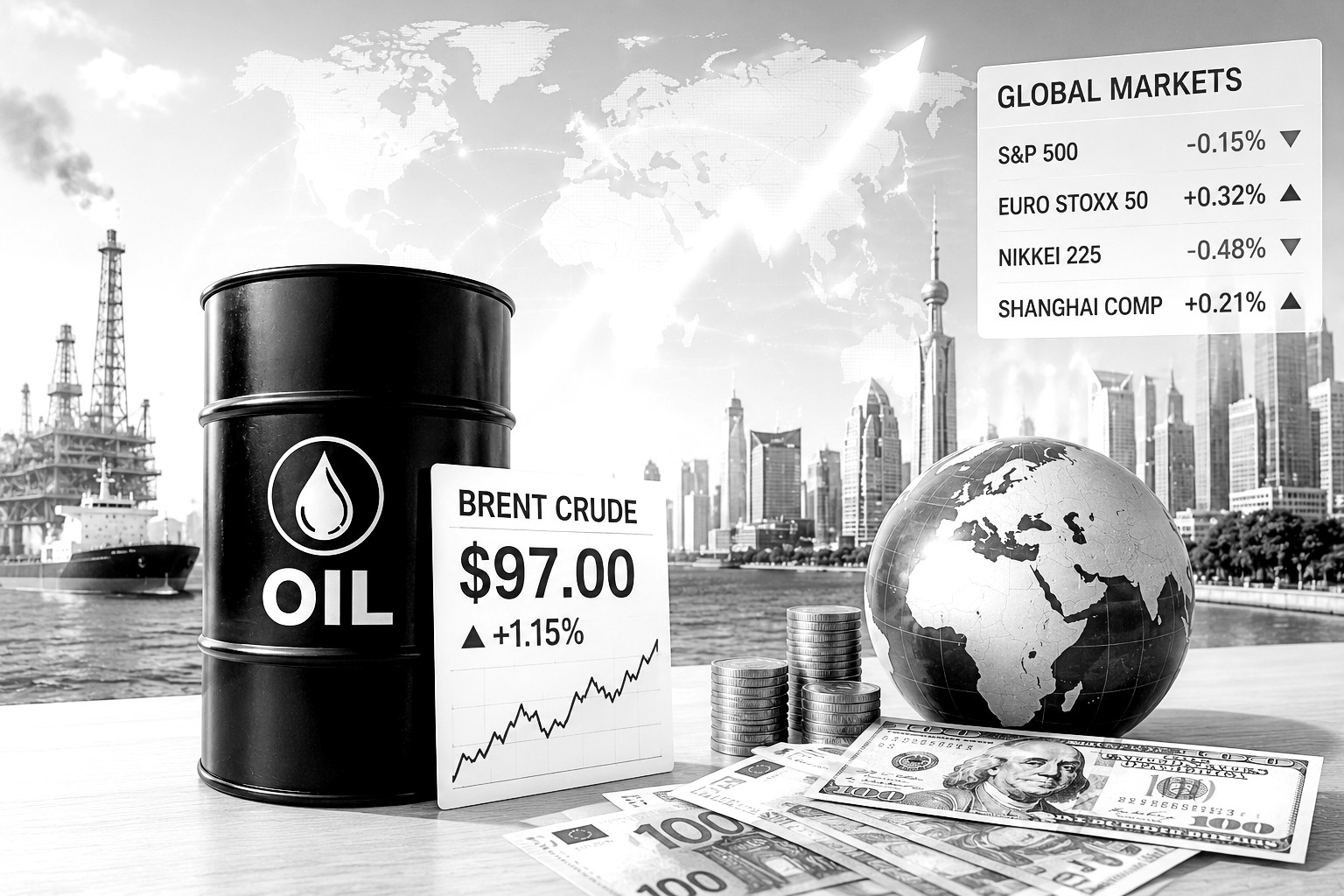
Oil prices rose on Tuesday as renewed tension around Iran and the Strait of Hormuz unsettled global markets, leaving investors caught between hopes for diplomacy and fears of another energy shock. Brent crude climbed by more than 1 per cent to around $97 a barrel, while equities traded mixed and the dollar found some support as a safe-haven currency.
Energy returns to the centre of markets
The latest move in oil matters because crude prices feed directly into transport, shipping, food production, industrial costs and inflation expectations. With Brent still elevated, investors are again asking whether central banks will have enough room to cut interest rates, or whether energy-driven inflation could force them to stay cautious for longer.
Iran risk drives the session
Markets reacted to fresh developments linked to Iran, including renewed military activity and continued uncertainty over shipping through the Strait of Hormuz. The waterway remains one of the world’s most important energy routes, and any threat to flows through the region quickly affects oil, gas, freight and insurance costs.


Stocks trade without clear direction
Global equity markets opened and traded unevenly. Some investors focused on the possibility of a diplomatic breakthrough, while others reduced risk because of the danger that energy prices could rise further. This left major stock indices mixed rather than clearly positive or negative.
Dollar gains defensive support
The US dollar received modest support as investors sought safety. In periods of geopolitical stress, the dollar often benefits from its role as the world’s main reserve currency. That move also matters for emerging markets, where a stronger dollar can increase pressure on currencies, imports and dollar-denominated debt.
Inflation risk remains the key concern
The central economic issue is not only the oil price itself, but how long it stays high. If crude remains near current levels, the effect could spread into airline costs, road transport, manufacturing, fertilisers and consumer prices. That would complicate the work of central banks already trying to balance growth, inflation and financial stability.
Why this is today’s main economic story
Tuesday’s market reaction shows how quickly geopolitics can become an economic event. Oil, currencies, bonds and equities are all responding to the same risk: whether the Iran situation eases, or whether the world faces a longer period of expensive energy and tighter financial conditions.
Newshub Editorial in Global Markets – 26 May 2026

If you have an account with ChatGPT you get deeper explanations,
background and context related to what you are reading.
Open an account:
Open an accountOil prices rose on Tuesday as renewed tension around Iran and the Strait of Hormuz unsettled global markets, leaving investors caught between hopes for diplomacy and fears of another energy shock. Brent crude climbed by more than 1 per cent to around $97 a barrel, while equities traded mixed and the dollar found some support as a safe-haven currency.
Recent Comments