
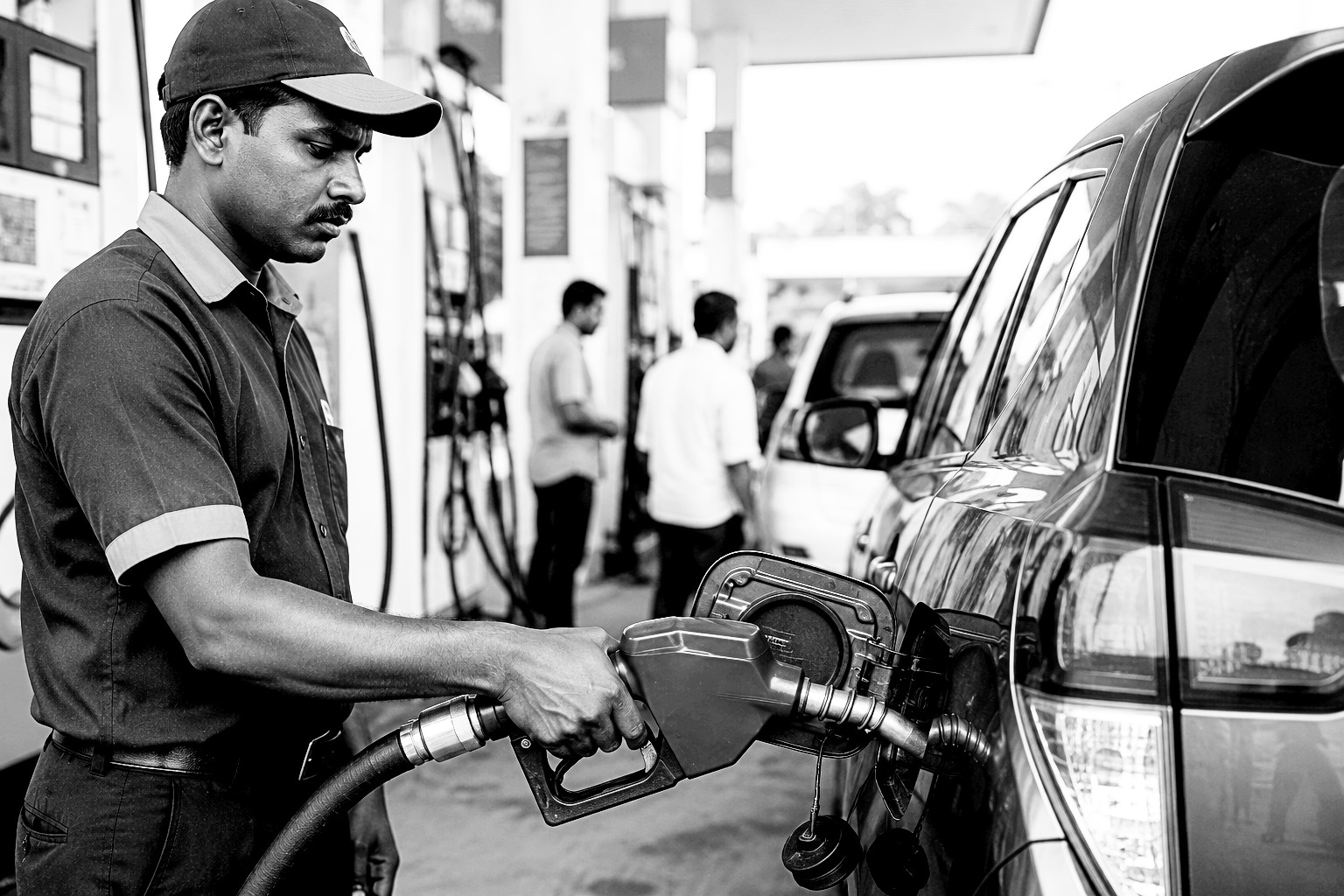
India has increased petrol and diesel prices by 90 paise per litre in the second retail fuel hike within a week, adding fresh pressure on households, transport operators and businesses already facing elevated living costs. The sharpest increases were recorded in Kolkata, where fuel prices rose more steeply than in Delhi, Mumbai and Chennai.
Fuel costs continue climbing
The latest increase reflects ongoing volatility in global energy markets, where crude oil prices remain sensitive to geopolitical tensions and supply concerns linked to shipping routes and Middle Eastern instability.
Petrol and diesel prices in India are closely watched because of their broad impact across the economy. Rising fuel costs directly affect transportation, logistics, food distribution and industrial activity, particularly in a country heavily dependent on road transport networks.


Kolkata sees steepest increases
Among India’s major metropolitan centres, Kolkata experienced the largest jump in retail fuel pricing. Analysts noted that regional taxation structures and freight dynamics often contribute to varying pump prices between Indian cities.
Consumers in Mumbai continue to face some of the country’s highest absolute fuel prices due to local taxation, while Delhi typically remains comparatively lower because of differing state-level duties.
Inflation pressures remain central
The fuel hikes come at a sensitive time for India’s economy. Although growth remains relatively strong compared with many global peers, inflation continues to pressure household budgets, particularly among lower and middle-income consumers.
Higher diesel prices are especially important because diesel remains central to freight transportation, agriculture and commercial logistics across India. Any sustained increase in diesel costs can ripple rapidly through food prices and broader consumer inflation.
Government balancing fiscal realities
Indian authorities continue to face a difficult balancing act between controlling inflation, maintaining fiscal stability and protecting public finances from excessive fuel subsidies. Global crude movements and currency fluctuations continue to influence pricing decisions.
At the same time, India’s rapidly expanding economy and growing urbanisation continue driving strong underlying fuel demand, even as the country pushes long-term investments into electric mobility, renewable energy and public transport infrastructure.
Transport sector watches closely
Logistics firms, taxi operators and delivery networks are now monitoring whether further increases may follow if global oil prices remain elevated. Businesses dependent on transportation costs may increasingly pass higher expenses onto consumers in the coming weeks.
For many Indian households, the latest price hike reinforces wider concerns surrounding affordability, inflation and the rising cost of everyday life in one of the world’s fastest-growing major economies.
Newshub Editorial in Asia – 19 May 2026

If you have an account with ChatGPT you get deeper explanations,
background and context related to what you are reading.
Open an account:
Open an accountIndia has increased petrol and diesel prices by 90 paise per litre in the second retail fuel hike within a week, adding fresh pressure on households, transport operators and businesses already facing elevated living costs. The sharpest increases were recorded in Kolkata, where fuel prices rose more steeply than in Delhi, Mumbai and Chennai.
Recent Comments