
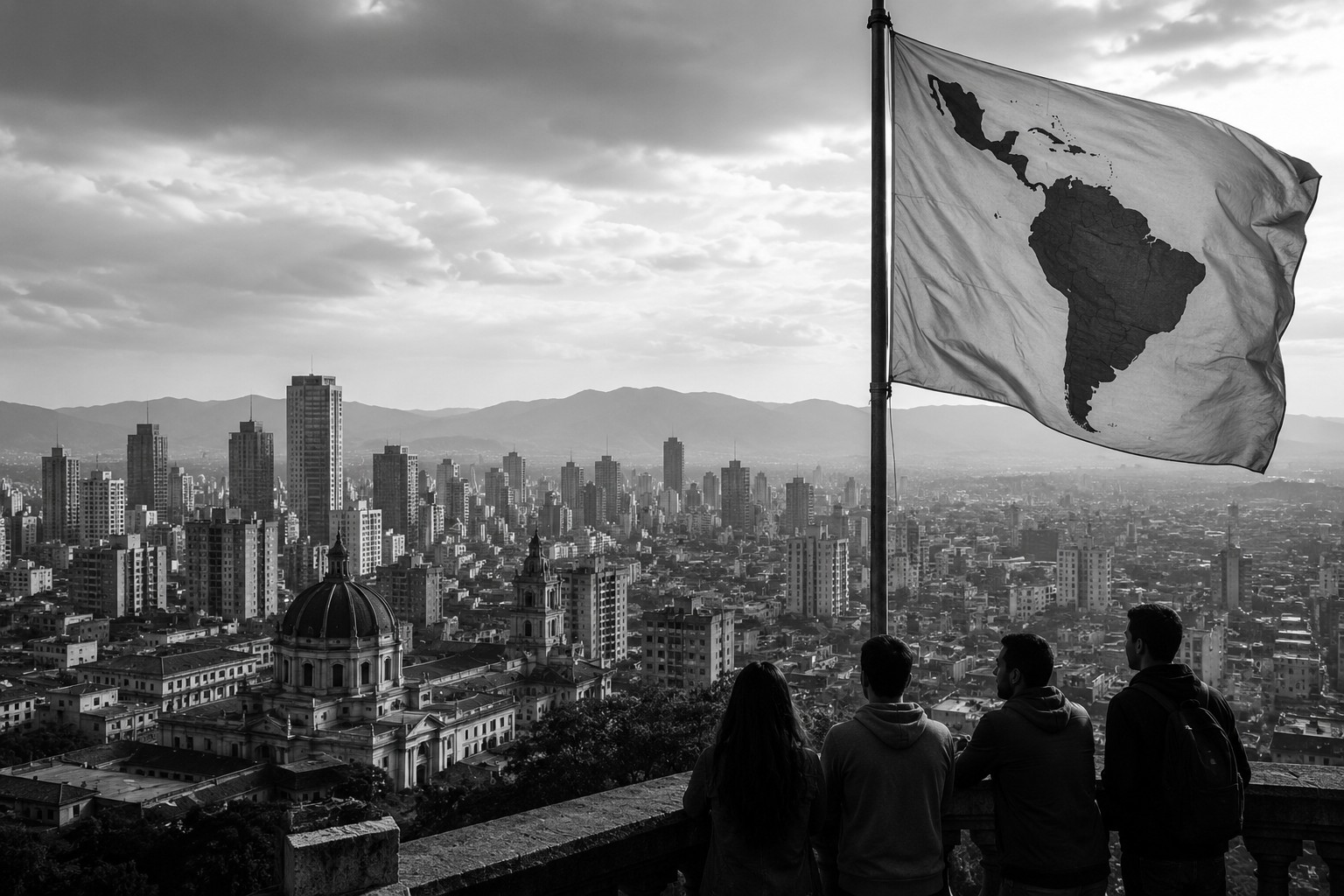
A new report from the United Nations Development Programme warns that rising democratic discontent across Latin America and the Caribbean risks undermining decades of institutional progress unless governments can deliver stronger economic growth, social mobility and public trust. The report argues that frustration with inequality, insecurity and stagnant living standards is reshaping politics across the region, but also presents an opportunity for a new development model focused on inclusion and institutional renewal.
The latest findings from the United Nations Development Programme highlight a growing disconnect between democratic expectations and the everyday realities faced by millions of citizens throughout Latin America and the Caribbean. While democratic systems remain widely supported in principle, confidence in governments, political parties and public institutions has weakened sharply over recent years.
According to the report, many voters increasingly feel that democratic systems have failed to translate political participation into tangible economic or social improvements. Persistent inequality, weak labour markets, organised crime, corruption scandals and limited public services have fuelled dissatisfaction, particularly among younger populations.

Economic frustration driving political volatility
The UNDP report notes that the region has experienced one of the weakest long-term growth trajectories in the developing world over the past decade. Economic stagnation, combined with inflationary pressures and rising living costs, has left many households vulnerable despite previous gains in poverty reduction.
This economic frustration has contributed to political fragmentation and a wave of anti-establishment sentiment across several countries. Governments from across the ideological spectrum have struggled to maintain public confidence as citizens demand faster progress on employment, healthcare, housing and security.
The report warns that democratic fatigue can create openings for institutional instability, populism or short-term policymaking that prioritises immediate political survival over sustainable development strategies.
At the same time, the UNDP stresses that the region possesses significant structural advantages, including abundant natural resources, renewable energy potential, expanding digital economies and a relatively young population. These assets, if managed effectively, could support a new phase of inclusive development.
Development seen as key to restoring trust
The report argues that rebuilding public confidence requires more than electoral reforms or institutional messaging. Instead, governments must demonstrate that democratic systems are capable of improving living standards and creating opportunities.
Key recommendations include stronger investment in education, digital infrastructure, green energy transitions and regional industrial development. The UNDP also highlights the importance of reducing informality in labour markets and improving fiscal systems to finance long-term social programmes.
Security remains another central challenge. Organised crime and violence continue to weaken state authority in several parts of the region, discouraging investment and increasing migration pressures. The report suggests that strengthening judicial systems and improving state capacity will be critical for sustaining democratic legitimacy.
Regional cooperation is also presented as an increasingly important factor. The UNDP believes that coordinated approaches to trade, migration, climate adaptation and energy policy could help Latin American and Caribbean nations improve resilience in an increasingly fragmented global economy.
A defining decade for the region
The report ultimately frames the current moment as a decisive period for the future of democracy and development in Latin America and the Caribbean. Public frustration remains high, but so does demand for institutional reform and economic opportunity.
The UNDP concludes that democratic systems can regain legitimacy if governments succeed in linking political participation with visible social and economic progress. Failure to do so, however, could deepen instability and further erode confidence in traditional institutions.
For policymakers across the region, the message is increasingly clear: democratic stability and economic development can no longer be treated as separate challenges.
Newshub Editorial in South America – May 13, 2026

If you have an account with ChatGPT you get deeper explanations,
background and context related to what you are reading.
Open an account:
Open an account
Recent Comments