
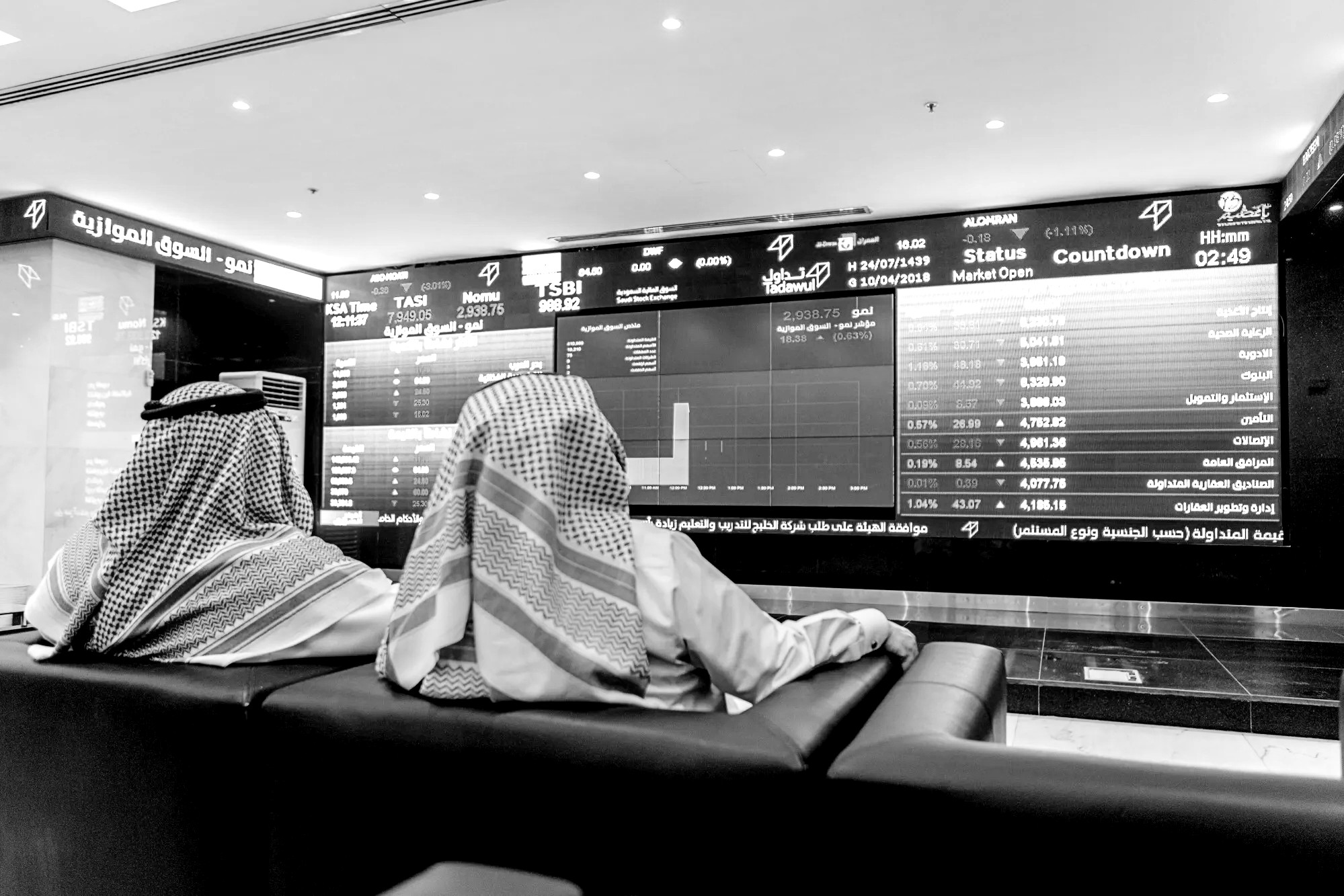
Major Arab markets opened Friday with cautious trading as investors across the Gulf and wider Middle East monitored oil prices, regional security tensions and global monetary policy developments. Energy-related shares remained central to market activity as traders continued assessing the economic implications of instability surrounding Gulf shipping routes and broader geopolitical uncertainty.
Oil-linked markets remain highly sensitive
Major Gulf exchanges including those in Saudi Arabia, United Arab Emirates and Qatar opened with mixed movement during Friday trading.
Energy companies, petrochemical producers and banking groups remained among the most actively traded sectors as investors responded to continued volatility in global oil markets.

The ongoing tensions connected to the Strait of Hormuz and broader regional military developments have increased attention on Gulf energy exports and shipping security. Rising insurance costs and concerns regarding maritime trade routes have continued influencing investor sentiment across regional exchanges.
At the same time, stronger oil prices have provided support for several Gulf economies heavily dependent on hydrocarbon revenues.
Banking and infrastructure sectors remain stable
Banking shares across the Gulf region remained relatively resilient during early trading as investors continued viewing major regional lenders as beneficiaries of strong government spending and infrastructure investment.
Construction, logistics and transport companies also attracted attention amid continuing large-scale economic diversification programmes in countries including Saudi Arabia and the UAE.
Analysts noted that Gulf economies continue attempting to reduce long-term dependence on oil revenues by expanding tourism, technology, manufacturing and renewable energy sectors.
Despite geopolitical concerns, sovereign wealth investment and state-backed infrastructure projects continue supporting broader market confidence in several Arab economies.
Global interest rates continue influencing sentiment
Investors across Arab markets also remained focused on signals from the United States Federal Reserve and global bond markets.
Higher international borrowing costs and currency pressures have continued affecting investor behaviour throughout emerging and frontier markets. However, several Gulf states remain comparatively insulated due to strong sovereign reserves and oil-export revenues.
Analysts said regional markets are likely to remain highly sensitive to developments involving energy prices, shipping security and diplomatic negotiations connected to the wider Gulf crisis.
Investors are also monitoring Chinese industrial demand and global trade activity due to their importance for long-term oil consumption forecasts.
Newshub Editorial in Asia – May 8, 2026

If you have an account with ChatGPT you get deeper explanations,
background and context related to what you are reading.
Open an account:
Open an account
Recent Comments