
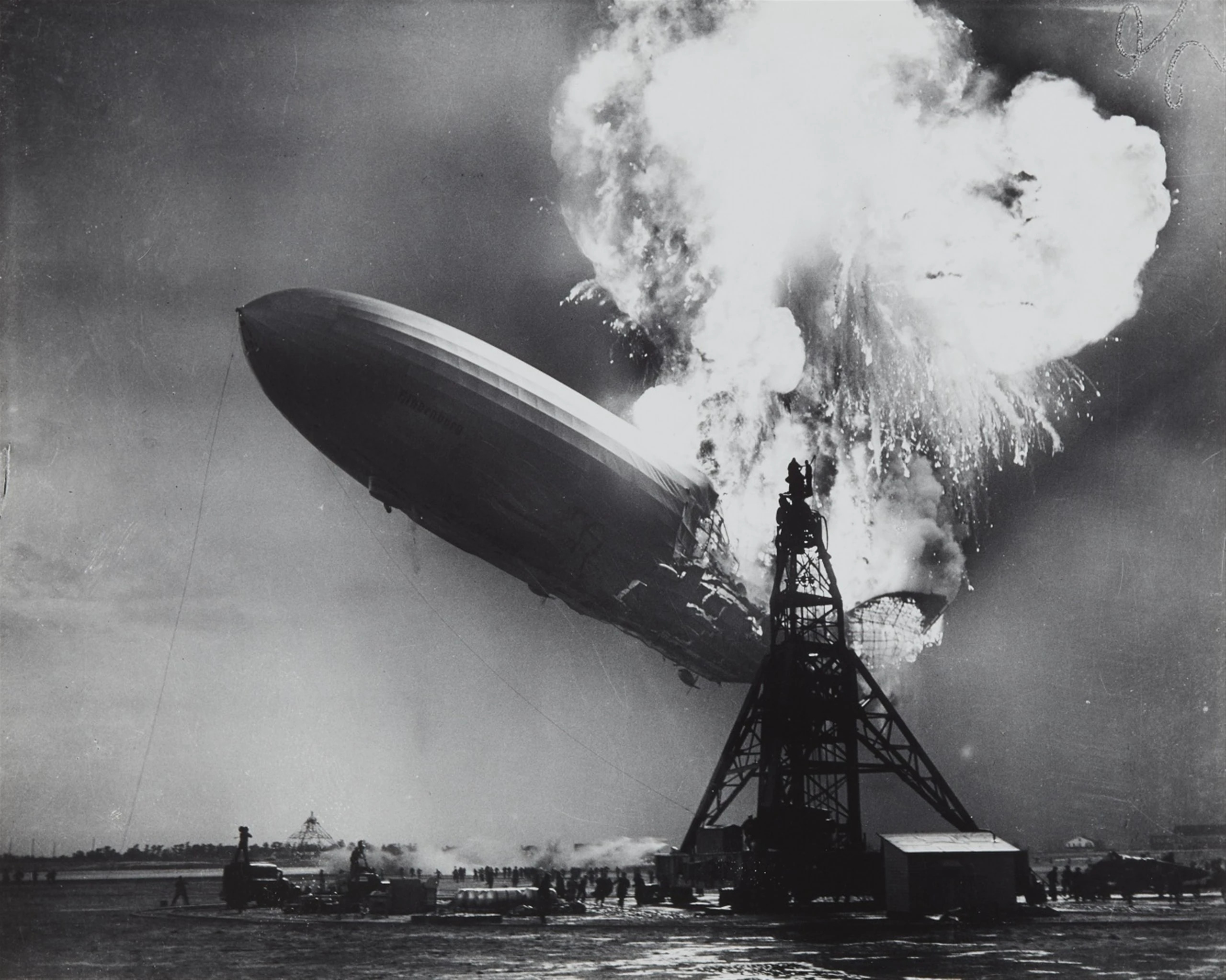
On 6 May 1937, one of the most iconic disasters in aviation history unfolded in front of horrified spectators as the German airship LZ 129 Hindenburg burst into flames while attempting to land at Naval Air Station Lakehurst. The catastrophe killed 36 people and effectively ended the era of passenger airships. Captured on film and immortalised through dramatic radio commentary, the disaster became one of the defining moments of the twentieth century.
The pride of German aviation
The Hindenburg was the largest airship ever built at the time and represented the height of luxury air travel during the interwar years. Operated by Germany’s Zeppelin company, the massive dirigible measured more than 245 metres in length and was designed to carry wealthy passengers across the Atlantic in comfort.

Named after former German president Paul von Hindenburg, the aircraft became a symbol of German technological ambition during the 1930s. Inside, passengers enjoyed dining rooms, lounges, cabins, and even a smoking room, despite the ship being filled with highly flammable hydrogen gas.
The airship had already completed numerous successful crossings between Europe and the United States before its fatal final journey in May 1937.
The final approach to Lakehurst
After departing from Frankfurt, Germany, the Hindenburg crossed the Atlantic carrying 97 people, including passengers and crew. Bad weather delayed its landing in New Jersey, but by the evening of 6 May the airship began its approach to the Lakehurst naval air station.
As ground crews prepared to secure the aircraft, flames suddenly appeared near the tail section. Within seconds, the fire spread rapidly through the hydrogen-filled structure. The enormous airship collapsed dramatically to the ground while passengers and crew attempted desperate escapes.
The entire disaster lasted less than a minute.
Of the 97 people on board, 35 were killed, along with one member of the ground crew. Many survivors suffered severe burns and injuries.
A disaster heard around the world
The destruction of the Hindenburg became one of the earliest globally recognised media disasters. Radio reporter Herbert Morrison delivered an emotional live account that included the famous words: “Oh, the humanity!”
Newsreel footage of the burning airship spread rapidly around the world and shocked audiences. The images became synonymous with disaster and technological vulnerability.
Investigators later concluded that leaking hydrogen combined with atmospheric electricity likely caused the ignition, though debate about the exact cause has continued for decades.
The end of the airship era
The Hindenburg disaster destroyed public confidence in passenger airships almost overnight. Although some rigid airships continued limited operations for a short period, the tragedy accelerated the transition toward fixed-wing aircraft for international travel.
Aeroplanes soon proved faster, safer, and more commercially practical for long-distance passenger transport.
Today, the Hindenburg remains one of the most enduring symbols of aviation tragedy and a reminder of how rapidly technological optimism can turn into catastrophe.
Newshub Editorial in North America – May 6, 2026

If you have an account with ChatGPT you get deeper explanations,
background and context related to what you are reading.
Open an account:
Open an account
Recent Comments