
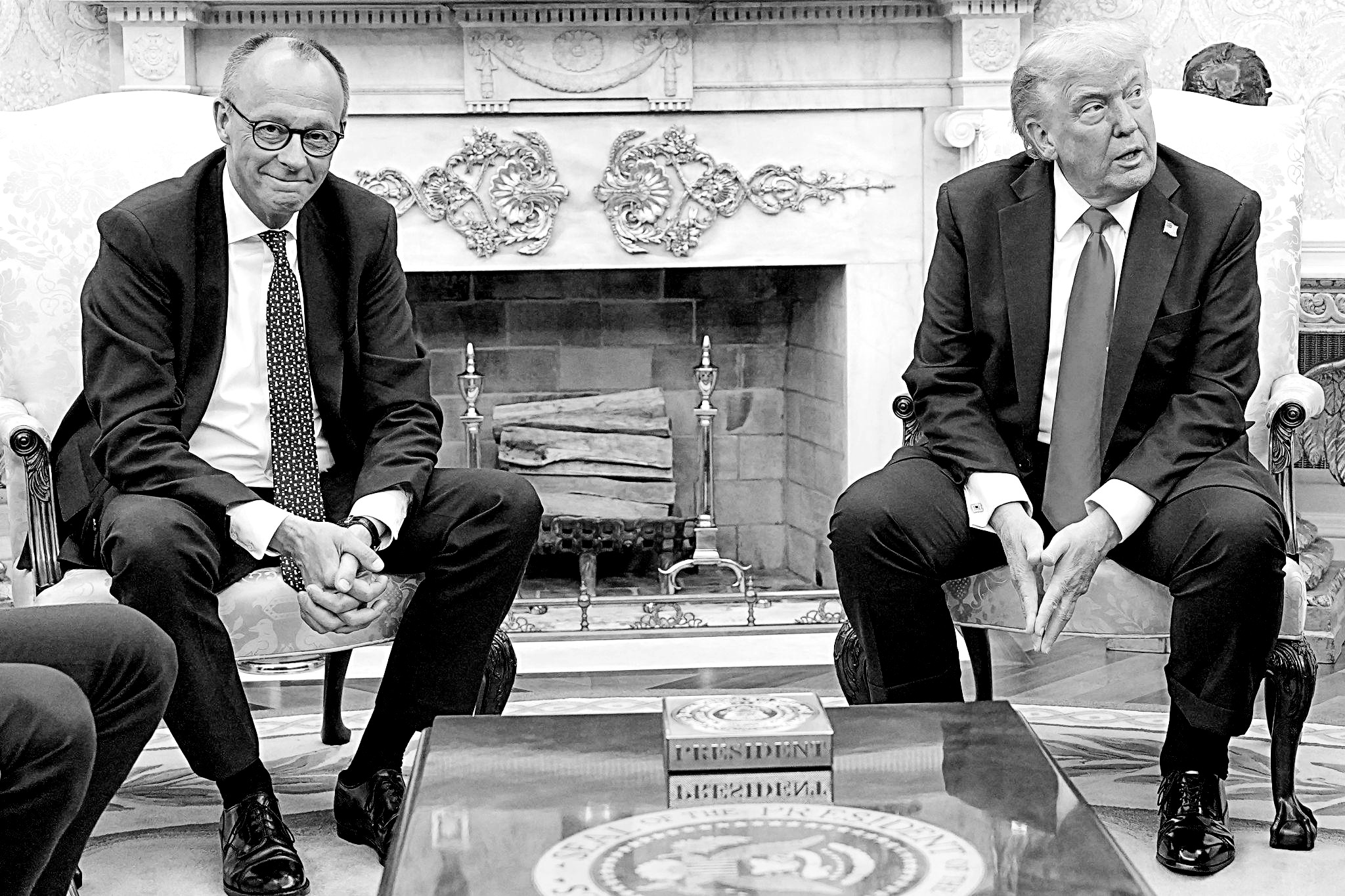
US President Donald Trump has publicly rebuked German Chancellor Friedrich Merz after the German leader accused Washington of allowing itself to be “humiliated” by Iran during the ongoing Middle East conflict. The sharp exchange highlights growing tensions between the United States and key European allies over the handling of the Iran crisis and the broader direction of Western foreign policy.
The dispute erupted after Merz criticised the Trump administration’s strategy during remarks addressing students in Germany, where he questioned Washington’s diplomatic and military approach toward Tehran.
According to reports, Merz argued that Iran had exposed weaknesses in the US position by resisting negotiations and prolonging the confrontation despite sustained American pressure. He also expressed concern about the absence of a clear long-term strategy for resolving the conflict.

Trump responded forcefully on social media, claiming that the German chancellor “doesn’t know what he’s talking about” and defending his administration’s handling of the crisis. He further accused critics in Europe of underestimating the threat posed by Iran’s nuclear ambitions.
Transatlantic tensions deepen
The public disagreement reflects increasingly visible divisions between Washington and several European governments regarding the conflict with Iran.
Germany has become more vocal in recent weeks as economic pressure from energy instability and disruptions linked to the Strait of Hormuz continue affecting European markets. Merz reportedly warned that the war risked evolving into another prolonged geopolitical crisis comparable to earlier Western interventions in Iraq and Afghanistan.
European leaders have also expressed frustration over what they view as limited consultation from Washington before major military escalations involving Iran and regional allies.
At the same time, the Trump administration has maintained that aggressive pressure on Tehran remains necessary to prevent Iran from advancing its nuclear capabilities and expanding regional influence.
Iran conflict strains Western alliance
The disagreement comes amid broader uncertainty surrounding the direction of the Iran conflict, which has increasingly affected global energy markets, shipping routes and diplomatic relations inside NATO.
The closure and instability surrounding the Strait of Hormuz have raised concerns across Europe due to the region’s dependence on Middle Eastern energy supplies. Germany, in particular, has faced mounting economic pressure from higher energy costs and industrial uncertainty.
Analysts said the exchange between Trump and Merz signals a potentially widening divide between the United States and Europe over strategic priorities, military escalation and diplomatic engagement in the Middle East.
Despite the criticism, German officials continue to insist that Iran must not acquire nuclear weapons, while also advocating for stronger diplomatic coordination between allies.
Political implications ahead
The confrontation also carries domestic political significance on both sides of the Atlantic.
Trump has continued positioning himself as a strong national security leader ahead of the next phase of the US political cycle, while Merz faces pressure within Germany over the economic consequences of prolonged instability in the Middle East.
Foreign policy observers noted that public disagreements between Washington and Berlin have become increasingly common in recent years, particularly on issues involving Ukraine, defence spending, energy security and relations with China.
As the Iran crisis continues, markets and diplomats will closely monitor whether tensions between Western allies deepen further or evolve into renewed efforts toward coordinated diplomacy.
Newshub Editorial in North America – 29 April 2026

If you have an account with ChatGPT you get deeper explanations,
background and context related to what you are reading.
Open an account:
Open an accountUS President Donald Trump has publicly rebuked German Chancellor Friedrich Merz after the German leader accused Washington of allowing itself to be “humiliated” by Iran during the ongoing Middle East conflict. The sharp exchange highlights growing tensions between the United States and key European allies over the handling of the Iran crisis and the broader direction of Western foreign policy.
Recent Comments