
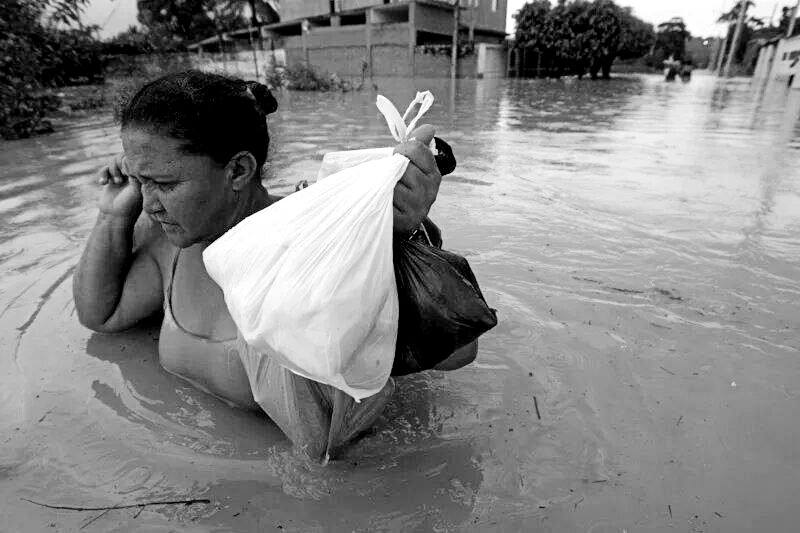
Brazil is once again confronting the devastating consequences of extreme weather after a series of deadly floods renewed concerns about climate vulnerability, urban planning and social inequality. The latest disaster marks the third major flooding catastrophe in as many years, with researchers and humanitarian organisations warning that women are often among the most vulnerable — and frequently “the first to die” — when climate-driven disasters strike.
Severe flooding across parts of Brazil has destroyed homes, displaced thousands of residents and overwhelmed local infrastructure, particularly in poorer and densely populated communities vulnerable to landslides and rising water levels.
Emergency services continued rescue and recovery operations as authorities assessed damage to roads, bridges, electricity networks and housing districts affected by torrential rainfall.

Climate scientists have increasingly linked the intensity and frequency of such disasters to broader global warming trends, which are amplifying extreme rainfall events across South America.
Women disproportionately affected
Humanitarian experts and researchers say natural disasters often expose deep social inequalities, with women and children facing heightened risks during evacuations and recovery periods.
In Brazil, many women living in flood-prone areas are primary caregivers responsible for children, elderly relatives and household survival during emergencies. This can delay evacuation and increase exposure to dangerous conditions when flooding escalates rapidly.
Aid organisations also note that women frequently have reduced access to transportation, financial resources and emergency support systems compared with wealthier segments of the population.
Researchers studying previous disasters in Brazil and other developing economies have warned that climate crises often magnify existing inequalities tied to income, housing quality and social protection systems.
Urban growth and infrastructure pressures
Rapid urbanisation has intensified flood risks across several Brazilian cities, particularly where informal housing developments have expanded into unstable hillsides and flood-prone zones.
Experts argue that inadequate drainage systems, deforestation and weak urban planning have compounded the impact of increasingly severe rainfall patterns.
Brazil has faced repeated climate-related emergencies in recent years, including deadly floods in Rio Grande do Sul, Bahia and São Paulo state. Each event has intensified calls for stronger infrastructure investment, disaster preparedness and climate adaptation measures.
The latest flooding disaster has once again raised questions over whether existing emergency systems are equipped to handle more frequent extreme weather events linked to climate change.
Economic and political consequences
The repeated disasters are also creating mounting economic pressure for Brazil, affecting agriculture, logistics, housing markets and public finances.
Insurance losses and reconstruction costs continue to rise, while local governments face growing demands for climate-resilient infrastructure and social protection programmes.
Environmental groups are urging Brazilian authorities to accelerate flood prevention initiatives, improve evacuation systems and strengthen protections for vulnerable communities.
At the same time, climate researchers warn that extreme weather events are likely to become increasingly common across Latin America as global temperatures continue rising.
The situation in Brazil is now being viewed internationally as part of a broader global pattern in which climate change is increasingly intersecting with inequality, urbanisation and public health risks.
Newshub Editorial in South America – 29 April 2026

If you have an account with ChatGPT you get deeper explanations,
background and context related to what you are reading.
Open an account:
Open an account
Recent Comments