
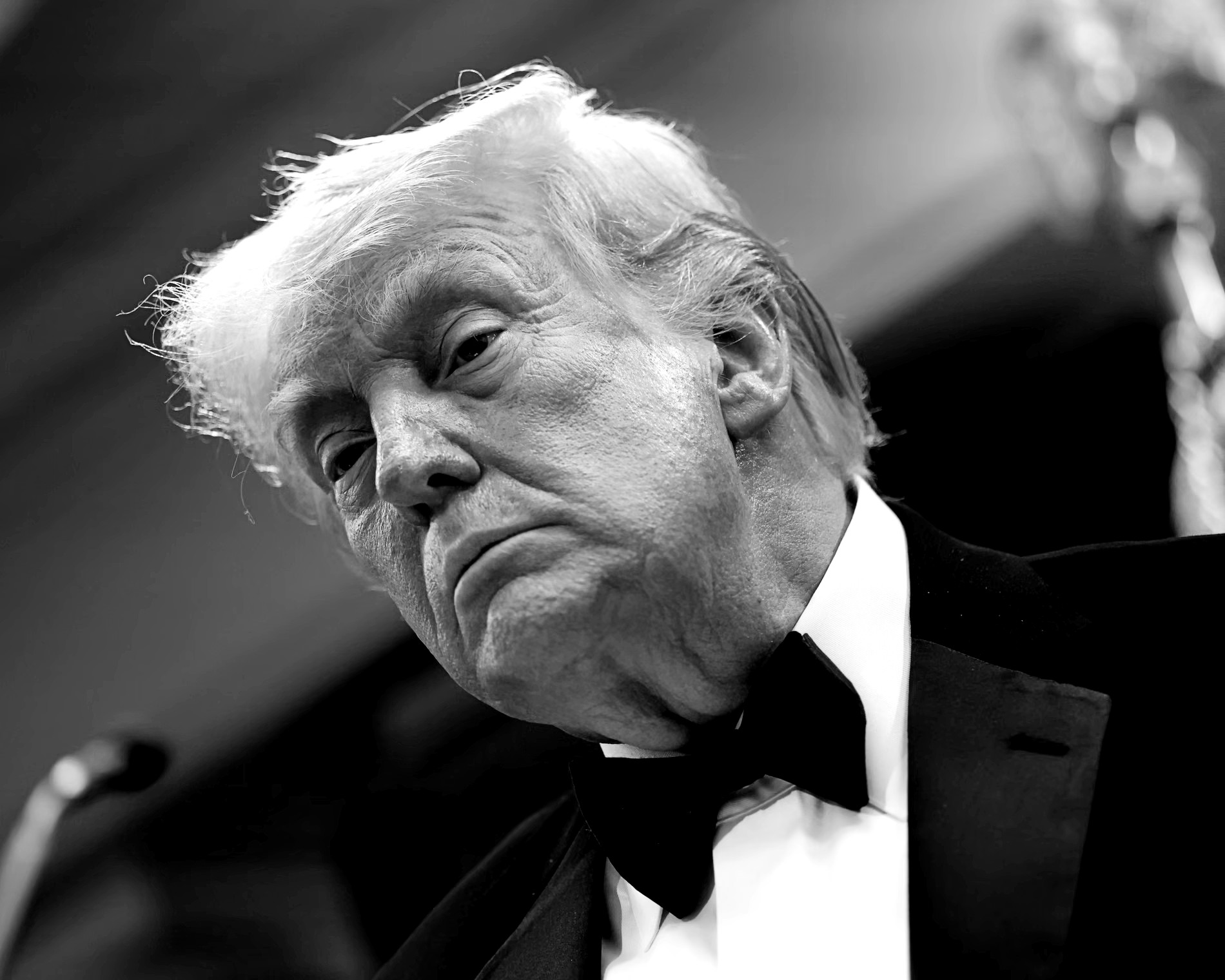
The Donald Trump has described journalists as “horrible people” following a heated exchange with Norah O’Donnell, who challenged him with excerpts from a suspected gunman’s alleged manifesto during a televised interview.
Confrontation during televised interview
The incident unfolded during a segment aired by CBS News, where O’Donnell presented passages purportedly linked to the suspect in a recent shooting. The excerpts were used to question the president on issues surrounding political rhetoric, extremism and the broader climate of violence.
Trump responded sharply, rejecting the framing of the question and criticising the media’s role in amplifying such material. He accused journalists of bias and sensationalism, arguing that coverage of manifestos risks giving undue attention to perpetrators.

Escalating tensions with the press
The remarks are the latest in a long-running pattern of confrontation between Trump and major media organisations. Throughout his political career, he has frequently criticised outlets he views as hostile, often questioning their credibility and motives.
In this instance, the president reiterated claims that sections of the press deliberately provoke controversy, stating that journalists were “horrible people” for raising the manifesto in the context of the interview. The comment has since drawn mixed reactions across political and media circles.
Debate over reporting on violent acts
The exchange has reignited a broader debate within journalism about how to handle material linked to violent attackers. Many news organisations have adopted more cautious approaches in recent years, limiting the publication of manifestos to avoid glorifying individuals responsible for attacks.
Critics of Trump’s remarks argue that questioning political leaders on such issues is a core function of the press, particularly when public safety and ideological extremism are involved. Supporters, however, contend that media coverage can unintentionally contribute to notoriety for perpetrators.
Political and public response
תגובות from lawmakers and commentators have been divided along familiar lines. Some have defended O’Donnell’s line of questioning as necessary and legitimate, while others have echoed concerns about the media’s handling of sensitive content.
The White House has not issued a detailed follow-up beyond the president’s remarks, but the episode underscores ongoing friction between the administration and the press at a time of heightened political sensitivity.
Implications for media relations
The confrontation highlights the increasingly adversarial relationship between political leadership and major news organisations in the United States. As coverage of security incidents intersects with political discourse, such exchanges are likely to remain a recurring feature of the media landscape.
For both sides, the challenge lies in balancing accountability, responsible reporting and public trust—an equilibrium that continues to be tested in high-profile moments like this.
Newshub Editorial in North America – April 27, 2026

If you have an account with ChatGPT you get deeper explanations,
background and context related to what you are reading.
Open an account:
Open an account
Recent Comments