
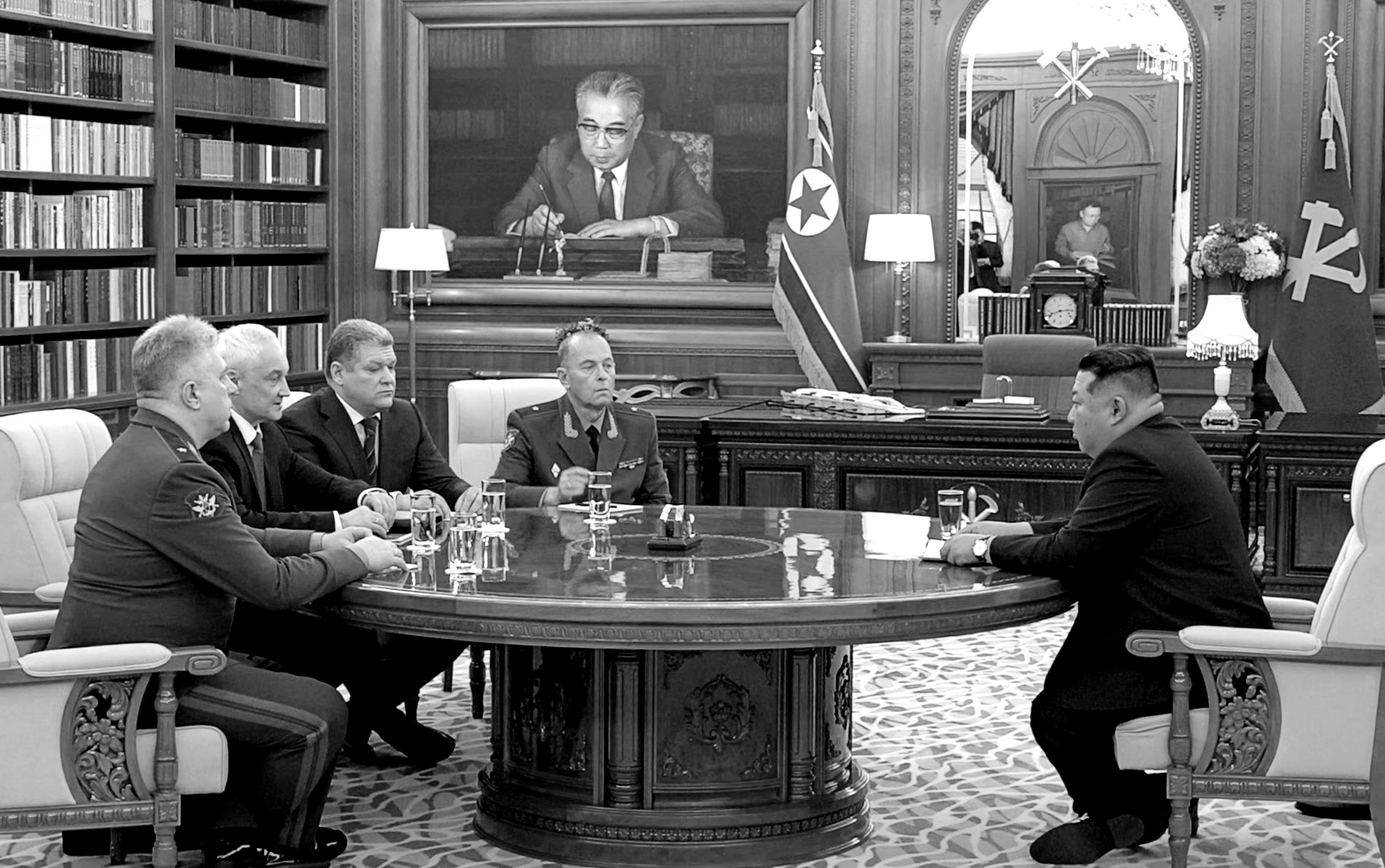
Kim Jong-un has moved to strengthen military cooperation with Russia, publicly praising soldiers said to have been involved in fighting in the Kursk region, signalling a further deepening of strategic alignment between Pyongyang and Moscow.
Symbolic recognition with strategic undertones
State media in North Korea reported that Kim commended personnel linked to operations in Kursk, framing their actions as a demonstration of solidarity with Russia. While details remain limited, the acknowledgement is widely interpreted as a political gesture reinforcing bilateral ties amid ongoing geopolitical tensions.
The move underscores a growing pattern of cooperation, with North Korea positioning itself as a supportive partner to Russia in the context of its broader confrontation with Western nations.

Expanding military and political coordination
Relations between Pyongyang and Moscow have intensified in recent years, with increased exchanges covering defence, technology and economic cooperation. Analysts point to mutual strategic interests: Russia seeks additional support and alternative partnerships, while North Korea benefits from political backing and potential access to resources and expertise.
Kim’s remarks highlight a shift toward more overt alignment, moving beyond diplomatic engagement into symbolic military cooperation narratives.
International concerns and sanctions pressure
The development is likely to raise concerns among Western governments and regional actors, particularly regarding the potential implications for sanctions regimes and security dynamics in East Asia.
North Korea remains subject to extensive international sanctions over its nuclear and missile programmes, while Russia faces its own set of restrictions tied to ongoing conflicts. Closer ties between the two could complicate enforcement efforts and reshape existing geopolitical calculations.
Regional security implications
The strengthening relationship adds another layer of complexity to an already volatile security environment. Neighbouring countries, including South Korea and Japan, are closely monitoring developments, particularly any indications of technology transfers or expanded military cooperation.
Such moves could influence defence postures across the region and contribute to a further polarisation of global alliances.
A signal of shifting alliances
Kim’s public endorsement of troops associated with Kursk reflects more than symbolic recognition—it signals a broader realignment in international relations. As geopolitical tensions persist, partnerships such as that between North Korea and Russia are likely to play an increasingly visible role in shaping the global security landscape.
The trajectory of this relationship will be closely watched, particularly for its potential impact on both regional stability and the wider balance of power.
Newshub Editorial in Asia – April 27, 2026

If you have an account with ChatGPT you get deeper explanations,
background and context related to what you are reading.
Open an account:
Open an account
Recent Comments