
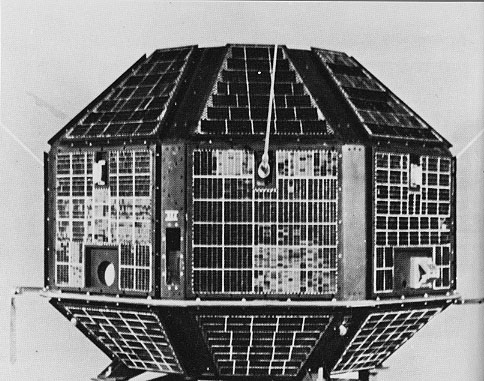
On 19 April 1975, India entered the space age with the launch of Aryabhata, its first uncrewed Earth satellite, built domestically and launched from the Soviet Union. The mission marked a defining moment in India’s scientific and technological trajectory, laying the groundwork for what would later become one of the world’s most dynamic space programmes.
A historic collaboration with the Soviet Union
The Aryabhata satellite was launched aboard a Soviet Kosmos-3M rocket from the Kapustin Yar launch site, under a cooperation agreement between India and the Soviet Union. At the time, India lacked its own launch capability, making international collaboration essential. The satellite was named after the ancient Indian mathematician Aryabhata, reflecting a deliberate link between historical scientific heritage and modern technological ambition.
Weighing approximately 360 kilograms, Aryabhata was designed and built by the Indian Space Research Organisation (ISRO), which had been established just six years earlier. The mission demonstrated India’s ability to design, fabricate, and test a functional satellite, even as it relied on foreign launch infrastructure.

Scientific goals and early challenges
Aryabhata was primarily intended for scientific experiments in X-ray astronomy, aeronomy, and solar physics. The satellite featured a polyhedral structure covered with solar panels, designed to generate electrical power for its instruments.
However, the mission encountered technical issues shortly after launch. A power failure led to the loss of data transmission within a few days. Despite this setback, the satellite remained in orbit for several years, and the mission was widely regarded as a success in terms of engineering achievement and institutional learning.
The experience gained from Aryabhata proved invaluable. It enabled ISRO to refine its satellite design capabilities and operational procedures, setting the stage for more advanced missions in the decades that followed.
Foundation for a global space player
The launch of Aryabhata is now seen as the starting point of India’s evolution into a major spacefaring nation. Over the years, ISRO has developed its own launch vehicles, including the Polar Satellite Launch Vehicle (PSLV) and the Geosynchronous Satellite Launch Vehicle (GSLV), significantly reducing reliance on foreign partners.
India’s space programme has since expanded into areas such as planetary exploration, satellite navigation, and commercial launch services. Missions like Chandrayaan (lunar exploration) and Mangalyaan (Mars orbiter) have attracted global attention for their cost efficiency and technical sophistication.
Strategic and economic implications
Aryabhata’s legacy extends beyond science. It helped establish a national framework for high-technology development, contributing to advancements in telecommunications, weather forecasting, and remote sensing—sectors that have had tangible economic and societal benefits.
Today, India’s space industry is increasingly integrated into global supply chains, with growing private sector participation and international partnerships. The country’s ability to deliver low-cost, reliable space solutions has positioned it as a competitive player in the commercial space market.
From a modest satellite launched with foreign assistance, India has built a robust and independent space ecosystem. Aryabhata remains a symbol of that journey—an early experiment that catalysed decades of innovation and strategic progress.
Newshub Editorial in Asia – April 19, 2026

If you have an account with ChatGPT you get deeper explanations,
background and context related to what you are reading.
Open an account:
Open an account
Recent Comments