
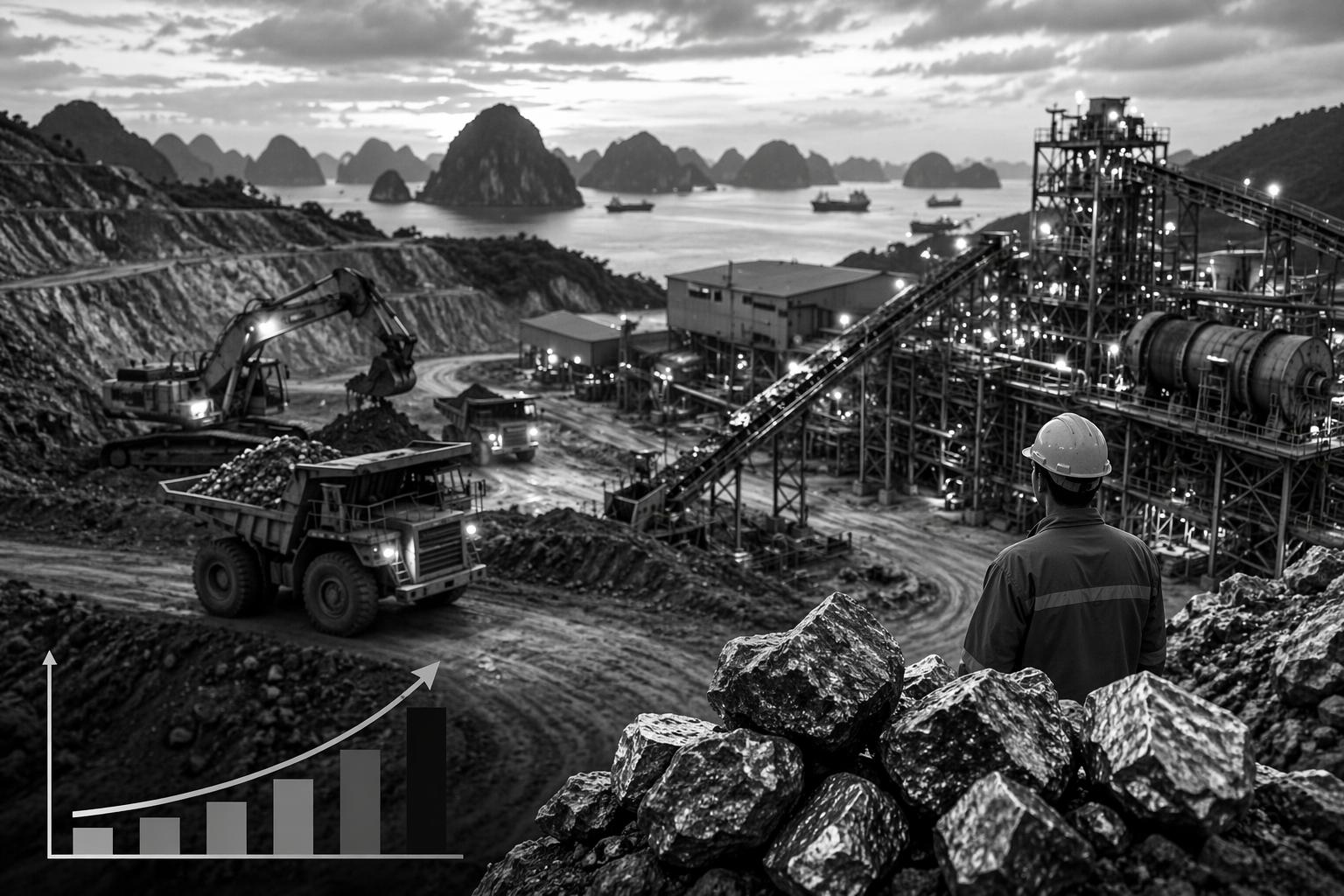
Vietnam is rapidly positioning itself as a key player in the global rare earths market, as Western and Asian economies seek alternatives to China’s dominant supply. Recent government moves to accelerate mining licences and attract foreign investment signal a strategic pivot that could reshape critical mineral supply chains over the next decade.
Strategic resources gain geopolitical weight
Rare earth elements, essential for electric vehicles, wind turbines, semiconductors and defence systems, have become one of the most strategically sensitive commodities in the global economy. China currently dominates both extraction and processing, controlling a substantial share of global supply. This concentration has created structural vulnerabilities for countries dependent on imports, particularly as geopolitical tensions intensify. Vietnam, which holds one of the largest known reserves of rare earth minerals, is now stepping forward to capitalise on this imbalance.
Policy reforms open the door
The Vietnamese government has introduced a series of reforms designed to unlock the sector’s potential. Licensing procedures are being streamlined, while regulatory frameworks are being updated to improve transparency and investor confidence. A key focus lies in encouraging joint ventures with international partners capable of delivering advanced processing capabilities. Historically, Vietnam’s role has been limited to raw extraction, but the current strategy aims to extend into refining and higher-value manufacturing.

Foreign investors circle opportunities
Interest from international investors is accelerating. Companies from Japan, South Korea and the United States are actively exploring partnerships to secure access to Vietnam’s rare earth resources. These discussions include plans to develop processing facilities and establish long-term supply agreements. For foreign firms, the appeal lies in diversifying supply chains away from China while gaining exposure to one of Southeast Asia’s fastest-growing industrial economies.
Economic upside beyond mining
The potential impact extends well beyond the mining sector. A fully integrated rare earth supply chain would strengthen Vietnam’s position in high-tech manufacturing, particularly in electronics, clean energy components and advanced industrial systems. This development aligns with the country’s broader ambition to evolve into a regional manufacturing hub, attracting multinational corporations seeking stable and scalable production environments outside China.
Challenges remain on infrastructure and governance
Despite strong momentum, several constraints remain. Rare earth processing is environmentally complex and requires significant capital investment, as well as robust regulatory oversight. Vietnam must address infrastructure gaps, including energy supply and logistics, while also developing a skilled workforce capable of supporting advanced industrial processes. Ensuring that environmental standards keep pace with expansion will be critical for maintaining long-term investor confidence.
A pivotal moment for emerging markets
Vietnam’s strategic push into rare earths reflects a broader shift across emerging markets, where natural resources are increasingly viewed as catalysts for industrial upgrading rather than simple export commodities. As global supply chains continue to fragment and realign, countries that combine resource availability with clear policy direction and international partnerships are positioned to capture a disproportionate share of future growth.
Newshub Editorial in Asia – 17 April 2026

If you have an account with ChatGPT you get deeper explanations,
background and context related to what you are reading.
Open an account:
Open an accountVietnam is rapidly positioning itself as a key player in the global rare earths market, as Western and Asian economies seek alternatives to China’s dominant supply. Recent government moves to accelerate mining licences and attract foreign investment signal a strategic pivot that could reshape critical mineral supply chains over the next decade.
Recent Comments