
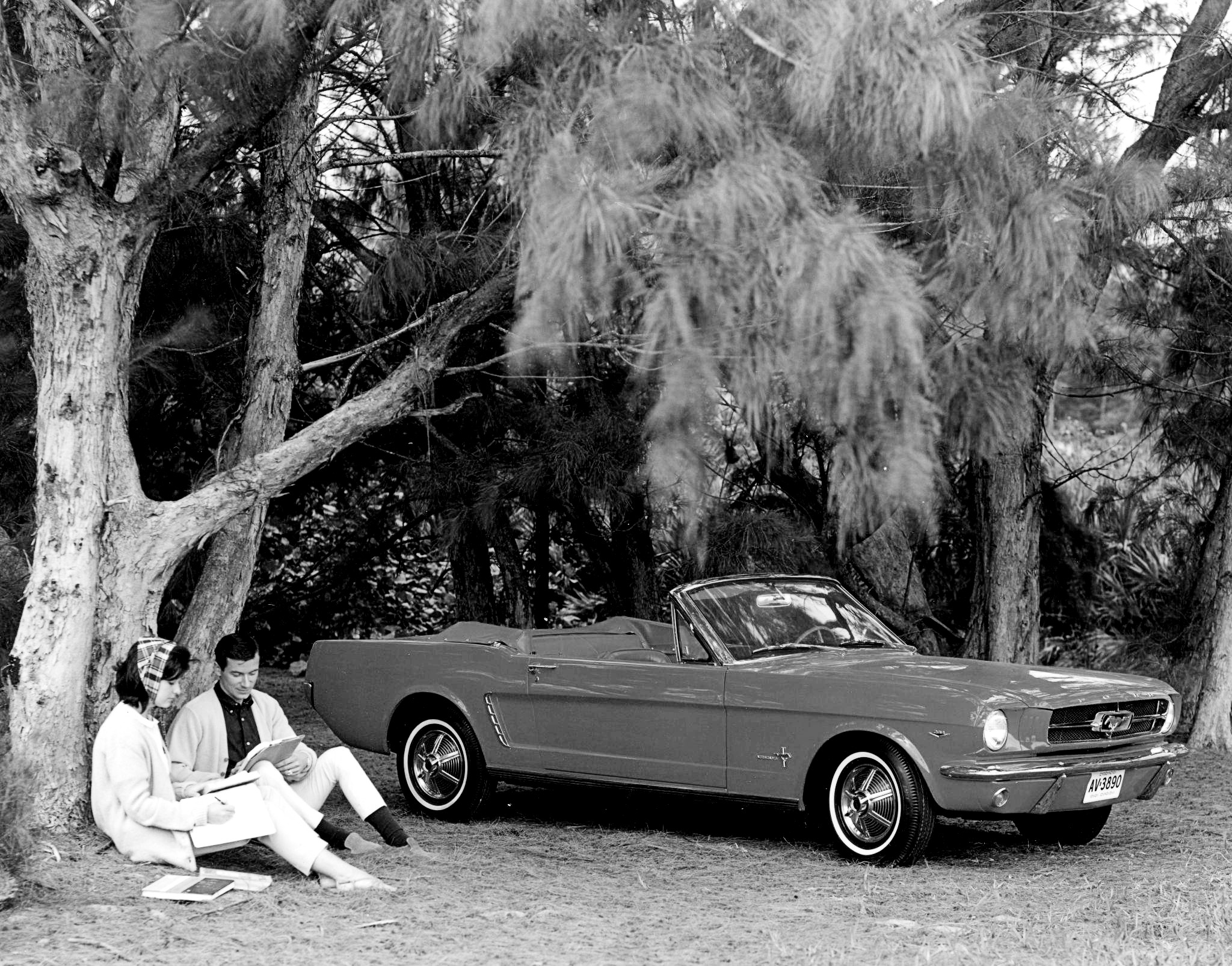
On this day in 1964, visitors to the New York World’s Fair witnessed one of the most innovative automotive launches in history, as the newly unveiled Ford Mustang carried passengers through the futuristic Magic Skyway ride, designed by Walt Disney.
A launch unlike any other
Rather than relying on traditional showroom displays or advertising campaigns, Ford chose to introduce its new model through an immersive experience. The Magic Skyway attraction transported visitors along a 12-minute journey spanning roughly half a mile, blending entertainment, storytelling, and engineering. Passengers sat inside Mustang convertibles as they were guided along a track through carefully curated scenes depicting Earth’s history—from prehistoric dinosaurs to a speculative vision of the future.
This approach represented a radical departure from conventional product launches. By placing potential customers directly inside the vehicle, Ford effectively allowed them to experience the Mustang not as a static object, but as part of a narrative about progress, mobility, and innovation.

The Disney effect on industrial storytelling
The involvement of Walt Disney was central to the success of the concept. Already renowned for transforming entertainment through Disneyland and cinematic storytelling, Disney brought a level of theatrical sophistication rarely seen in industrial exhibitions. The ride combined animatronics, set design, and controlled movement to create a seamless and memorable experience.
For Ford, this collaboration was more than a marketing exercise—it was a strategic alignment with a cultural force capable of shaping public perception. The Magic Skyway positioned the Mustang within a broader story about the future of transportation, reinforcing its identity as a forward-looking, aspirational product.
Immediate commercial success
The impact of the launch was both immediate and measurable. On its first day alone, approximately 22,000 Mustang units were sold, an extraordinary figure that underscored the effectiveness of Ford’s unconventional strategy. Demand continued to surge in the following months, quickly establishing the Mustang as one of the most successful automotive introductions in modern history.
The vehicle itself played a crucial role in sustaining this momentum. With its sporty design, relatively affordable pricing, and strong performance credentials, the Mustang appealed to a broad demographic, particularly younger buyers seeking style and individuality.
From fairground attraction to cultural icon
What began as a bold marketing experiment soon evolved into a defining moment in automotive history. The Mustang’s association with the New York World’s Fair and the Magic Skyway contributed to its mythos, embedding it within the cultural landscape of 1960s America.
Over time, the model became synonymous with freedom, performance, and American engineering. Its enduring legacy is reflected in decades of continuous production, numerous design evolutions, and a global fan base that spans generations.
A blueprint for experiential marketing
Looking back, the 1964 launch offers valuable insights into the power of experiential marketing. By integrating entertainment, technology, and product demonstration into a single cohesive experience, Ford created a template that continues to influence modern brand strategies.
The success of the Mustang at the World’s Fair demonstrates that innovation in presentation can be just as impactful as innovation in product design—particularly when it captures the imagination of the public on a grand scale.
Newshub Editorial in North America – April 17, 2026

If you have an account with ChatGPT you get deeper explanations,
background and context related to what you are reading.
Open an account:
Open an account
Recent Comments