
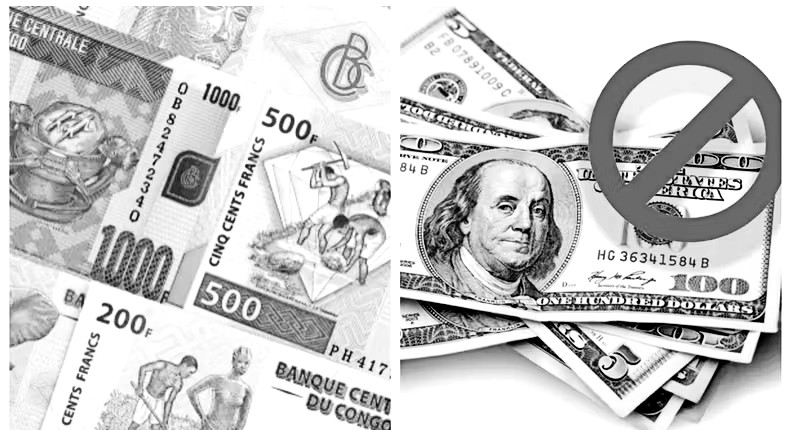
The government of the Democratic Republic of the Congo has announced a ban on cash payments in US dollars, marking a high-stakes attempt to reassert control over its monetary system and reduce the economy’s long-standing dependence on foreign currency. The move represents one of the most significant policy shifts in the country’s financial framework in recent years.
A decisive move against dollarisation
Dollarisation has been deeply embedded in the Congolese economy for decades, with businesses and consumers widely using US dollars for everyday transactions, savings and pricing. Authorities now aim to reverse this trend by requiring that cash payments be conducted in the local currency, the Congolese franc.
The policy is designed to strengthen monetary sovereignty, giving the central bank greater control over liquidity, inflation and exchange rate dynamics. Officials argue that excessive reliance on foreign currency has limited the effectiveness of domestic economic policy.


Stabilising the franc and restoring confidence
At the core of the reform is an effort to stabilise the Congolese franc and rebuild confidence in the national currency. By reducing demand for dollar cash transactions, policymakers hope to support the franc’s value and improve the transmission of monetary policy.
However, achieving this objective will depend heavily on public trust. In economies with a history of inflation and currency volatility, shifting behaviour away from hard currency can prove challenging.
Impact on businesses and consumers
The immediate impact is expected to be felt across the informal sector, where dollar cash transactions are particularly common. Traders, retailers and service providers will need to adjust pricing and payment systems, potentially creating short-term disruption.
For larger businesses, the transition may be more manageable, especially where digital or banking infrastructure is already in place. Nevertheless, concerns remain about enforcement and the risk of parallel markets emerging if demand for dollars persists.
Balancing reform with economic realities
Economists note that de-dollarisation policies carry both potential benefits and significant risks. While greater monetary control can support long-term stability, abrupt restrictions may undermine confidence if not accompanied by credible macroeconomic management.
Key factors will include inflation control, fiscal discipline and the availability of reliable banking services. Without these, attempts to force a shift away from dollar usage could face resistance from both businesses and consumers.
A broader strategy for economic sovereignty
The move forms part of a wider effort by the Congolese government to strengthen economic sovereignty and reduce external vulnerabilities. By promoting the use of the national currency, authorities aim to build a more resilient financial system capable of supporting sustainable growth.
The success of the policy will depend on execution. If managed effectively, it could mark a turning point in the country’s economic trajectory. If not, it risks adding volatility to an already complex financial environment.
Newshub Editorial in Africa – 14 April 2026

If you have an account with ChatGPT you get deeper explanations,
background and context related to what you are reading.
Open an account:
Open an accountThe government of the Democratic Republic of the Congo has announced a ban on cash payments in US dollars, marking a high-stakes attempt to reassert control over its monetary system and reduce the economy’s long-standing dependence on foreign currency. The move represents one of the most significant policy shifts in the country’s financial framework in recent years.
Recent Comments