
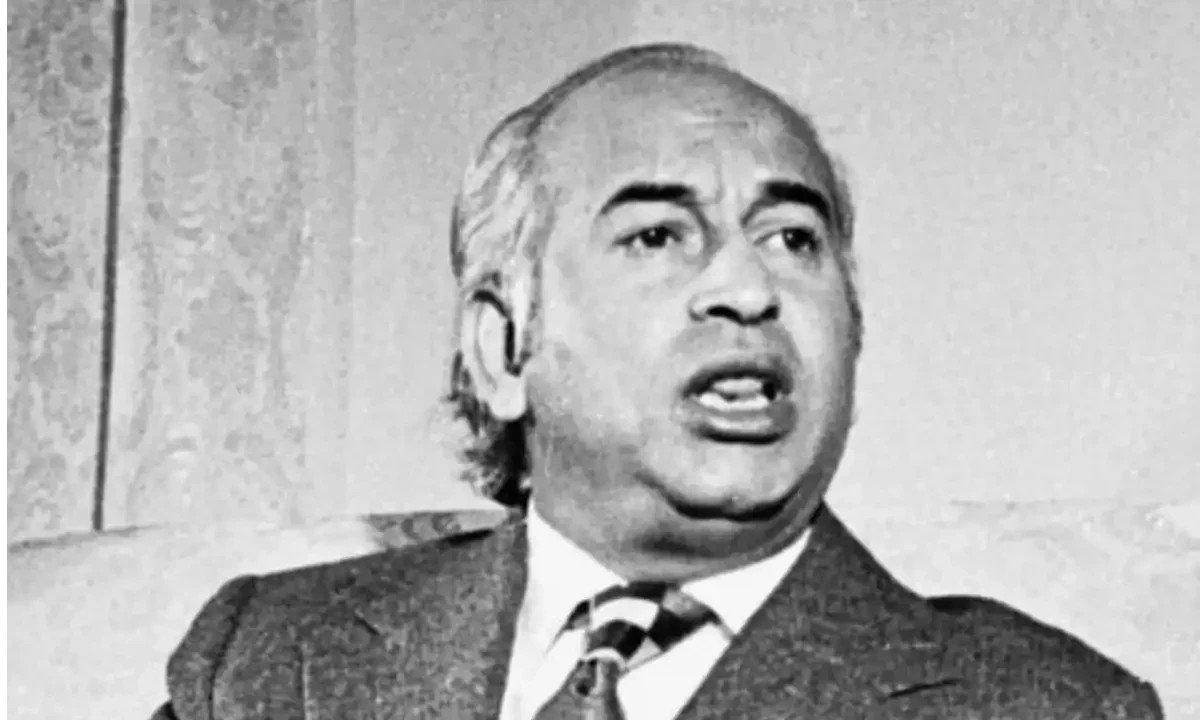
Pakistan’s adoption of its third constitution in 1973 marked a decisive turning point in the country’s political development, shifting authority from a presidential system to a parliamentary structure and transforming Zulfikar Ali Bhutto from president into prime minister. The move redefined executive power and aimed to stabilise governance after years of institutional uncertainty.
A structural shift in governance
The 1973 constitution replaced a centralised presidential model with a parliamentary system in which executive authority rests primarily with the prime minister. The president’s role was reduced to that of a ceremonial head of state, while real decision-making power moved to the elected government.
This transition was designed to create clearer accountability and strengthen democratic processes. After a period marked by political instability and military influence, the new framework sought to restore balance between institutions and provide a more predictable system of governance.

Bhutto’s transition to prime minister
For Zulfikar Ali Bhutto, the constitutional change represented both a personal and political shift. Moving from the presidency to the premiership, he retained leadership but now operated within a parliamentary structure that concentrated executive authority in his new role.
As prime minister, Bhutto gained direct control over government policy, cabinet appointments and legislative direction. This allowed him to consolidate power while aligning his leadership with a system intended to reflect democratic norms.
Key provisions of the constitution
The 1973 constitution introduced several foundational elements that continue to shape Pakistan’s political system. It established a bicameral parliament consisting of the National Assembly and the Senate, reinforcing legislative oversight and representation.
It also formalised a federal structure, granting provinces defined powers and recognising regional diversity within the state. In addition, the constitution enshrined fundamental rights and confirmed Islam as the state religion, reflecting both political and ideological priorities at the time.
Together, these provisions were intended to strengthen institutional resilience and create a durable framework for governance.
Long-term implications for political stability
The adoption of the constitution remains one of Pakistan’s most significant political milestones. Despite periods of military intervention and constitutional amendments, the 1973 framework has endured as the foundation of the country’s legal and political system.
For observers and investors, the shift underscored Pakistan’s ongoing effort to balance authority with legitimacy. A functioning parliamentary system offers greater transparency and predictability, both of which are critical for long-term economic and political stability.
A defining moment in Pakistan’s modern history
By transferring executive power to the prime minister and embedding governance within a parliamentary framework, the 1973 constitution reshaped Pakistan’s political trajectory. For Zulfikar Ali Bhutto, it marked a transition that preserved his leadership while redefining the structure through which that leadership was exercised.
Newshub Editorial in Asia – April 10, 2026

If you have an account with ChatGPT you get deeper explanations,
background and context related to what you are reading.
Open an account:
Open an account
Recent Comments