

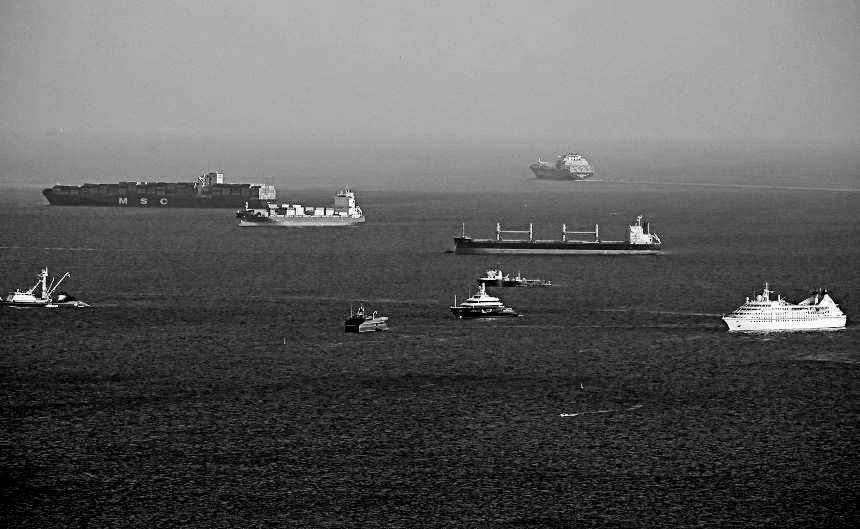
Senior US military officials warned President Donald Trump that Iran could attempt to close the strategically vital Strait of Hormuz if attacked, according to a report by The Wall Street Journal. The warning, delivered during multiple high-level briefings before the outbreak of hostilities, highlighted the potential global economic consequences of a confrontation in the Persian Gulf.
Military briefings outlined risk to global oil flows
According to the report, the chairman of the Joint Chiefs of Staff, General Dan Caine, told President Trump during several pre-war briefings that US intelligence assessments indicated Iran might attempt to block or severely disrupt shipping through the Strait of Hormuz if military strikes were launched against Iranian targets.
The narrow waterway, located between Iran and Oman, is one of the most critical energy chokepoints in the world. Roughly one-fifth of global oil shipments pass through the strait, making any disruption potentially devastating for global energy markets.

US military planners reportedly warned that Iran could deploy naval mines, fast attack boats, coastal missile batteries and drones to threaten commercial vessels and tanker traffic.
Such actions could rapidly escalate tensions and trigger a broader regional crisis affecting energy supplies to Asia, Europe and beyond.
Trump reportedly dismissed the concerns
According to The Wall Street Journal report, President Trump was not persuaded by the warnings during the briefings. Sources cited by the newspaper said he believed the US military possessed the capability to manage any Iranian attempt to close the waterway.
Trump reportedly expressed confidence that American naval power could quickly neutralise threats and ensure the continued flow of oil shipments through the Gulf.
The US Navy maintains a significant presence in the region, including the Fifth Fleet headquartered in Bahrain, which is tasked with protecting maritime routes and maintaining stability in Gulf waters.
However, military analysts have long warned that even limited disruptions to shipping lanes could send shockwaves through global energy markets.
Hormuz remains world’s most sensitive energy chokepoint
The Strait of Hormuz has repeatedly been at the centre of geopolitical tensions between Iran, the United States and Gulf states. Iran has periodically threatened to close the strait during periods of confrontation with Western powers.
Energy analysts note that any attempt to block the waterway would likely trigger an immediate international response, as many major economies depend on oil shipments passing through the corridor.
Countries such as China, Japan, South Korea and India rely heavily on Gulf oil transported through Hormuz, making the strait a vital artery of the global economy.
Even the perception of risk in the area can drive sharp increases in oil prices and insurance costs for shipping companies.
Global markets watch developments closely
Financial markets and energy traders continue to monitor developments in the Gulf closely as the conflict evolves. Oil prices have already shown increased volatility amid concerns that shipping disruptions could tighten global supply.
While the US Navy and allied forces maintain strong capabilities in the region, analysts say the strategic importance of the Strait of Hormuz means any escalation carries significant economic and geopolitical risks.
The report underscores how central the waterway remains to global energy security — and how quickly regional tensions can ripple through the world’s financial and commodity markets.
Newshub Editorial in North America — March 14, 2026

If you have an account with ChatGPT you get deeper explanations,
background and context related to what you are reading.
Open an account:
Open an account
Recent Comments