

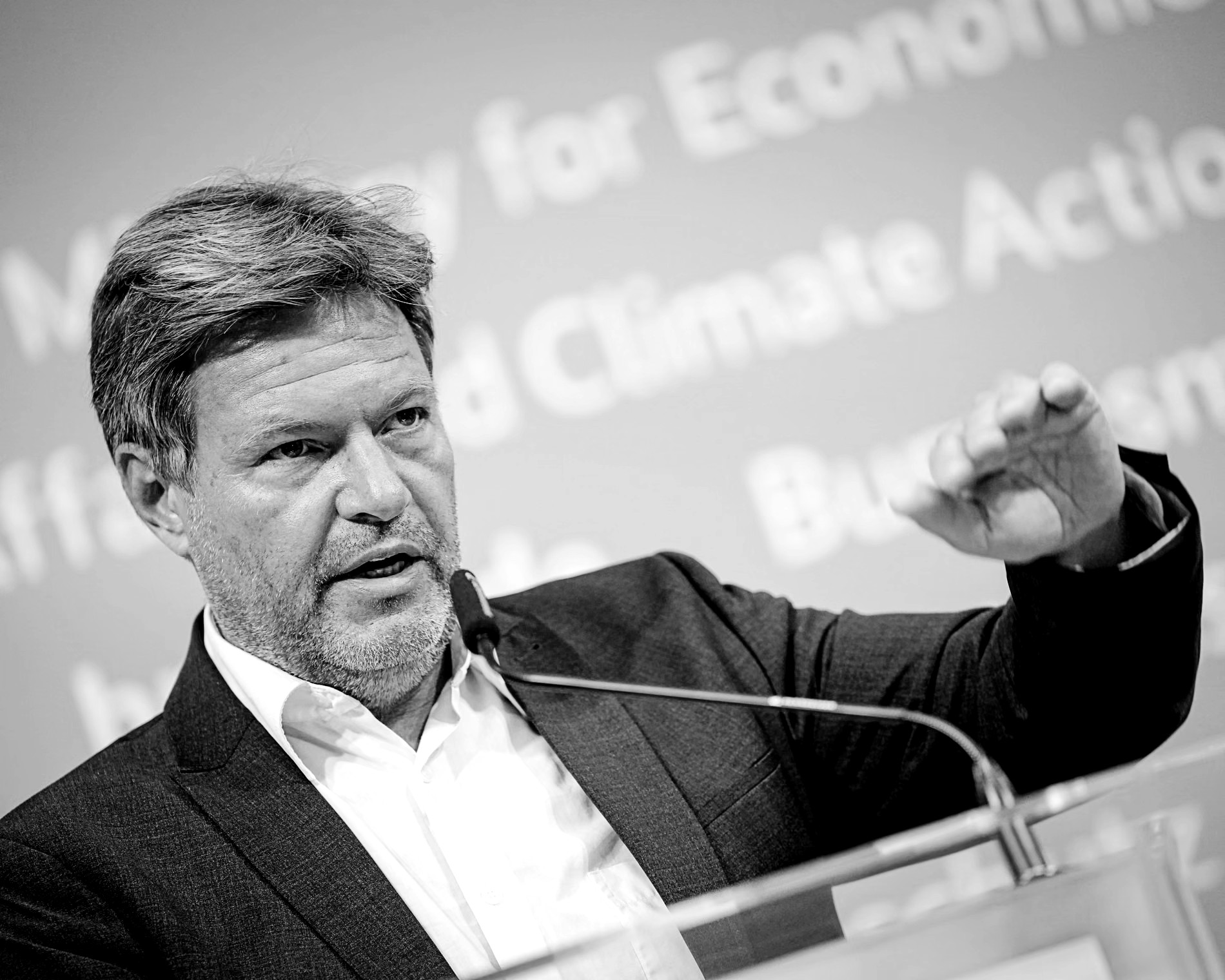
Former German economy minister Robert Habeck has warned that global politics has entered a new phase of economic confrontation following Donald Trump’s re-election as US president, arguing that tariffs, technology controls and trade restrictions are increasingly being used as political weapons. Habeck said the world has moved beyond the earlier phase of “weaponised energy” and is now witnessing a broader form of economic coercion shaping international relations.
From energy leverage to economic pressure
Speaking about the changing geopolitical landscape, Habeck said the global economy is becoming a battleground where governments deploy economic tools to exert political pressure.
During the past decade, energy supplies — particularly natural gas and oil — were widely seen as strategic levers in international politics. Europe’s experience with Russian gas dependence highlighted how critical resources could be used to influence political outcomes.

However, Habeck argues that the current phase of geopolitical competition has expanded far beyond energy markets.
Tariffs, export restrictions, sanctions, technological controls and investment barriers are now increasingly deployed as instruments of state power.
Trade and technology at the centre of rivalry
According to Habeck, the intensifying competition between major global powers has accelerated the politicisation of trade and technology.
Restrictions on semiconductor exports, controls on advanced technologies and new trade tariffs have become central tools in strategic competition between leading economies.
He suggested that such measures are no longer exceptional responses to crises but are increasingly embedded within long-term economic strategies.
This trend is reshaping global supply chains as companies adjust to a world where geopolitical considerations play a growing role in economic decision-making.
Trump’s return reshapes global economic debate
Habeck linked the shift partly to the political climate following Donald Trump’s return to the White House. Trump has repeatedly advocated for stronger tariffs, trade protections and industrial policies designed to prioritise domestic economic interests.
These policies, Habeck suggested, contribute to an environment in which economic policy becomes increasingly intertwined with geopolitical strategy.
European leaders have also responded by pursuing greater economic resilience, including efforts to secure critical supply chains, expand domestic industrial capacity and reduce dependence on foreign technology providers.
Europe navigating a new strategic environment
For the European Union, the growing use of economic tools as political leverage presents both risks and challenges.
European policymakers are attempting to strike a balance between maintaining open trade relationships and protecting strategic industries.
Initiatives such as industrial policy support, technology investment and supply-chain diversification are increasingly being framed as matters of economic security rather than purely economic policy.
Habeck argued that Europe must adapt to this evolving landscape while continuing to defend international rules-based trade systems.
A global economy shaped by geopolitics
The former minister’s remarks reflect a broader shift in how governments view the relationship between economics and geopolitics.
Trade, technology and financial systems are now frequently viewed through a strategic lens, with national security considerations shaping policy decisions across multiple sectors.
For businesses and investors, the implication is clear: economic outcomes may increasingly depend on geopolitical dynamics rather than purely market forces.
As the global economy adjusts to this new reality, the intersection between politics and economics appears likely to remain a defining feature of international relations.
Newshub Editorial in Europe — March 14, 2026

If you have an account with ChatGPT you get deeper explanations,
background and context related to what you are reading.
Open an account:
Open an account
Recent Comments