

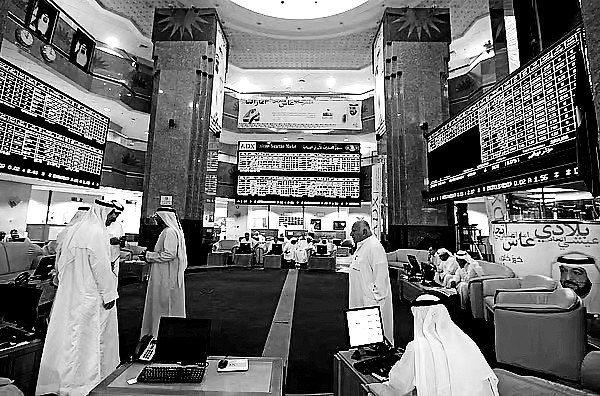
Stock markets across the Arab world experienced a volatile trading week as investors reacted to sharp movements in energy prices, ongoing geopolitical tensions in the Middle East and shifting expectations for global interest rates. While some Gulf exchanges benefited from strong oil revenues and resilient banking sectors, others faced pressure as regional uncertainty prompted cautious trading.
Saudi market steadies after early volatility
Saudi Arabia’s Tadawul, the region’s largest stock exchange, ended the week broadly stable after a series of fluctuating sessions. Early declines were driven by global market uncertainty and profit-taking in large-cap stocks, particularly in the petrochemical and industrial sectors.
However, banking shares and energy-related companies helped stabilise the market toward the end of the week. Investors continue to monitor the performance of Saudi Aramco and other key energy firms, whose valuations remain closely tied to global oil price movements.

Analysts noted that the Saudi market remains supported by strong domestic liquidity and continued investment tied to the Kingdom’s Vision 2030 economic transformation programme.
Dubai and Abu Dhabi mixed as investors remain cautious
In the United Arab Emirates, the Dubai Financial Market closed the week with modest gains, supported by real estate developers and financial institutions. Dubai’s property sector has continued to attract regional and international capital, helping maintain positive momentum in selected stocks.
The Abu Dhabi Securities Exchange, meanwhile, ended the week slightly lower as traders trimmed positions in energy and investment companies following recent gains. Despite the pullback, Abu Dhabi remains one of the region’s strongest-performing markets over the past year, reflecting robust sovereign investment flows and strategic economic diversification.
Qatar and Kuwait supported by banking sector
Qatar’s stock exchange recorded a relatively stable week, with financial institutions providing support to the broader market. The country’s banking sector continues to benefit from strong capitalisation and steady demand for credit linked to infrastructure and energy projects.
Kuwait’s premier market index also showed resilience during the week. Banking stocks and telecom companies helped offset declines in industrial and investment firms, allowing the market to maintain moderate gains despite global volatility.
Investors in Kuwait remain attentive to fiscal policy developments and potential economic reforms that could influence long-term market sentiment.
Egypt faces pressure amid currency and inflation concerns
Outside the Gulf, Egypt’s stock exchange experienced a more challenging week. The benchmark EGX30 index declined as investors reacted to persistent inflation pressures and uncertainty surrounding currency stability.
Foreign investors have remained cautious toward Egyptian equities, although domestic investors continued to provide some support to the market.
Economists say that Egypt’s financial outlook will depend heavily on progress in economic reforms, foreign investment inflows and the stabilisation of the country’s currency.
Oil and geopolitics shape regional outlook
Across the Arab world, market sentiment continues to be closely tied to developments in the energy sector and regional geopolitics. Oil prices remain a key driver for Gulf economies, influencing government spending, corporate earnings and investor confidence.
With tensions in the Middle East continuing to affect energy markets and global supply chains, analysts expect trading across Arab exchanges to remain sensitive to both geopolitical developments and global monetary policy signals.
For now, regional markets appear resilient but cautious as investors prepare for another potentially turbulent week.
Newshub Editorial in Middle East — March 14, 2026

If you have an account with ChatGPT you get deeper explanations,
background and context related to what you are reading.
Open an account:
Open an account
Recent Comments