
Four years after Russia launched its full-scale invasion of Ukraine on 24 February 2022, the conflict has transformed from a rapid shock offensive into a prolonged war of attrition — reshaping borders, economies, alliances, and the global security order.
From lightning assault to stalled advance
When Russian forces first crossed into Ukraine, missiles struck Kyiv and other major cities, while armoured columns advanced from the north, east, and south. President Vladimir Putin framed the attack as a limited “special military operation”. Instead, Ukrainian resistance quickly stalled Russia’s push toward the capital, forcing a withdrawal from northern regions within weeks.

By mid-2022, fighting had shifted east and south. Russia captured large parts of Luhansk and Donetsk and seized key territory along the Azov Sea, including Mariupol, after devastating sieges. Ukraine, under President Volodymyr Zelenskyy, mobilised society and secured Western military backing, laying the groundwork for counteroffensives later that year which reclaimed significant territory in Kharkiv region and the city of Kherson.
Entrenchment and grinding warfare
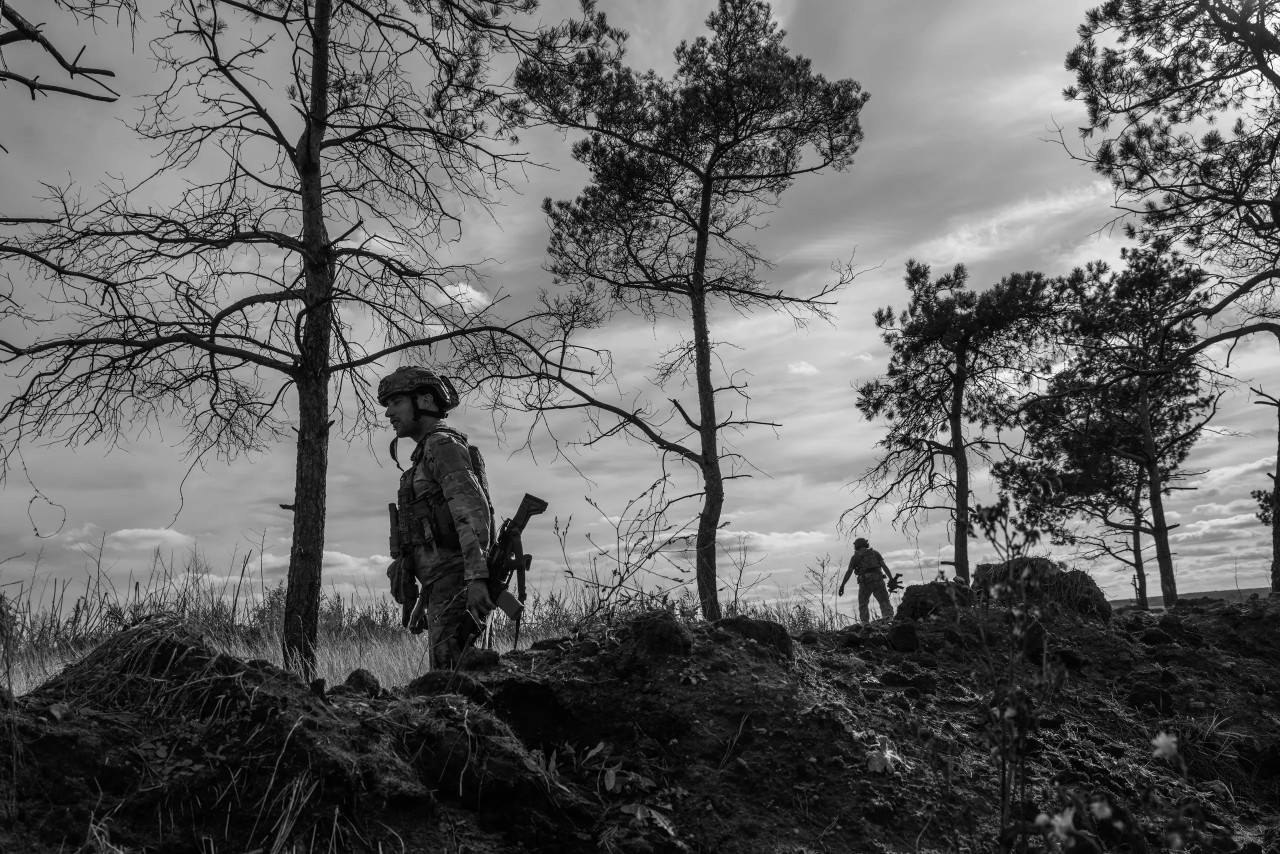
Since 2023, the war has increasingly resembled World War I-style positional fighting. Vast trench systems now dominate the front lines, particularly in eastern Ukraine. Both sides have relied heavily on artillery, drones, and missile strikes, while manpower shortages and ammunition constraints have become defining features of the conflict.
Ukraine’s much-anticipated counteroffensive in 2023 achieved only limited gains, underscoring how deeply fortified Russian positions had become. Throughout 2024 and into 2025, Russia gradually pressed forward in parts of Donetsk, while Ukraine focused on defensive lines, long-range strikes on logistics hubs, and attacks on Russian energy infrastructure.
Civilian suffering has remained severe. Cities and power grids have been repeatedly targeted, prompting rolling blackouts and waves of displacement. Millions of Ukrainians remain refugees across Europe.
International stakes rise
The invasion triggered unprecedented sanctions on Russia and a massive military aid pipeline to Kyiv from the European Union and North Atlantic Treaty Organization members. Defence budgets across Europe have surged, and energy policy has been permanently reshaped as countries moved to reduce reliance on Russian gas.
At the same time, global repercussions have been far-reaching: food supply disruptions, volatile commodity markets, and widening geopolitical fault lines between Western democracies and authoritarian states.
Where the war stands today
As of early 2026, no decisive breakthrough has occurred. Russia holds roughly a fifth of Ukrainian territory, while Ukraine continues to press for advanced weapons and sustained international support. Peace talks remain sporadic and inconclusive, with both sides signalling readiness for a long struggle.
What began as a bid for rapid domination has evolved into a grinding, high-cost conflict with no clear end in sight. Four years on, Ukraine’s survival as a sovereign state and Europe’s future security architecture remain tightly intertwined with the outcome of this war.
Newshub Editorial in Europe – 24 February 2026

If you have an account with ChatGPT you get deeper explanations,
background and context related to what you are reading.
Open an account:
Open an account
Recent Comments