
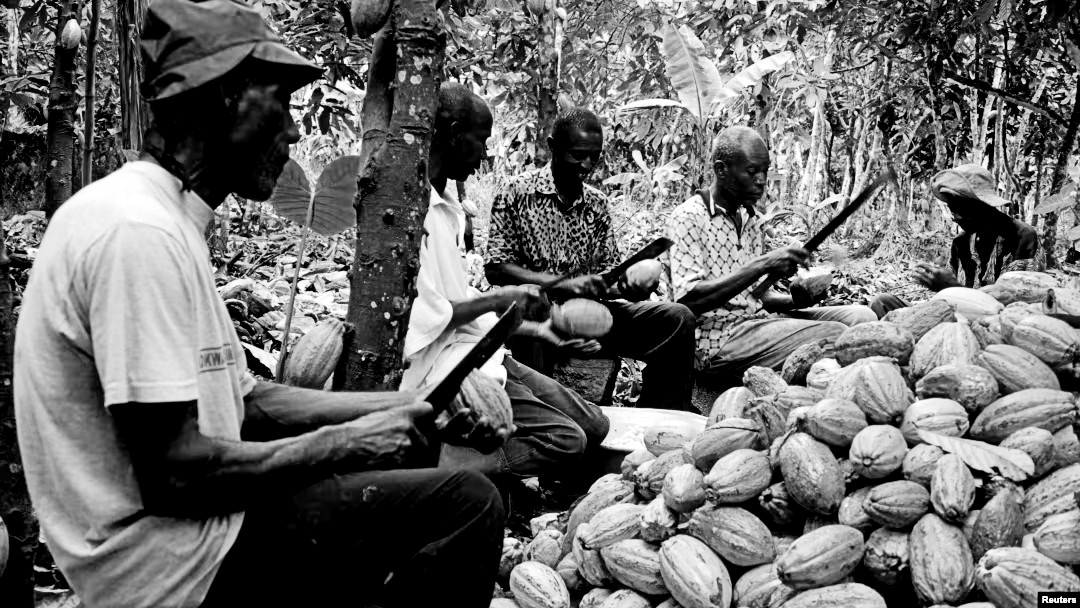
In a week dominated by geopolitical headlines and market volatility, a quieter sunshine story has emerged from West Africa, where a Ghanaian agri-technology company is using blockchain to improve transparency, farmer incomes, and trust in one of the region’s most important export industries: cocoa.
Turning cocoa into a digital asset
Based in Ghana, agri-tech firm Farmerline has built its business around connecting smallholder farmers directly to markets, data, and financing. In recent years, the company has expanded its platform by integrating blockchain-based traceability tools that digitally record cocoa production from farm gate to export.
Each batch of cocoa can be logged with immutable data points covering origin, farming practices, and sustainability metrics. For international buyers increasingly under pressure to demonstrate ethical sourcing, this creates verifiable proof. For farmers, it creates visibility and leverage in a global value chain where they have historically had little bargaining power.

Blockchain as trust infrastructure
Rather than presenting blockchain as a speculative technology, Farmerline uses it as trust infrastructure. The distributed ledger acts as a shared record between farmers, cooperatives, exporters, and buyers, reducing disputes and information asymmetry. Once data is recorded, it cannot be altered retroactively, increasing confidence for all participants.
This approach aligns closely with emerging regulatory demands in Europe and North America, where stricter rules on deforestation, child labour, and supply-chain transparency are reshaping agricultural trade. Ghanaian cocoa that can be digitally verified gains a competitive edge, not through volume, but through credibility.
Impact at the farmer level
Ghana’s cocoa sector employs millions of people, many operating at subsistence income levels. By linking blockchain traceability with mobile technology, Farmerline enables farmers to receive agronomic advice, weather alerts, and payment information directly on their phones. Verified production data also supports access to credit, as lenders gain greater confidence in future yields.
Early results suggest that farmers participating in traceability programmes experience more stable buyer relationships and improved pricing outcomes. While margins remain tight, the shift from anonymous commodity supply to verified origin marks a structural improvement.
Why this matters beyond cocoa
The implications extend far beyond one crop. If blockchain-based traceability can work at scale in cocoa, it can be replicated across cashew, coffee, shea, and other West African exports. The technology creates a bridge between informal rural economies and formal global markets, without forcing farmers into complex digital systems they cannot manage.
Crucially, the value is not in the blockchain itself, but in what it enables: accountability, inclusion, and data-driven decision-making. This distinguishes the model from many early blockchain projects that struggled to move beyond proof-of-concept.
A genuine sunshine story
In a region often discussed in terms of aid or risk, Farmerline’s progress illustrates a different narrative: African companies applying advanced technology to solve local problems with global relevance. By embedding blockchain into agriculture rather than finance, the company demonstrates that digital innovation in West Africa is diversifying rapidly.
As global supply chains demand more transparency and fairness, this Ghanaian cocoa traceability model offers a hopeful glimpse of how technology can redistribute value, not just efficiency.
Newshub Editorial in Africa – 2 February 2026

If you have an account with ChatGPT you get deeper explanations,
background and context related to what you are reading.
Open an account:
Open an account
Recent Comments