
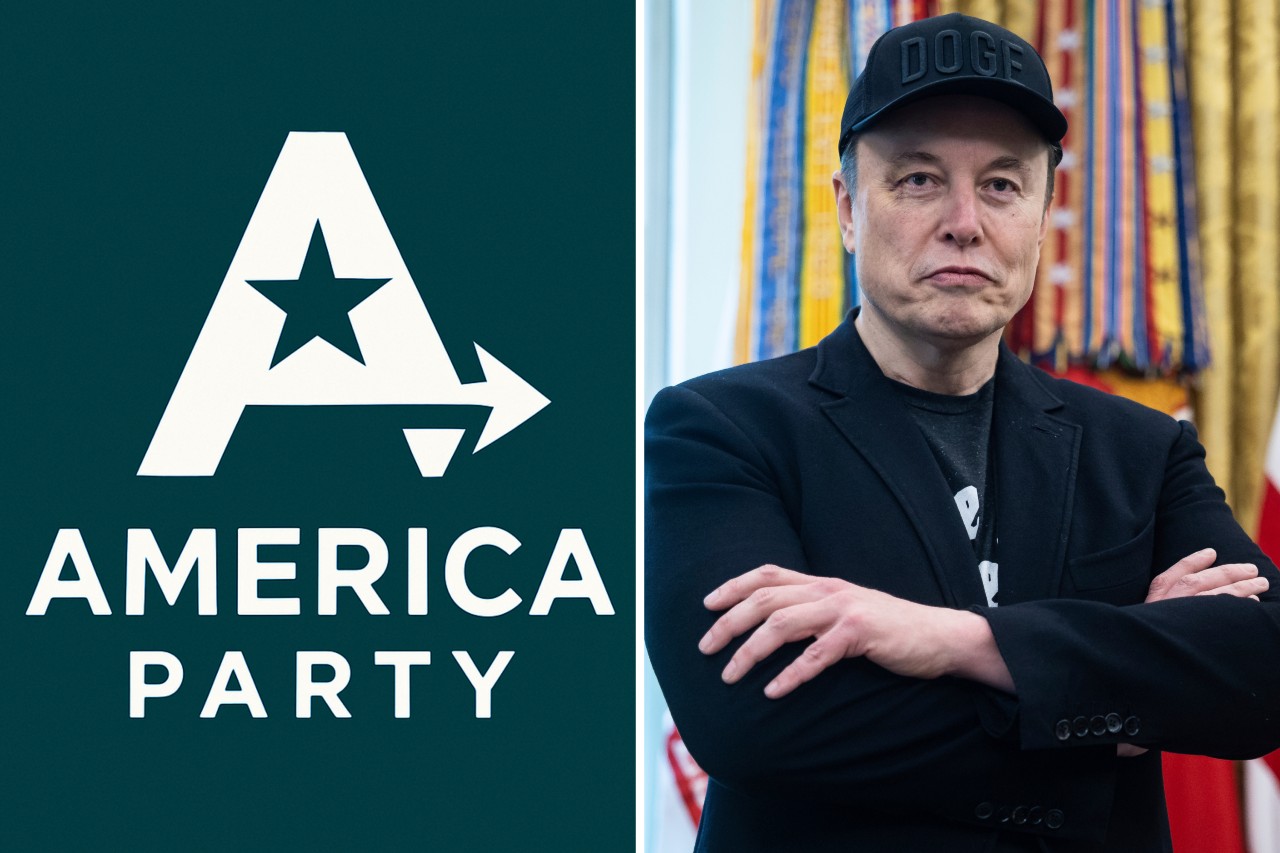
Elon Musk has formally launched his political movement, the America Party, vowing to disrupt the US two-party system and bring what he calls “freedom from political decay.” The tech billionaire unveiled the initiative on social media after running a public poll asking if Americans were ready for an alternative. The majority voted “yes”—and within 24 hours, the party was announced.
Positioned as a pro-business, pro-technology platform with nationalist overtones, the America Party’s declared aims include balancing the federal budget, reducing regulation, strengthening military innovation through artificial intelligence, and promoting population growth through incentives for larger families. It also places heavy emphasis on freedom of speech, a personal crusade Musk has repeatedly tied to his ownership of X (formerly Twitter).
Musk has made clear he has no immediate ambition to run for office himself. Instead, the America Party will focus on influencing power in Washington by backing a small but decisive number of congressional candidates—“two or three Senate seats and eight to ten in the House,” according to his initial statement.

Political reactions have been swift and polarising. Donald Trump, speaking at a rally in Pennsylvania, ridiculed the effort, describing Musk as “a brilliant man who’s gone off the rails.” He warned the America Party could fracture conservative unity and “hand victories to the radical left.”
Meanwhile, figures on the left dismissed the venture as another vanity project by a billionaire with too much time and money. Democratic strategist Sarah Campbell warned that the party was “a libertarian rebrand with no grassroots muscle.”
In practical terms, the America Party faces formidable structural challenges. Gaining ballot access in all 50 states is both legally complex and resource-intensive. Some states require more than a million verified petition signatures or minimum levels of support in prior elections. Building a functioning national political apparatus from scratch would take years and hundreds of millions of dollars.
Musk has hinted at financial support from a circle of wealthy allies. Entrepreneur Mark Cuban and former Trump aide Anthony Scaramucci have both expressed public support. Analysts believe Musk’s wealth and media presence give the movement a head start, but its longevity and reach remain uncertain.
There are also broader business implications. Tesla shares dipped following the announcement, compounded by the news that new Republican tariffs would strip EV manufacturers of key tax credits. Some investors worry Musk’s political ambitions could distract from his corporate responsibilities, especially amid ongoing challenges at SpaceX and X.
As of now, the America Party is a brand with a name, a message, and a powerful figurehead—but not much else. Whether it becomes a real political force or ends as a flash of online theatre will depend on how fast Musk can turn internet enthusiasm into institutional momentum.
REFH – newshub finance
Recent Comments