
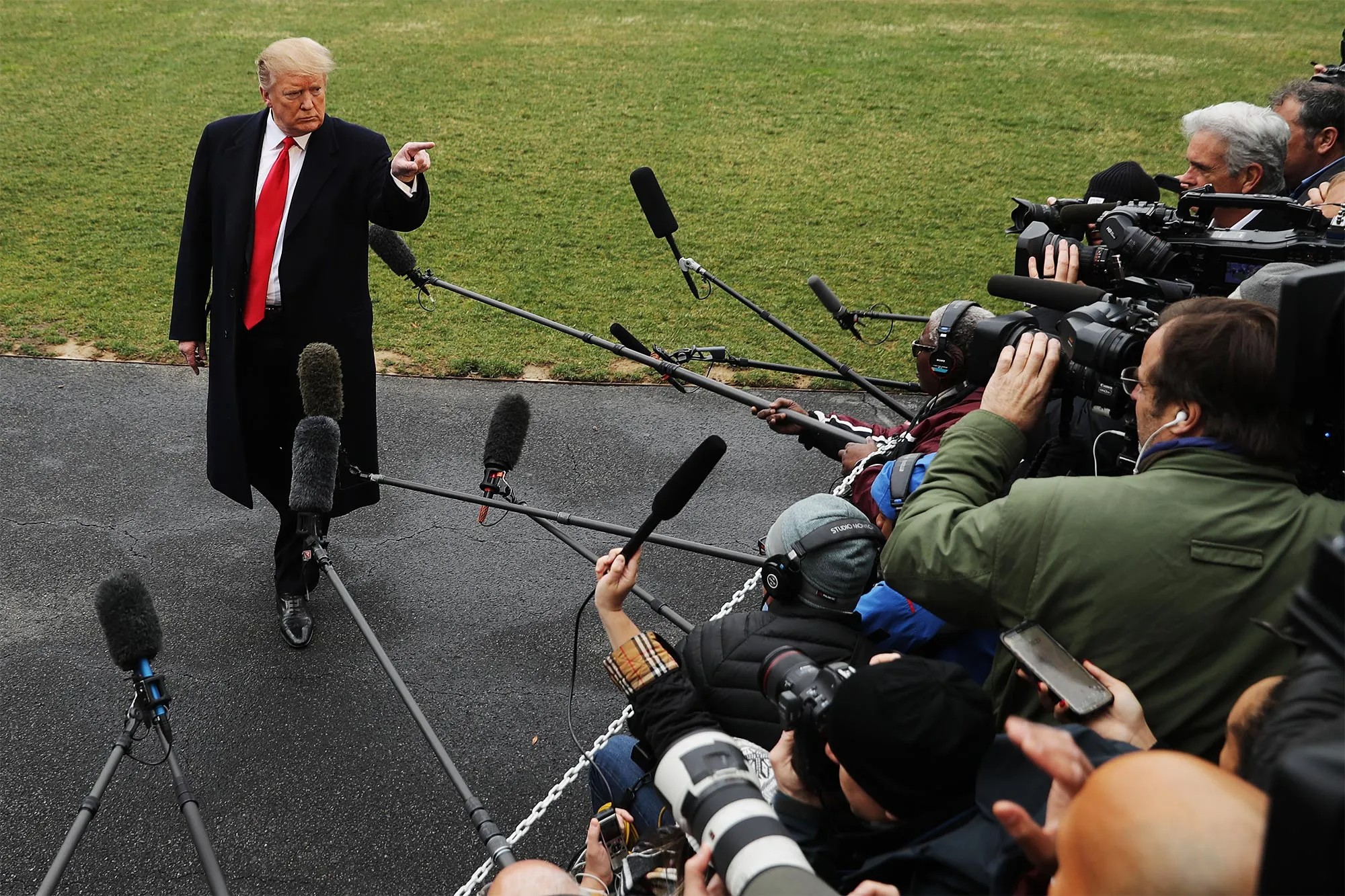
Since first emerging as a political force in 2015, Donald Trump has waged a relentless war on traditional media institutions. Labelled “the enemy of the people” by the former president, the press has become both a punching bag and a pillar of his populist message. As he seeks a dramatic return to the White House, the question is not whether the war continues, but whether he’s winning.
Trump’s strategy has always been rooted in distrust. By undermining the credibility of mainstream outlets like The New York Times, CNN and The Washington Post, he energised supporters who felt ignored or misrepresented. Terms like “fake news” and “lamestream media” became rallying cries, not just insults, drawing clear battle lines between the political outsider and the so-called establishment.
The effect was profound. During and after his presidency, trust in major media among Republican voters collapsed. According to Gallup, only 14% of Republicans had confidence in mass media by 2023, down from over 50% two decades earlier. Simultaneously, Trump-aligned platforms—such as Truth Social, Newsmax and One America News—grew in visibility and influence, offering alternative narratives that mirrored his messaging.

But while Trump’s antagonism has weakened public confidence in legacy outlets, it has not eliminated them. Investigative reporting continues to play a critical role in checking power, exposing contradictions, and framing policy debates. Moreover, legal battles—such as those tied to the January 6th investigation or Trump’s corporate dealings—have repeatedly drawn from traditional reporting and fact-based analysis. In short, the media have not retreated, even if they’ve been bruised.
What complicates the picture is the polarisation of information ecosystems. Trump’s base increasingly consumes news through tailored channels, largely insulated from mainstream critique. This allows him to dominate the narrative within his support network, often bypassing journalistic scrutiny altogether. Social media further amplifies his message with little friction. In this ecosystem, “winning” is not measured by universal trust but by the consolidation of loyalty.
Still, Trump remains deeply concerned with media perception. He celebrates favourable coverage and lashes out at negative press, suggesting that legitimacy—though publicly dismissed—still matters to him. His team continues to court mainstream headlines, albeit on their own terms, illustrating a paradox: while attacking the media, he also seeks to dominate it.
Is he winning the war? In shaping perception among his followers, perhaps. But in the broader public square, it’s less clear. The traditional media may be weakened, fragmented, and often on the defensive, but it has not been silenced. And Trump, for all his power in alternative media spaces, still struggles to command trust beyond his base.
The war rages on. Victory remains as contested as the headlines themselves.
REFH – newshub finance
Recent Comments