
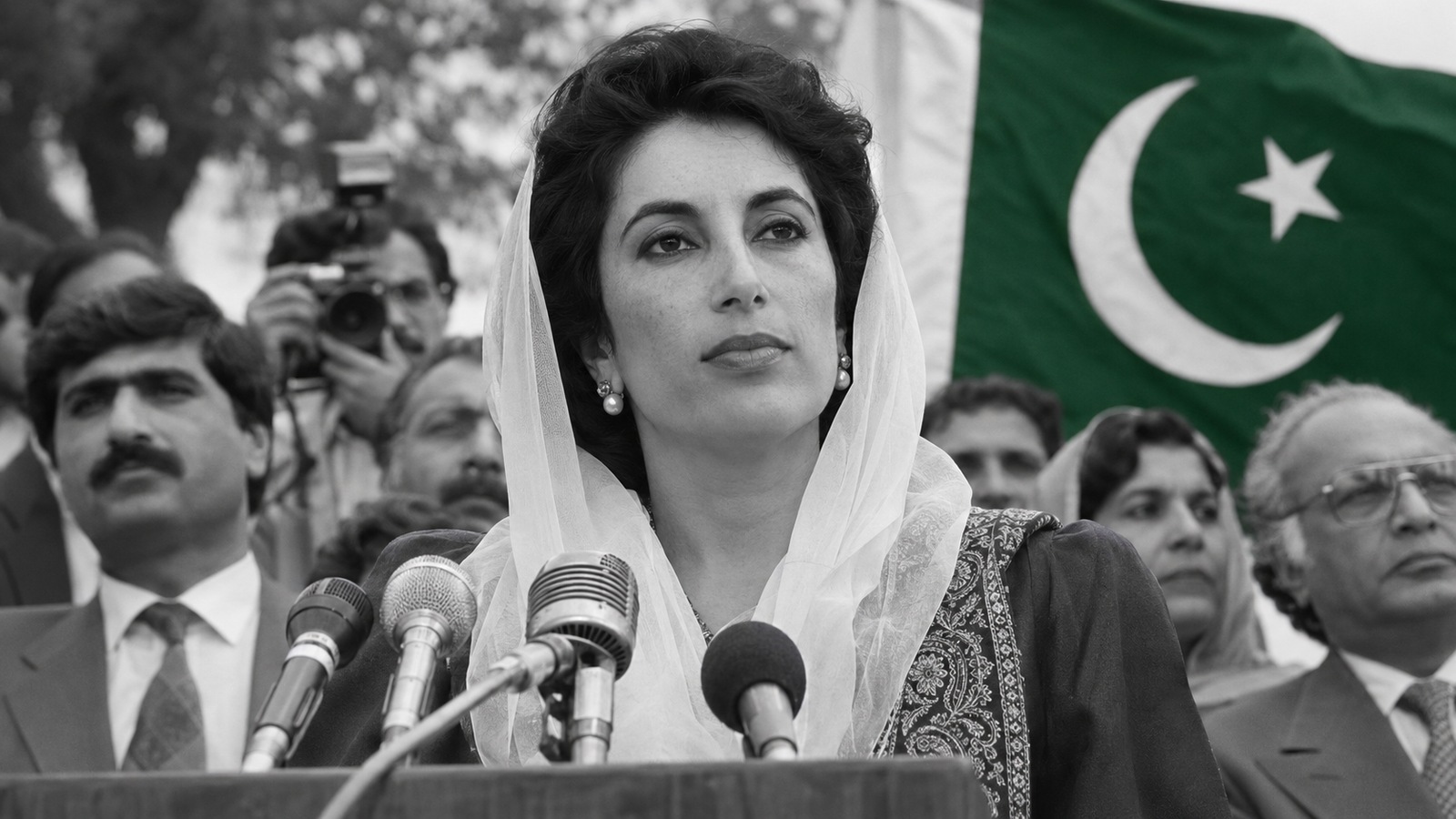
On 16 November 1988, Pakistanis voted in a general election that brought Benazir Bhutto’s Pakistan People’s Party to the head of the National Assembly. The result paved the way for Bhutto, then 35, to be sworn in on 2 December as Pakistan’s first woman prime minister and the first woman to head the government of a Muslim-majority country.
A return to party politics
The election followed the death of General Muhammad Zia-ul-Haq in a plane crash in August 1988. Zia had seized power in a military coup in 1977, ousting Bhutto’s father, Prime Minister Zulfikar Ali Bhutto, who was executed in 1979. Benazir Bhutto spent years in detention and exile before returning to Pakistan in 1986, when crowds gathered to welcome her in Lahore.
Zia had called the November election on a non-party basis, as he had done in 1985. After his death, the Supreme Court lifted the ban on parties taking part, allowing Bhutto’s Pakistan People’s Party to compete openly against the conservative Islamic Democratic Alliance led by Nawaz Sharif.


From the ballot box to government
Bhutto’s party won the largest bloc of seats in the National Assembly, falling short of an outright majority. Acting President Ghulam Ishaq Khan invited the party to form a government, and it secured support from smaller groups. Sixteen days after the vote, Bhutto took the oath of office.
The limits of the victory
The election restored open competition between political parties at national level, while the president retained the constitutional power to dissolve the National Assembly. In August 1990, Ghulam Ishaq Khan used that power to dismiss Bhutto’s government, ending her first term after less than two years.
The vote of 16 November marked the moment voters returned Bhutto’s party to the centre of Pakistani politics. Her swearing-in two weeks later made history, while her dismissal showed how much authority the presidency still held over an elected government.
NewsHub Finance | On this day | 16 November 2026
On 16 November 1988, Pakistanis voted in a general election that brought Benazir Bhutto’s Pakistan People’s Party to the head of the National Assembly. The result paved the way for Bhutto, then 35, to be sworn in on 2 December as Pakistan’s first woman prime minister and the first woman to head the government of a Muslim-majority country.

Recent Comments