
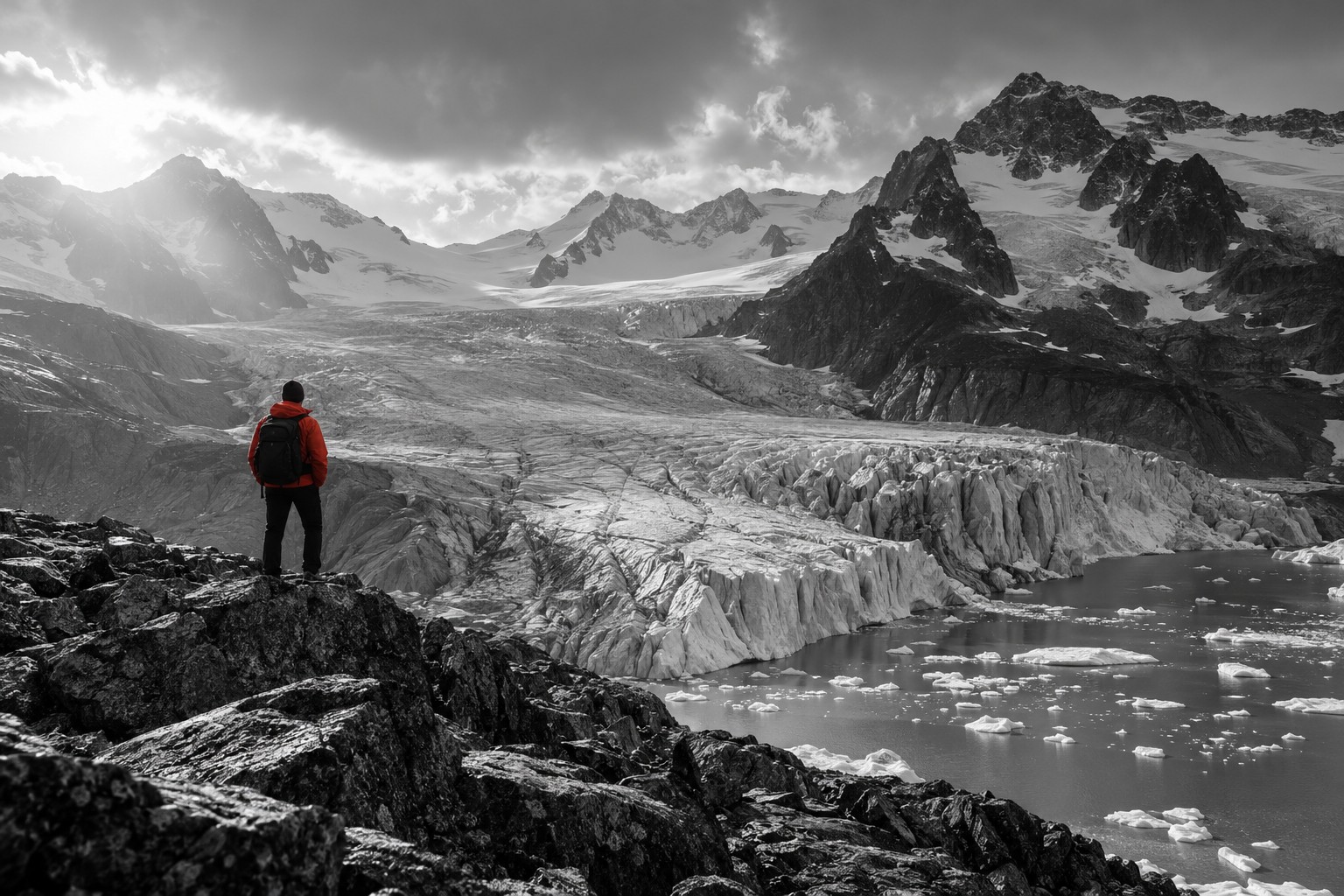
The western United States has lost nearly 300 glaciers since the 1960s, according to a major new scientific study revealing the dramatic impact of rising global temperatures. Researchers warn that most of the surviving glaciers are continuing to shrink, threatening mountain ecosystems, water resources and the future of some of America’s most recognisable landscapes.
A third of the ice has vanished
During the middle of the 20th century, more than 1,450 glaciers covered the mountains of the western United States, stretching across the Rocky Mountains, Sierra Nevada and Pacific Northwest.


A study published in the Proceedings of the National Academy of Sciences reveals that approximately one-quarter have since disappeared as functioning glaciers, while the total area and volume of ice have declined by around one-third.
Many glaciers have become so small that they no longer move under their own weight, effectively losing the characteristics that distinguish glaciers from ordinary patches of snow and ice.
Andrew Fountain, a geographer at Portland State University and the study’s lead author, said the extent of the losses exceeded his expectations.
Rising temperatures accelerate the decline
The research identifies increasingly warm summers and changing winter precipitation as major factors behind the disappearance of mountain ice.
Higher summer temperatures accelerate melting, while warmer winters increasingly produce rain instead of the snowfall required to replenish glaciers.
Smaller glaciers at lower elevations and those exposed to greater sunlight have been particularly vulnerable.
Scientists warn that even larger glaciers could disappear during the coming decades, leaving surviving ice formations concentrated around the highest and most sheltered mountain peaks.
Water supplies and ecosystems under pressure
Glaciers play an important role in maintaining alpine environments, releasing cold water into streams and rivers during warmer months.
Their disappearance can affect aquatic ecosystems, agricultural irrigation and hydroelectric generation, particularly during periods of prolonged drought.
Although seasonal snowpack provides a much larger share of the American West’s water supply, shrinking glaciers represent another warning about the vulnerability of mountain water systems.
The consequences extend beyond environmental concerns, potentially affecting communities and industries dependent on reliable water resources.
A warning extending far beyond America
The findings reflect a global pattern of accelerating glacier retreat, with similar developments documented in the European Alps, Himalayas and other mountain regions.
Scientists emphasise that reducing greenhouse gas emissions remains essential to limiting further warming and slowing future ice losses.
However, glaciers already reduced to a fraction of their former size may never recover under prevailing climatic conditions.
For the American West, the disappearance of ice formations that survived for thousands of years illustrates how rapidly climate change is reshaping the natural environment.
NewsHub Finance | Climate & Environment | 25 October 2026
The western United States has lost nearly 300 glaciers since the 1960s, according to a major new scientific study revealing the dramatic impact of rising global temperatures. Researchers warn that most of the surviving glaciers are continuing to shrink, threatening mountain ecosystems, water resources and the future of some of America's most recognisable landscapes.

Recent Comments