
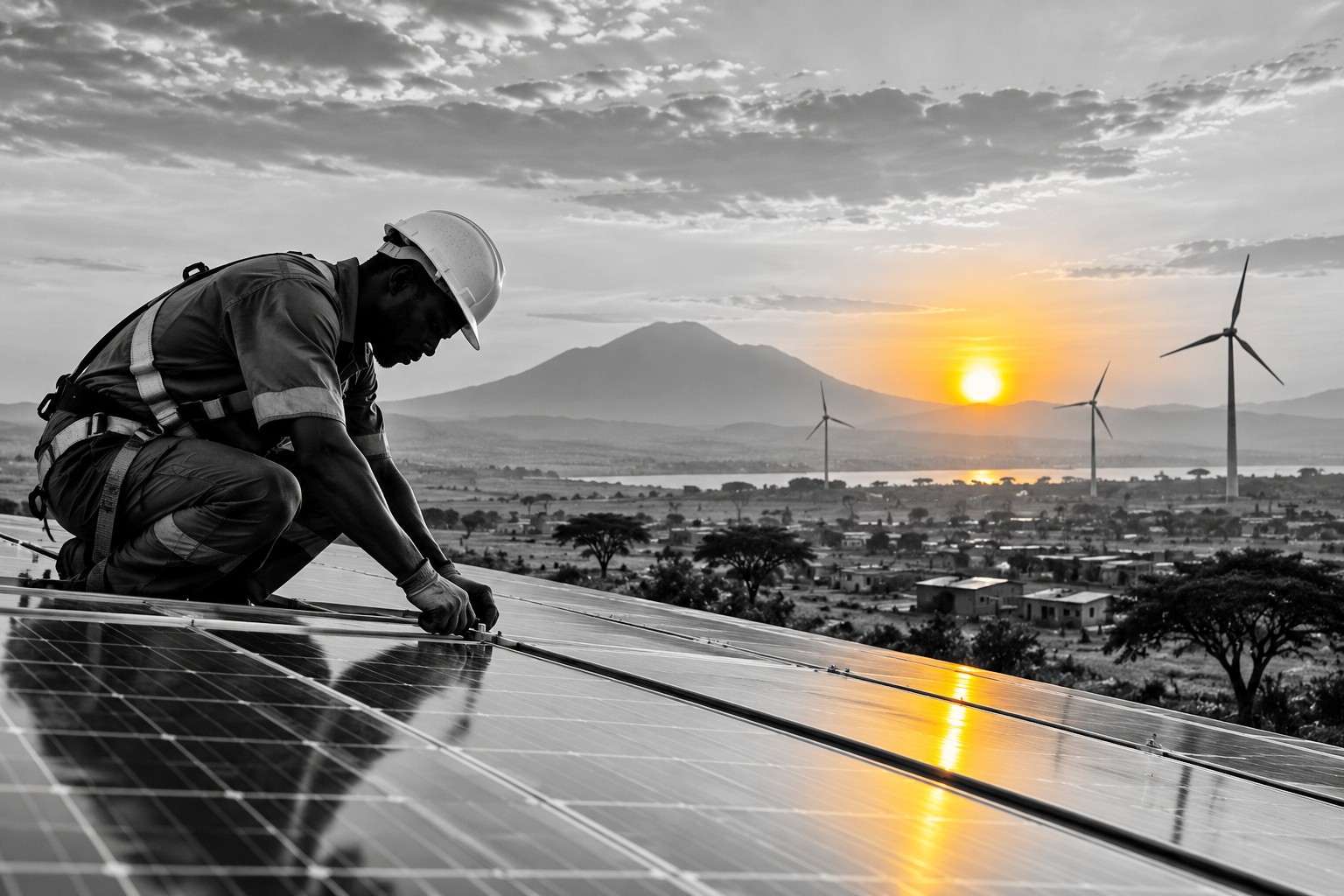
Solar power is rapidly transforming Africa’s electricity landscape, with an estimated 100,000 panels installed across the continent every day. Yet solar alone cannot meet the growing demand for reliable energy. Four emerging technologies could help Africa overcome its electricity shortages, strengthen industrial development and bring power to millions of underserved households.
Turning agricultural waste into electricity
Waste-to-energy technology offers Africa an opportunity to convert agricultural residues, organic waste and animal manure into valuable energy resources.
In Côte d’Ivoire, the 46-megawatt Biovea Energie plant uses palm oil production waste to generate electricity. The project also provides additional income opportunities for local farmers.


Biogas technology offers another solution, converting organic materials into combustible gas through anaerobic digestion. Smaller installations can provide cooking fuel and electricity to individual households and rural communities.
Unlocking geothermal energy
Kenya has demonstrated the enormous potential of geothermal electricity, generating almost half its power from underground heat sources.
Traditionally, geothermal development has depended on favourable geological conditions, particularly around the East African Rift Valley.
However, enhanced geothermal systems could change that limitation. By drilling several kilometres underground, developers can potentially access heat resources in regions previously considered unsuitable.
Although expensive, technological advances and falling drilling costs could eventually make geothermal electricity available across much of Africa.
Storing electricity without conventional batteries
Energy storage is becoming increasingly important as countries expand solar and wind generation.
Beyond lithium-ion batteries, engineers are developing compressed-air and gravity-based storage systems.
In Nigeria, a pilot project is exploring compressed air as a way to store excess solar electricity for overnight use.
South Africa is also testing gravity storage technology that lifts heavy blocks using surplus electricity and releases the stored energy when the blocks descend.
Such solutions could reduce dependence on imported battery materials while supporting more reliable power networks.
Harvesting solar energy from space
Perhaps the most ambitious innovation involves placing solar panels in orbit and transmitting electricity wirelessly to receiving stations on Earth.
Unlike conventional solar installations, space-based systems could potentially collect sunlight almost continuously.
Developers are exploring commercial deployment around 2030, although technical, economic and regulatory obstacles remain substantial.
For remote African communities, the technology could eventually provide electricity without extensive transmission infrastructure.
A new foundation for economic development
Africa’s energy transformation will depend on combining established technologies with innovative solutions suited to local conditions.
Reliable electricity is essential for manufacturing, agriculture, healthcare, education and the expanding digital economy.
Investment in new generation and storage technologies could also create opportunities for African businesses, while improving access to financial services and digital infrastructure.
The challenge is no longer simply producing more electricity. It is developing affordable, dependable energy systems capable of supporting Africa’s economic ambitions.
NewsHub Finance | Energy & Africa | 25 October 2026
Solar power is rapidly transforming Africa's electricity landscape, with an estimated 100,000 panels installed across the continent every day. Yet solar alone cannot meet the growing demand for reliable energy. Four emerging technologies could help Africa overcome its electricity shortages, strengthen industrial development and bring power to millions of underserved households.

Recent Comments