
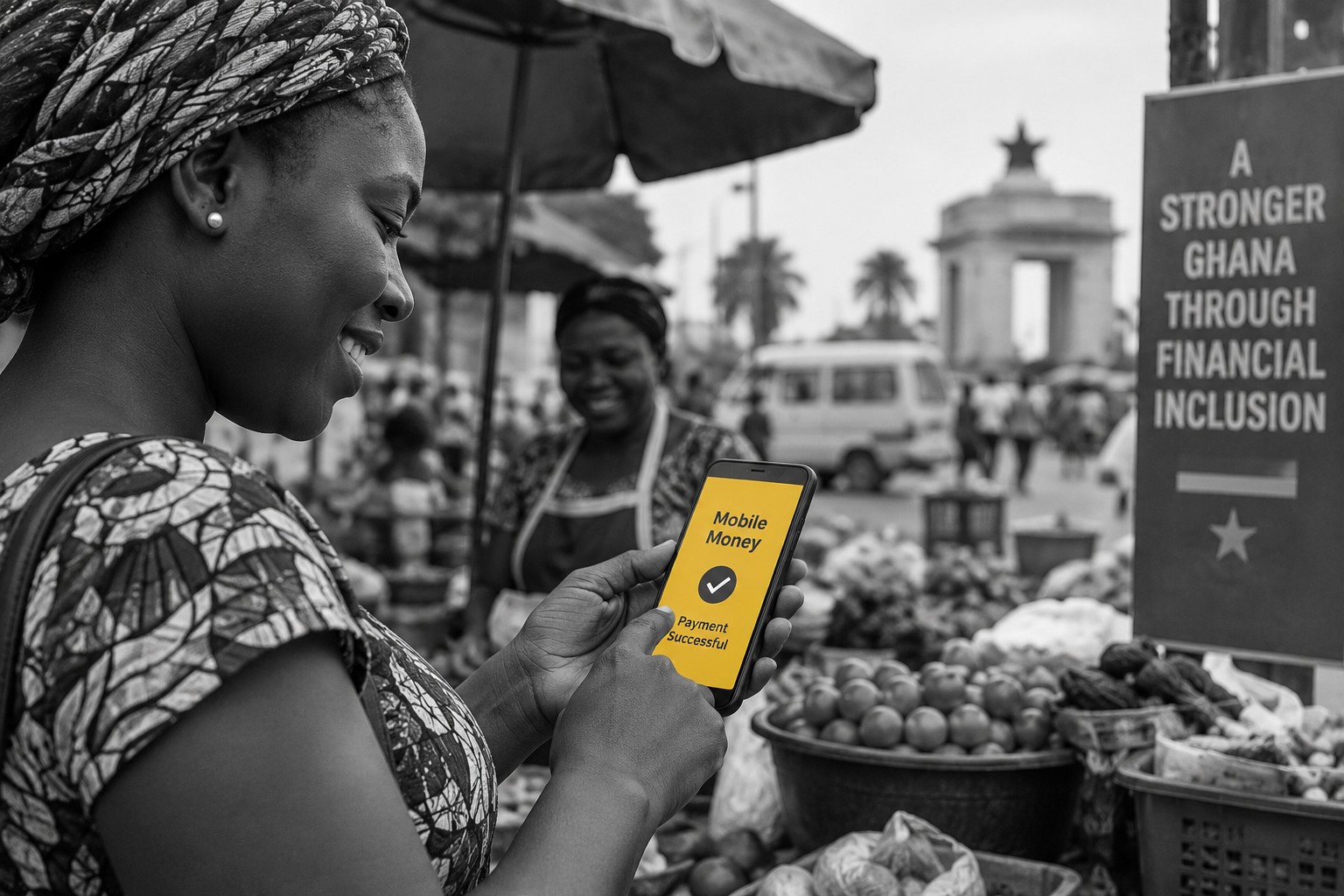
Ghana is emerging as a leading example of how digital financial services can transform economic participation in Africa. With mobile money transactions exceeding one billion in a single month, the country’s central bank is calling for faster cross-border payments, stronger consumer protection and a shift from basic financial access towards meaningful financial inclusion.
Mobile money reaches a historic milestone
Ghana recorded more than one billion mobile money transactions in August 2026, with their combined value reaching GH¢519 billion, according to figures highlighted by the Bank of Ghana.


The transaction value represented an increase of 46.5% compared with the same period a year earlier.
The figures demonstrate the growing importance of mobile financial services in everyday economic activity, particularly among small businesses, informal traders and consumers who rely on digital payments.
Access does not always mean inclusion
Speaking during the IMF and World Bank meetings in October, the Governor of the Bank of Ghana emphasised that expanding access to financial services is only the beginning.
Although approximately 81% of Ghanaian adults have access to financial services, only 52.7% meet the broader measure of meaningful financial inclusion, which considers actual usage and service quality.
The distinction highlights a major challenge across emerging markets: opening an account does not necessarily mean that individuals can access affordable credit, savings products or other essential financial services.
Breaking down Africa’s payment barriers
The central bank is also seeking to improve cross-border payments.
Many transactions between African countries still depend on international correspondent banking arrangements, with costs sometimes exceeding 8%.
Ghana is testing payment interoperability with Rwanda and Nigeria, exploring connections between mobile wallets, bank accounts, stablecoins and central bank digital currencies.
The Pan-African Payment and Settlement System is also being extended to support mobile wallet transactions along the Ghana–Nigeria corridor.
A broader opportunity for African economies
More efficient digital payments could strengthen regional trade, reduce transaction costs and improve financial opportunities for small and medium-sized enterprises.
However, financial inclusion also depends on consumer trust, digital literacy, reliable infrastructure and appropriate regulation.
For millions of Africans, mobile money has already changed how everyday transactions are conducted.
Ghana’s latest initiatives suggest that the next phase will focus on transforming widespread payment access into broader economic participation.
The challenge is no longer simply connecting people to financial services, but ensuring those services genuinely improve their financial lives.
NewsHub Finance | Africa & Financial Inclusion | 15 October 2026
Ghana is emerging as a leading example of how digital financial services can transform economic participation in Africa. With mobile money transactions exceeding one billion in a single month, the country’s central bank is calling for faster cross-border payments, stronger consumer protection and a shift from basic financial access towards meaningful financial inclusion.

Recent Comments