
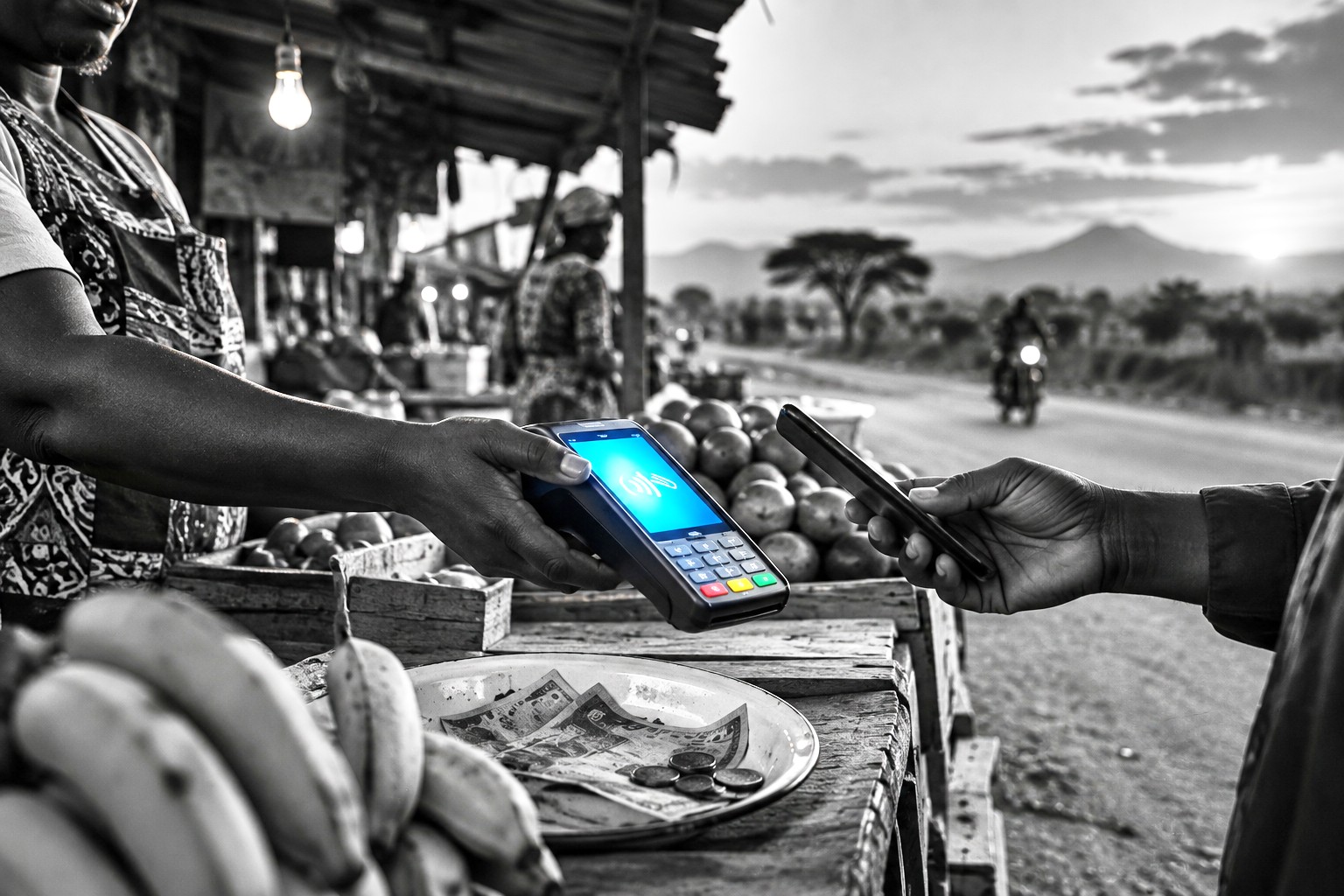
More than 100 million people could join the global consumer class in 2027 if recent growth patterns continue, extending a transformation across emerging markets that is reshaping demand for goods, services and financial access.
For decades, China demonstrated the scale of economic mobility. Hundreds of millions moved from poverty towards greater financial security, creating one of the world’s largest consumer markets.
The next chapter is unfolding across multiple countries, with different starting points, growth rates and challenges.

A growing consumer economy
World Data Lab reports that annual net additions to the global consumer class exceeded 100 million in most years of the past decade. Its current methodology defines this group as people spending at least $13 daily in 2021 purchasing-power-parity terms, adjusting for differences in local prices.
A further 100 million consumers in 2027 would represent approximately 274,000 people a day, or more than three every second. This illustrates the scale of a possible continuation of recent trends; it is not a confirmed forecast for that year.
Asia remains central to the expansion. India, China and Southeast Asian economies feature prominently, while Africa and Latin America offer distinct opportunities as household spending power develops.
Progress remains uneven
Rising consumption does not mean poverty is disappearing.
The World Bank’s revised framework places the poverty threshold typical of upper-middle-income countries at $8.30 daily in 2021 purchasing-power-parity terms. Its 2025 estimates indicated that more than 3.7 billion people remained below that level.
Inflation, conflict, unemployment and economic shocks can reverse household gains. Crossing a spending threshold also does not automatically provide financial security or access to banking.
From spending power to financial participation
For financial-service providers, the opportunity extends beyond purchases. Households with rising incomes may need affordable payments, savings, insurance and responsibly provided credit.
Digital accounts can help people receive wages, transfer money and establish transaction histories. Their usefulness depends on reliable infrastructure, transparent pricing and consumer protection.
MSTRpay’s stated emerging-market strategy across Africa, Asia, Latin America and the Caribbean targets this transition towards broader financial participation. Delivering that ambition will depend on local partnerships, regulatory requirements and services suited to customers’ circumstances.
China showed how economic mobility could transform a single vast market. The coming decade could spread that change across a wider range of economies.
The next transformation may not have one flag. It could have dozens.
Recent Comments