
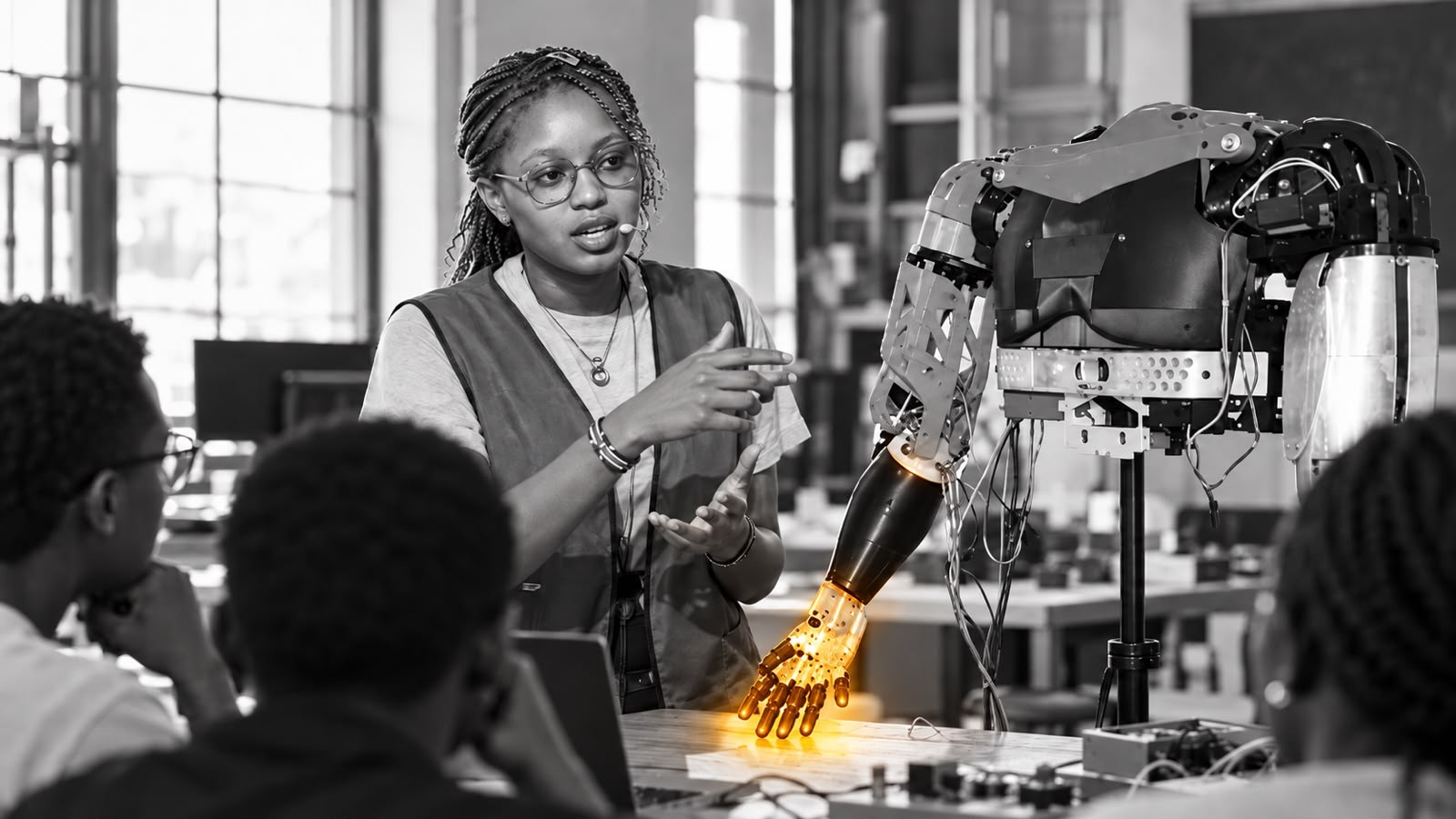
Kenyan startup ZeroBionic has developed an AI-powered robotic system designed to translate classroom speech into sign language, helping deaf and hard-of-hearing pupils follow lessons alongside their classmates. The project combines robotics with locally developed language data to address a practical barrier to education.
Co-founded by Kenyan computer scientist Norah Kimathi, 22, the company uses artificial intelligence to process spoken words and a multi-jointed robotic hand to reproduce signs.
ZeroBionic says its robotic hands are being used in 78 Kenyan schools, cost approximately US$350 each and have an expected lifespan of around two years. The company reports speech-to-sign accuracy of approximately 92%.

Built for local classrooms
The system can operate offline, making it suitable for schools where reliable broadband is unavailable. Components are produced locally using 3D printing and recycled materials, helping the team adapt the technology to local conditions.
Its potential extends beyond the hardware. An affordable classroom device could provide additional communication support where specialist interpreters are scarce, although technology alone cannot close the wider education gap.
The language behind the machine
Much of the development work involves building the data needed to teach the system how to sign.
ZeroBionic works with deaf teachers and students to record vocabulary, including specialist terminology for mathematics, biology and other science subjects. Limited training data creates a significant challenge: recognising spoken words is only useful if the system can communicate their meaning accurately.
By developing this material locally, the team is building both a classroom tool and a foundation for further language technology.
The work illustrates how African technology companies are approaching practical needs through local knowledge, engineering and collaboration with the people expected to use their products.
AI with a human purpose
ZeroBionic is also developing a humanoid robot called Africa One as part of its efforts to refine and expand the system’s signing capabilities.
The broader test will be how effectively these tools support understanding during everyday lessons. Price, durability and offline operation matter, but so does the quality of communication between teachers and pupils.
For a child struggling to follow a science lesson, the value of artificial intelligence may be measured in something straightforward: understanding what the teacher has just explained.
Newshub Editorial in Africa – 27 September 2026

Ask NF GPT
If you have an account with ChatGPT you get deeper explanations,
background and context related to what you are reading.
Recent Comments