
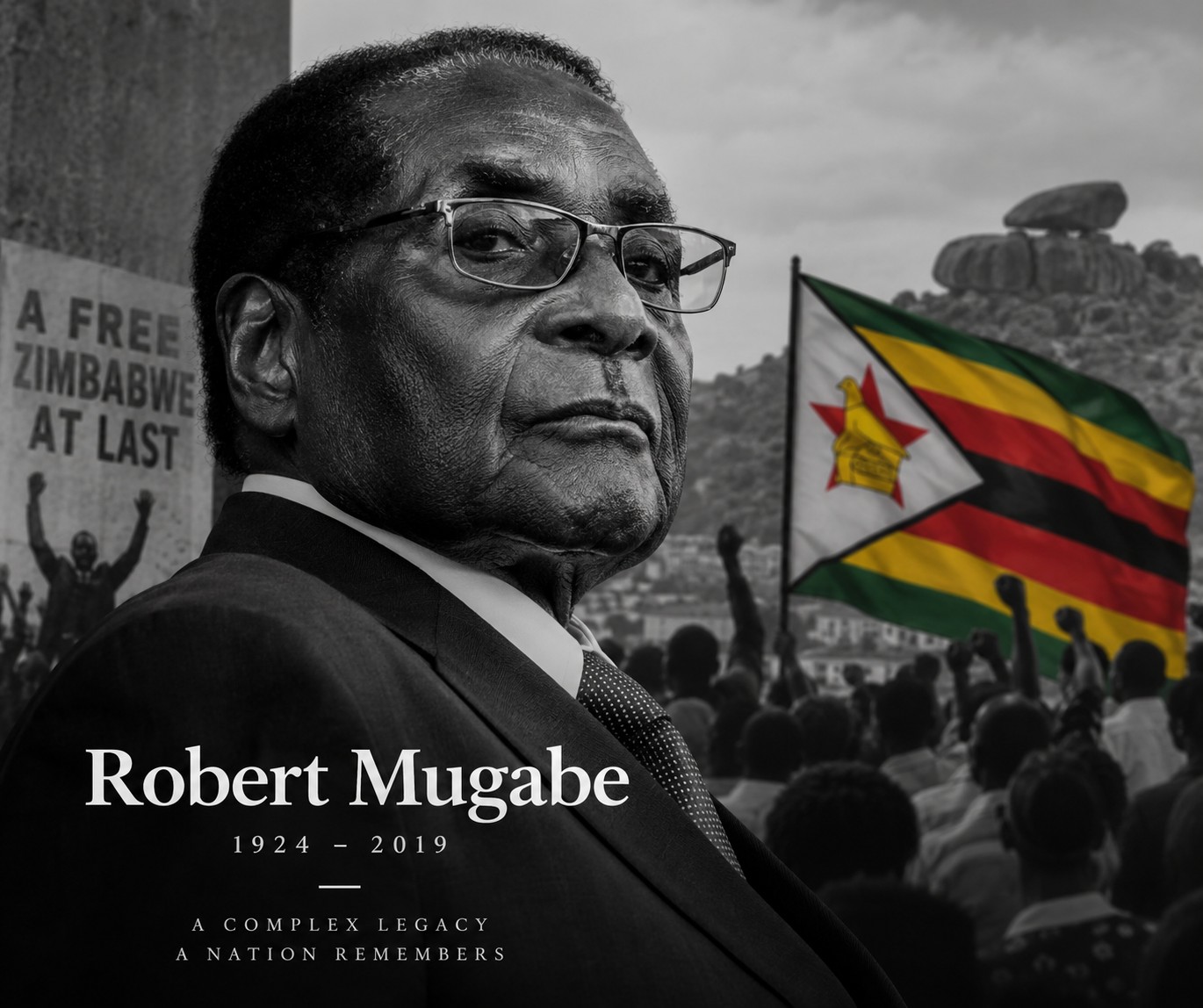
Robert Mugabe died at the age of 95 in Singapore, closing the final chapter in the life of one of Africa’s most influential and controversial political leaders. He had led Zimbabwe from independence in 1980 until his removal from power in 2017.
From liberation struggle to government
Born in 1924 in what was then Southern Rhodesia, Mugabe became deeply involved in the struggle against white-minority rule. He was imprisoned for more than a decade before emerging as a leading figure in the Zimbabwe African National Union, ZANU.
Following years of guerrilla warfare and negotiations, Zimbabwe gained internationally recognised independence from Britain in 1980. Mugabe became the country’s first prime minister and was initially widely praised internationally as a liberation leader who advocated racial reconciliation. He became president in 1987.

Thirty-seven years in power
Mugabe’s rule gradually became increasingly authoritarian. Opposition movements faced repression, elections were repeatedly disputed and his government was accused of serious human-rights abuses.
His controversial land reform programme, which accelerated from 2000, transferred white-owned commercial farms to black Zimbabweans. Supporters regarded the policy as a necessary correction of colonial inequalities, while critics blamed its implementation for damaging agricultural production and contributing to a wider economic collapse.
Zimbabwe subsequently experienced extraordinary hyperinflation, unemployment and shortages, while Mugabe increasingly blamed Western sanctions and colonial interests for the country’s difficulties.
A dramatic fall from power
After 37 years at the centre of Zimbabwean politics, Mugabe’s rule ended in November 2017 when the military intervened amid a struggle over who would eventually succeed him. Facing impeachment, the 93-year-old president resigned.
His former vice-president, Emmerson Mnangagwa, subsequently became president.
Less than two years later, on 6 September 2019, Mugabe died in Singapore, where he had been receiving medical treatment.
His legacy remains profoundly divided. To admirers, Mugabe was an uncompromising African nationalist who helped liberate Zimbabwe from colonial rule. To his critics, he became an authoritarian leader whose determination to remain in power contributed to repression and economic devastation.
Few African leaders of the post-colonial era have left behind a legacy as consequential – or as contested.
Newshub Editorial in Africa – 6 September 2026
Recent Comments