
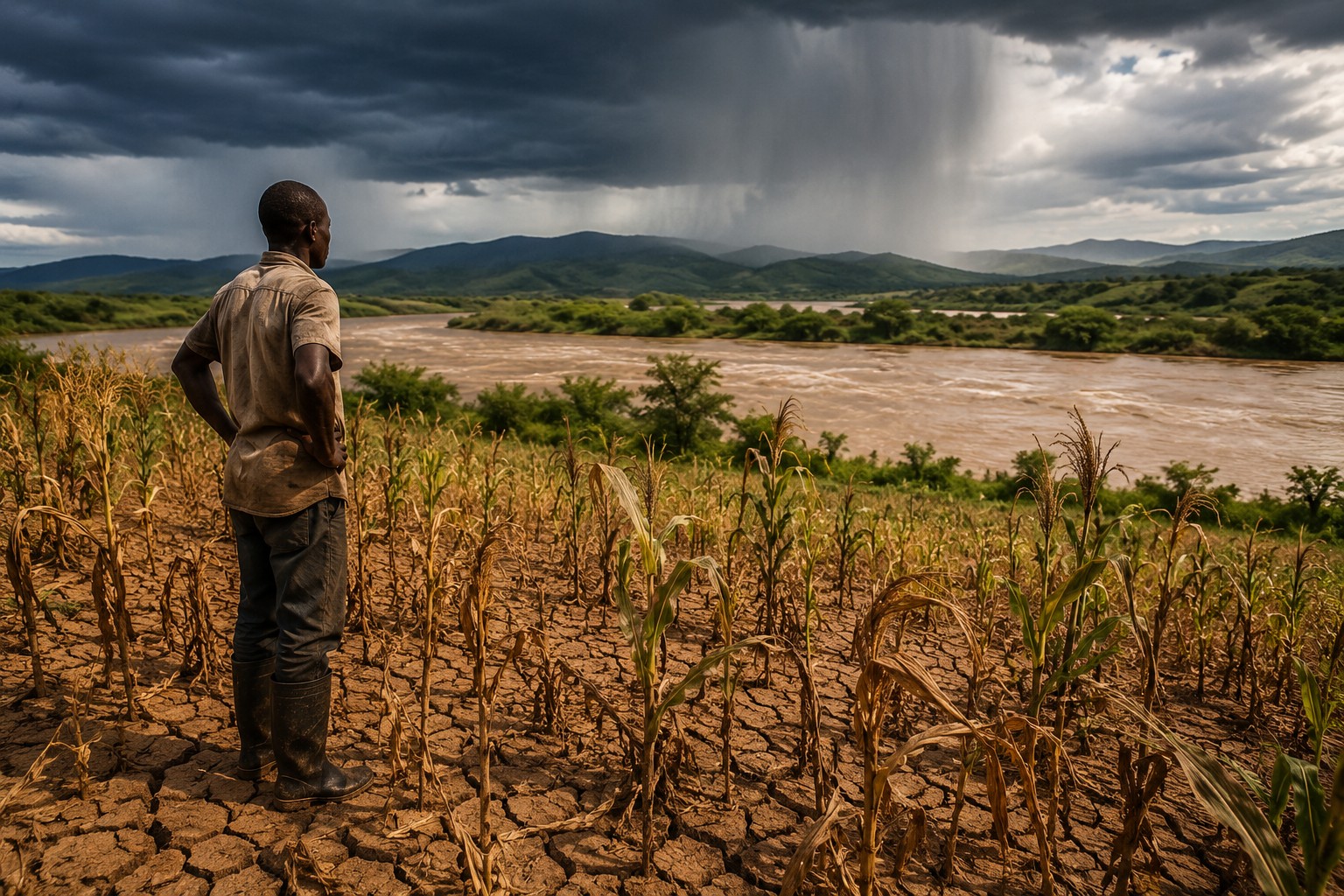
African countries could suffer combined economic losses of between $10 billion and $20 billion from a potentially extreme El Niño event, according to a warning from the African Development Bank. Climate change is expected to amplify the resulting droughts, floods and storms.
Growth forecasts under pressure
Anthony Nyong, the bank’s director for climate change and green growth, said the most severely affected countries could lose an average of between 1 and 2 per cent of gross domestic product.

The African Development Bank had previously forecast continental economic growth of 4.2 per cent in 2026 and 4.4 per cent in 2027. Those projections were prepared before forecasters warned that the developing El Niño could become one of the strongest recorded.
El Niño is a natural warming pattern in the Pacific Ocean that alters weather conditions around the world. It is not caused by climate change, but rising global temperatures can make the associated extremes more severe and unpredictable.
Food prices and migration risks rise
Drought could persist across parts of the Sahel and Southern Africa, while East African countries may face destructive rainfall and flooding.
Sudan, South Sudan, Somalia, the Democratic Republic of Congo, Burundi, Mali and Nigeria are considered particularly vulnerable. Crop failures and shortages of grazing land could increase food insecurity, intensify competition for water and force people to leave affected areas.
The African Development Bank warned that maize prices could double in some markets. Agricultural losses are already approaching $330 million this year, while fisheries may also suffer as storms and rising sea temperatures reduce productivity.
Climate shocks threaten public finances
The consequences extend beyond farming. Floods and storms can destroy roads, electricity networks and other essential infrastructure, leaving governments with additional debt and reconstruction costs.
Countries with limited financial reserves may be forced to divert money from healthcare, education and development projects. Banks could also face rising risks as farmers, companies and governments struggle to repay loans.
The bank estimates that Africa may require as much as $100 billion in climate adaptation finance this year. Without greater investment in resilient agriculture, water systems, forecasting and infrastructure, repeated climate shocks could reverse years of economic progress across some of the continent’s fastest-growing markets.
Newshub Editorial in Africa – 3 September 2026

Ask NF GPT
If you have an account with ChatGPT you get deeper explanations,
background and context related to what you are reading.
Recent Comments