
India deepens Argentina lithium push as KABIL targets 2030 production
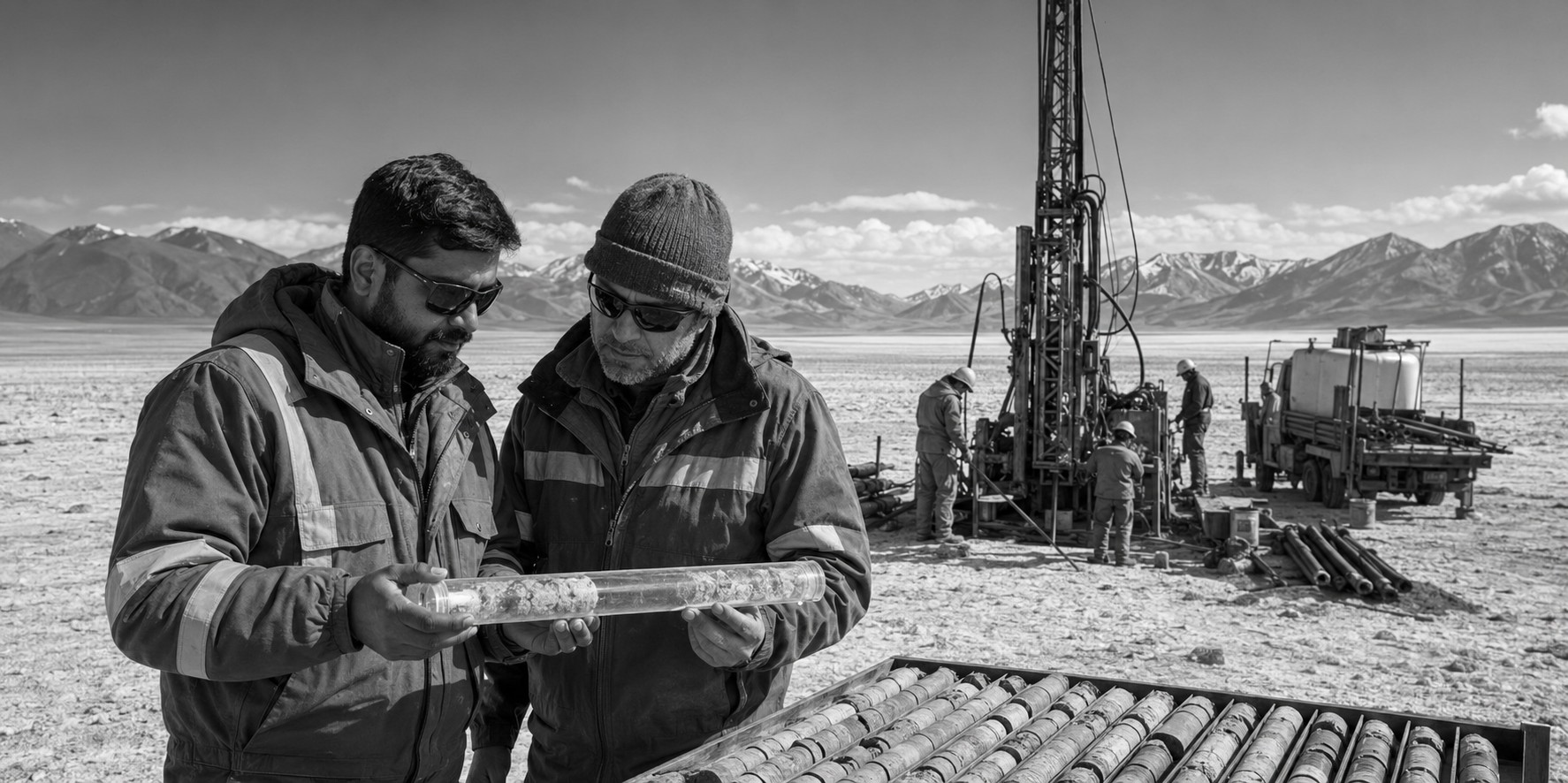
India’s state-owned Khanij Bidesh India Limited expects to begin lithium production in Argentina within four to five years, advancing New Delhi’s effort to secure the minerals needed for electric vehicles, renewable-energy storage and high-technology manufacturing.
Five-block project advances
KABIL, a joint venture between National Aluminium Company, Hindustan Copper and Mineral Exploration and Consultancy, signed an exploration agreement covering five lithium blocks in Argentina’s Catamarca province in 2024.

The agreement involved an investment of about ₹2 billion. Geological mapping and sampling began near Fiambalá in October 2024, while drilling and more detailed exploration are expected to determine whether commercial extraction is viable.
The current timetable places the completion of the feasibility study in 2029 and the start of commercial production around the end of 2030. Earlier milestones were delayed as KABIL sought technical expertise in extracting lithium from brine deposits.
Argentina portfolio could expand
KABIL’s presence in Argentina may grow considerably before production begins. Catamarca’s provincial government has offered the Indian company seven additional greenfield lithium-brine blocks, while two more opportunities are under consideration in Jujuy province.
The company is also pursuing a preliminary agreement with mining authorities in Salta. If the projects under discussion progress, KABIL’s Argentine portfolio could expand from five to as many as 14 lithium prospects.
Argentina forms part of South America’s “lithium triangle” alongside Chile and Bolivia. The region contains some of the world’s largest lithium resources and is attracting investment from governments and companies seeking alternatives to supply chains dominated by China.
Supply security drives investment
India currently depends heavily on imported lithium-ion cells and critical battery materials. Domestic demand is expected to increase as the country expands electric transport, renewable power and energy-storage infrastructure.
Securing overseas lithium supplies would support India’s ambition to develop a domestic battery-manufacturing industry. It could also reduce the exposure of Indian manufacturers to volatile prices, geopolitical restrictions and supply disruptions.
The Argentine venture reflects a broader shift among emerging economies. Instead of exporting only raw materials or importing finished technologies, countries such as India are seeking direct ownership and long-term access across strategic supply chains.
Execution risks remain
KABIL’s overseas ambitions remain at an early stage. Parliamentary disclosures show that the company had no operating revenue in the three financial years through 2025–26 and had accumulated losses of ₹16.61 crore.
Lithium-brine projects can also face technical, environmental and community challenges, particularly because production may require substantial water resources. Financing, regulatory approvals and commodity-price movements could further affect the commercial timetable.
Security concerns have already forced KABIL to place a separate Russian-backed lithium opportunity in Mali on hold.
A wider critical-minerals strategy
Alongside Argentina, KABIL and other Indian state-owned companies are examining lithium opportunities in Australia and Chile, while assessing critical-mineral projects in countries including Malawi, Brazil, Canada and Indonesia.
Argentina, however, has emerged as the centre of India’s most advanced overseas lithium campaign. Progress there could determine whether New Delhi can convert its critical-minerals diplomacy into commercially reliable supplies.
Newshub Editorial in Asia – 17 August 2026

Ask NF GPT
If you have an account with ChatGPT you get deeper explanations,
background and context related to what you are reading.
India’s state-owned Khanij Bidesh India Limited expects to begin lithium production in Argentina within four to five years, advancing New Delhi’s effort to secure the minerals needed for electric vehicles, renewable-energy storage and high-technology manufacturing.
Recent Comments