
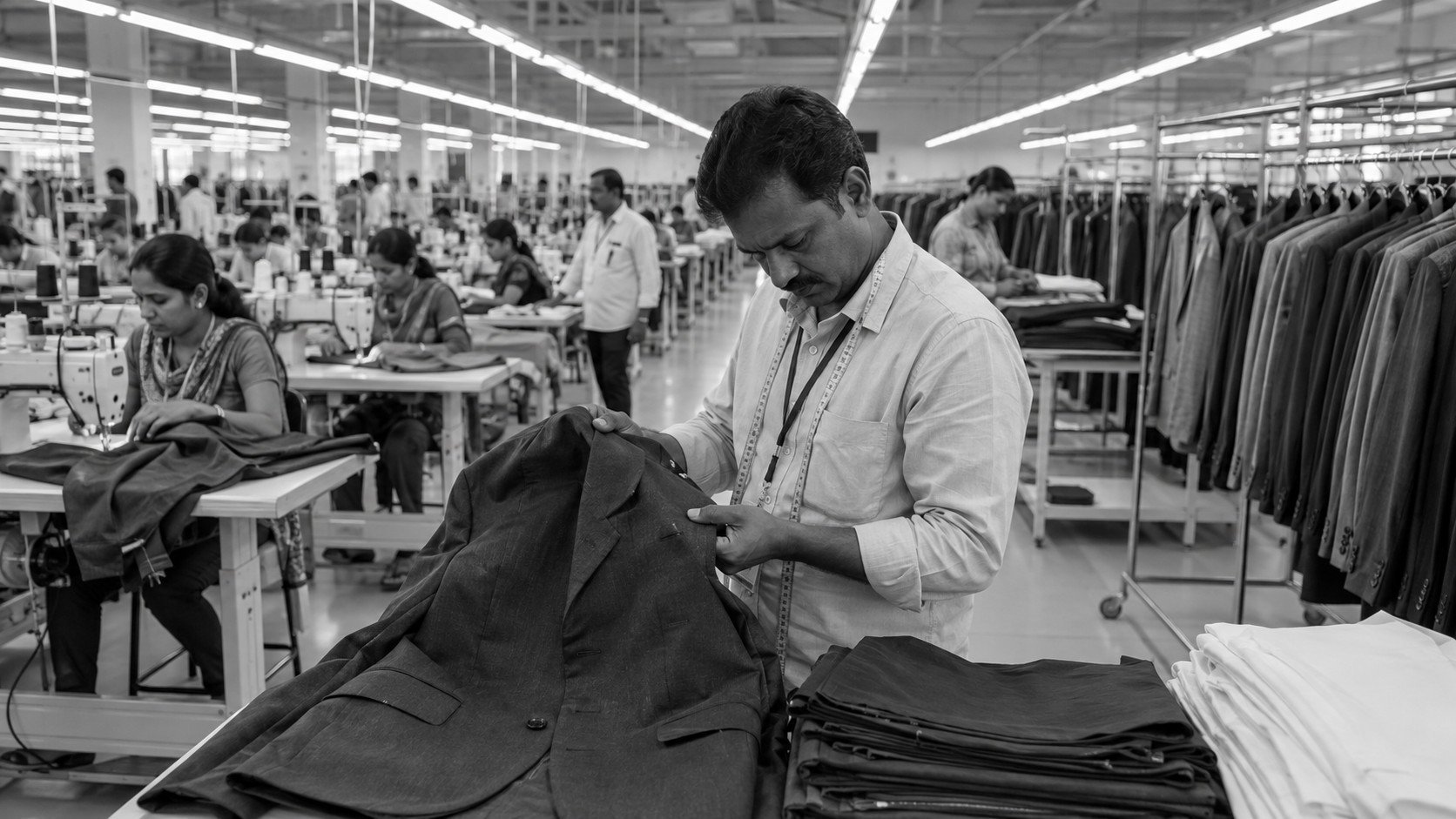
India’s Raymond Lifestyle plans to increase Europe’s share of its exports to as much as 25% within two years as the apparel group reduces its dependence on the United States. The strategy reflects changing global trade conditions and growing European demand following India’s new commercial agreements with Britain and the European Union.
Europe expected to grow faster
Europe accounted for approximately 17% of Raymond Lifestyle’s exports before the latest US tariff changes. Chief executive Satyaki Ghosh expects that proportion to rise to between 20% and 25% over the next two years.
The United States previously represented around 65% of the company’s exports. Raymond now expects the American share to fall to between 55% and 60%, although it will remain the company’s largest overseas market.

Exports generated approximately one-fifth of Raymond Lifestyle’s total revenue during the financial year ending in March 2026. The company owns Indian clothing brands including Park Avenue and ColorPlus and supplies international retailers such as JCPenney and Charles Tyrwhitt.
Trade agreements generate new interest
The company has recorded a double-digit increase in enquiries from European customers following announcements of India’s trade agreements with Britain and the EU.
Approximately 30% of those enquiries have already developed into orders, with particularly strong activity coming from the UK. Additional contracts remain under negotiation.
Raymond has also added customers in Poland, Germany and France. Management expects easier market access and lower tariff barriers to improve the competitiveness of Indian garments against products manufactured in Bangladesh, Vietnam, Pakistan and Turkey.
India’s textile and apparel exports to its ten largest European markets increased by 9% to approximately ₹694.45 billion, equivalent to $7.29 billion, during the 2025–26 financial year. Exports to the United States declined by 7% over the same period.
US exposure becomes a strategic risk
Indian clothing manufacturers have traditionally depended heavily on American buyers. New tariff policies introduced by US President Donald Trump have increased costs and created uncertainty over future orders.
For companies with concentrated customer bases, a sudden change in US import duties can affect pricing, production planning and profitability. Expanding in Europe provides Raymond with a larger range of customers and reduces its vulnerability to decisions made in a single market.
The shift is not intended to represent a withdrawal from the United States. Instead, Raymond is seeking a more balanced export portfolio while continuing to serve established American clients.
Production capacity set to expand
To meet anticipated European demand, Raymond plans to increase output at its manufacturing facility in Ethiopia. The company is also expanding production in the southern Indian state of Andhra Pradesh.
The Andhra Pradesh facility is expected to increase from its current number of manufacturing lines to ten over the next two years, more than tripling its production infrastructure.
Raymond’s international expansion will depend on maintaining consistent quality, competitive delivery times and compliance with European environmental and labour requirements. European buyers have increasingly demanded greater transparency across textile supply chains, including information about water use, emissions and working conditions.
A wider opportunity for Indian textiles
Raymond’s strategy illustrates how Indian manufacturers are attempting to benefit from a broader restructuring of global supply chains. International retailers are seeking alternatives to China while political instability and production disruptions have affected other Asian garment centres.
India offers a large workforce, an established textile industry and growing domestic manufacturing capacity. Its trade agreements could remove a longstanding tariff disadvantage in Europe.
If European enquiries continue converting into orders, Raymond’s diversification may provide a model for other Indian apparel exporters seeking growth while reducing their exposure to unpredictable US trade policy.
Newshub Editorial in Asia – 11 August 2026

Ask NF GPT
If you have an account with ChatGPT you get deeper explanations,
background and context related to what you are reading.
India’s Raymond Lifestyle plans to increase Europe’s share of its exports to as much as 25% within two years as the apparel group reduces its dependence on the United States. The strategy reflects changing global trade conditions and growing European demand following India’s new commercial agreements with Britain and the European Union.
Recent Comments