
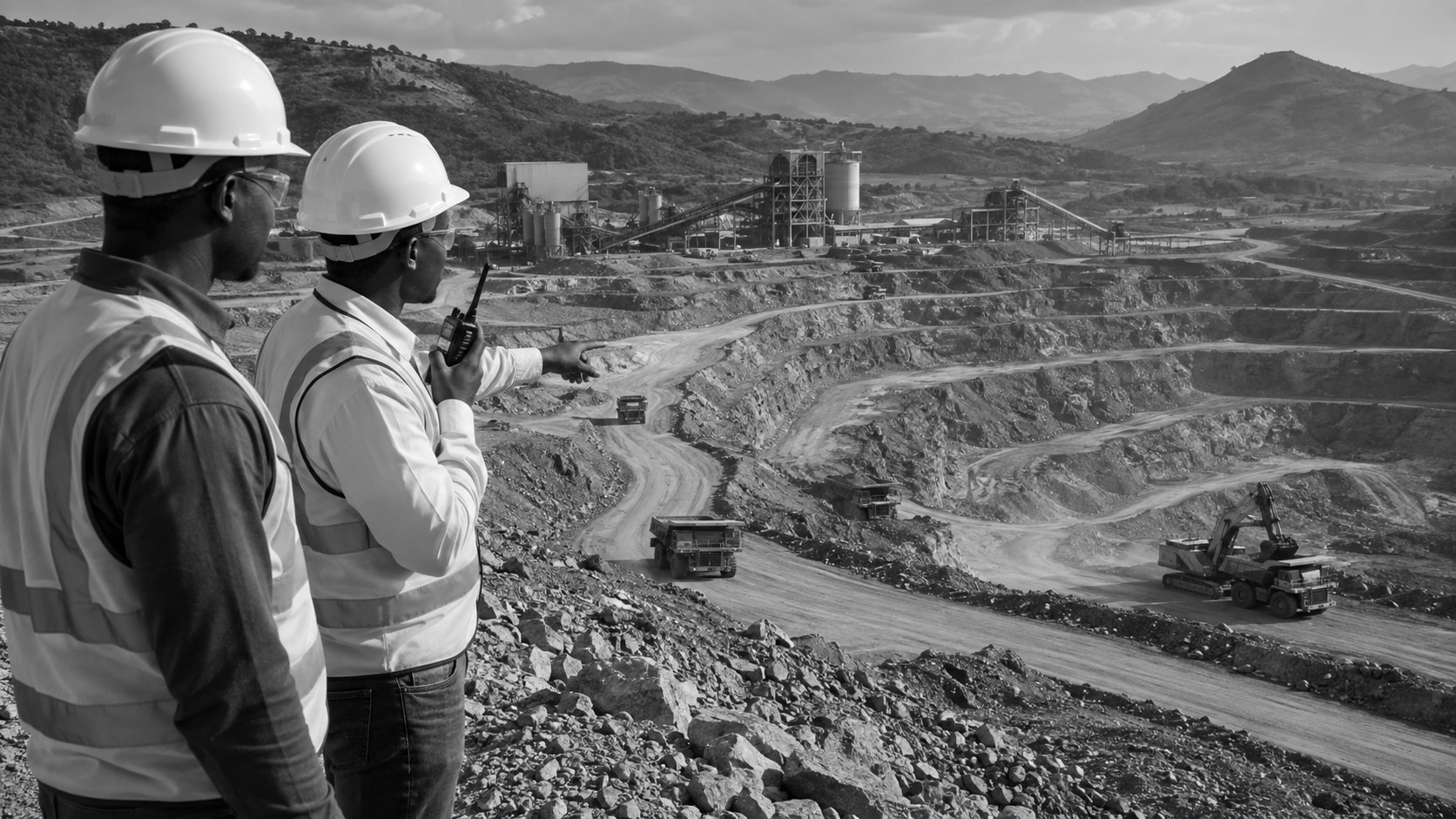
Tanzania’s mining industry is entering a new period of expansion as record gold prices, higher production and growing international demand for critical minerals increase export earnings and government revenue. The sector contributed 10.3% of gross domestic product in 2025, up from 7.8% a year earlier, strengthening its position as one of the country’s most important economic engines.
Minerals become leading source of foreign exchange
Tanzania’s mineral exports reached $5.4bn in 2025, representing an increase of 31% from $4.4bn during the previous year. Minerals generated approximately 52% of national export earnings, overtaking tourism as Tanzania’s largest source of foreign currency.
Government income from mining taxes, royalties and other charges has also increased substantially. Annual mining-related revenue rose from 624.6bn Tanzanian shillings in the 2021–22 financial year to an estimated 1.4 trillion shillings, equivalent to approximately $530m, in 2025.

Higher gold prices deliver windfall
Gold remains the dominant force behind the expansion. A 66% increase in international gold prices during 2025 helped lift Tanzania’s gold exports from $3.4bn to approximately $4.7bn.
The country hosts six large-scale gold mines and two major gemstone operations, alongside a growing number of medium-sized and artisanal projects. Important producers include AngloGold Ashanti’s Geita mine and Barrick Gold’s North Mara and Bulyanhulu operations.
Barrick participates in the Tanzanian market through Twiga Minerals, a joint venture with the government. Tanzania’s proven gold resources are estimated at between 36m and 45m ounces, although substantial deposits remain undeveloped.
New gold production under development
Australia-listed Perseus Mining is constructing the Nyanzaga project in the Lake Victoria goldfields. Completion is expected during late 2026, with initial production targeted for early 2027.
Once operational, Nyanzaga is expected to produce approximately 250,000 ounces of gold annually during the first stage of its mine life. The project could become one of Tanzania’s largest new gold operations and further increase exports, employment and state revenue.
Critical minerals offer diversification
The government wants to reduce its dependence on gold prices by developing minerals required for batteries, electric vehicles, renewable energy systems and advanced manufacturing.
Tanzania is estimated to possess 18m tonnes of graphite, equivalent to approximately 6% of global reserves, alongside 890,000 tonnes of rare earth elements. The Kabanga deposit is regarded as one of the world’s largest undeveloped nickel resources, while the Rukwa Basin contains a substantial primary helium deposit.
Eleven advanced critical-mineral projects are reportedly ready for development, covering nickel, graphite, rare earths, uranium, iron ore and other commodities. However, only 16% of Tanzania’s territory has been comprehensively mapped. The government intends to increase geophysical survey coverage to 50% by 2030.
State strengthens its position
Mining reforms introduced since 2017 have increased government participation and imposed stronger local employment and procurement requirements. The state is entitled to a free carried interest of at least 16% in medium-sized and large mining projects, with current holdings typically ranging between 16% and 20%.
Companies supplying the mining sector must generally have at least 20% Tanzanian ownership, while selected contracts may be reserved entirely for locally owned businesses. Authorities are also monitoring expatriate employment and requiring companies to develop succession plans for Tanzanian workers.
Investment climate remains decisive
Tanzania’s challenge is to capture more value without discouraging the capital required to develop complex projects. Slow licensing, infrastructure shortages and regulatory uncertainty could allow competing mining countries to move more quickly.
If Tanzania maintains predictable regulations while expanding local processing and ownership, its mineral wealth could generate broader industrial growth rather than remaining primarily an export business.
Newshub Editorial in Africa – 6 August 2026

Ask NF GPT
If you have an account with ChatGPT you get deeper explanations,
background and context related to what you are reading.
Tanzania’s mining industry is entering a new period of expansion as record gold prices, higher production and growing international demand for critical minerals increase export earnings and government revenue. The sector contributed 10.3% of gross domestic product in 2025, up from 7.8% a year earlier, strengthening its position as one of the country’s most important economic engines.
Recent Comments