
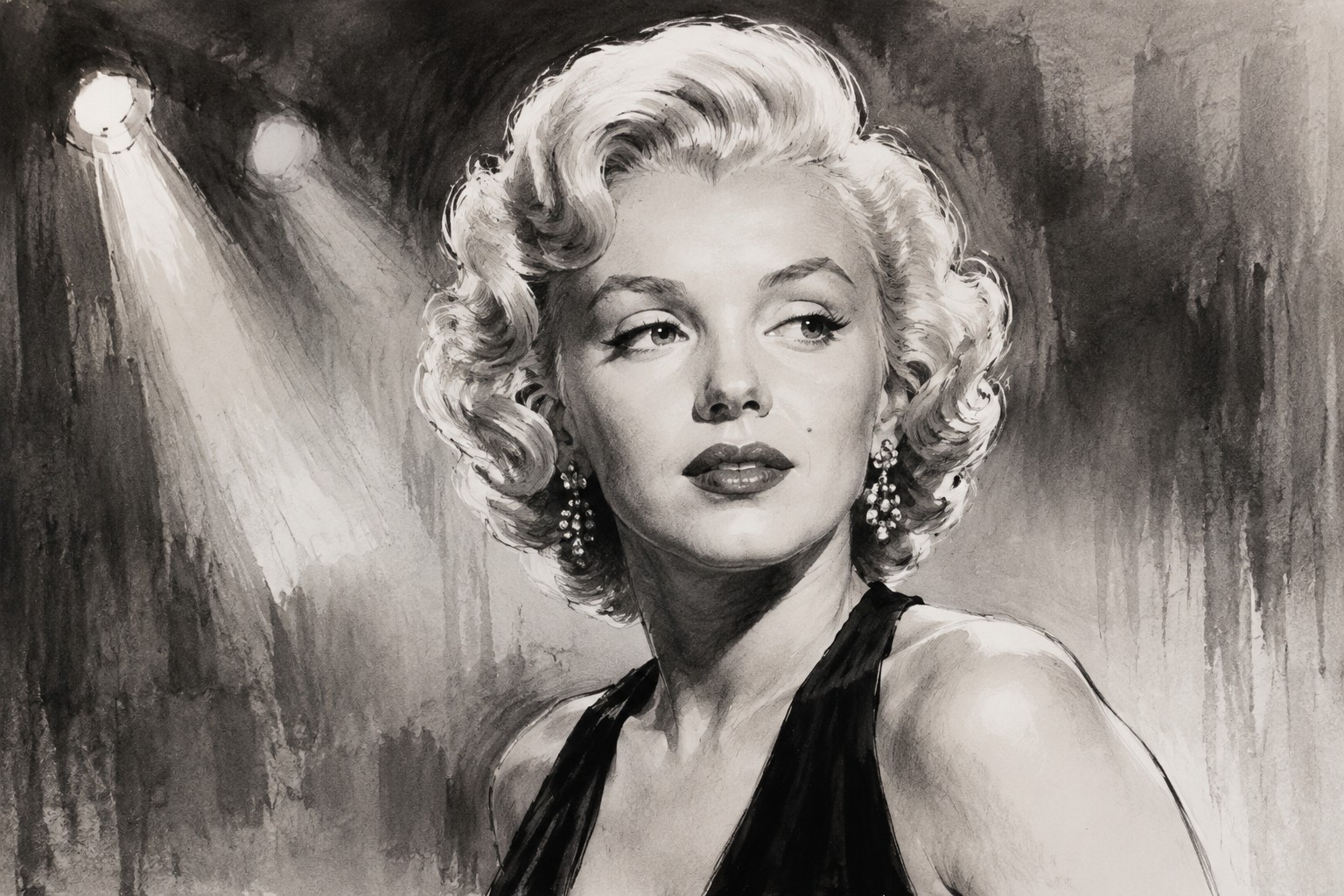
On 5 August 1962, Marilyn Monroe was found dead in her Los Angeles home. She was only 36, yet she had already become one of the most recognisable figures in cinema history. More than six decades later, her image continues to represent Hollywood glamour, while her life reveals a far more complex story of ambition, vulnerability and a determined struggle for independence.
From Norma Jeane to Marilyn Monroe
Born Norma Jeane Mortenson in Los Angeles on 1 June 1926, Monroe experienced an unsettled childhood. Her mother suffered from serious mental-health problems, and Norma Jeane spent much of her youth in foster homes and an orphanage.

She began working as a model during the Second World War and was soon noticed by Hollywood talent scouts. After signing a film contract, she adopted the name Marilyn Monroe and gradually developed the carefully constructed screen identity that would make her famous: platinum-blonde hair, glamorous clothes and an apparently effortless sensuality.
Behind that image was an ambitious performer who studied acting, examined her performances critically and wanted to be regarded as more than a decorative presence on screen.
Hollywood’s brightest new star
Monroe’s breakthrough came through supporting roles in films including The Asphalt Jungle and All About Eve. By 1953, appearances in Niagara, Gentlemen Prefer Blondes and How to Marry a Millionaire had transformed her into one of Hollywood’s most commercially valuable stars.
Her famous scene standing above a subway grate in The Seven Year Itch became one of the defining images of twentieth-century popular culture. Yet Monroe increasingly resisted the “dumb blonde” roles offered to her.
In 1954, she challenged the studio system by forming Marilyn Monroe Productions. The move helped her negotiate greater control over her career and improved financial terms. Her dramatic performance in Bus Stop demonstrated her wider abilities, while Some Like It Hot displayed the comic timing that earned her a Golden Globe.
Fame, marriage and private struggles
Monroe’s private life attracted intense public attention. Her marriages to baseball star Joe DiMaggio and playwright Arthur Miller were followed as closely as her films. The fascination surrounding her relationships often overshadowed her professional ambitions.
She also struggled with insomnia, anxiety, depression and dependence on prescription medication. Her difficulties affected film productions and intensified as the pressures of fame grew.
Monroe’s final completed film, The Misfits, was written by Miller and released in 1961. Its melancholy atmosphere and portrayal of emotionally isolated characters later appeared painfully connected to the lives of its stars.
A death that shocked the world
Monroe died late on 4 August 1962 and was discovered at her Brentwood home during the early hours of 5 August. The official cause was acute barbiturate poisoning, with the death recorded as a probable suicide.
Her death produced worldwide grief and decades of speculation. However, no later investigation has replaced the official finding.
Marilyn Monroe remains both an icon and a symbol of the darker side of celebrity. The glamorous photographs survive, but so does the story of Norma Jeane: a talented, intelligent and vulnerable woman attempting to control an identity that Hollywood had helped create.
Newshub Editorial in North America – 5 August 2026

Ask NF GPT
If you have an account with ChatGPT you get deeper explanations,
background and context related to what you are reading.
On 5 August 1962, Marilyn Monroe was found dead in her Los Angeles home. She was only 36, yet she had already become one of the most recognisable figures in cinema history. More than six decades later, her image continues to represent Hollywood glamour, while her life reveals a far more complex story of ambition, vulnerability and a determined struggle for independence.
Recent Comments