
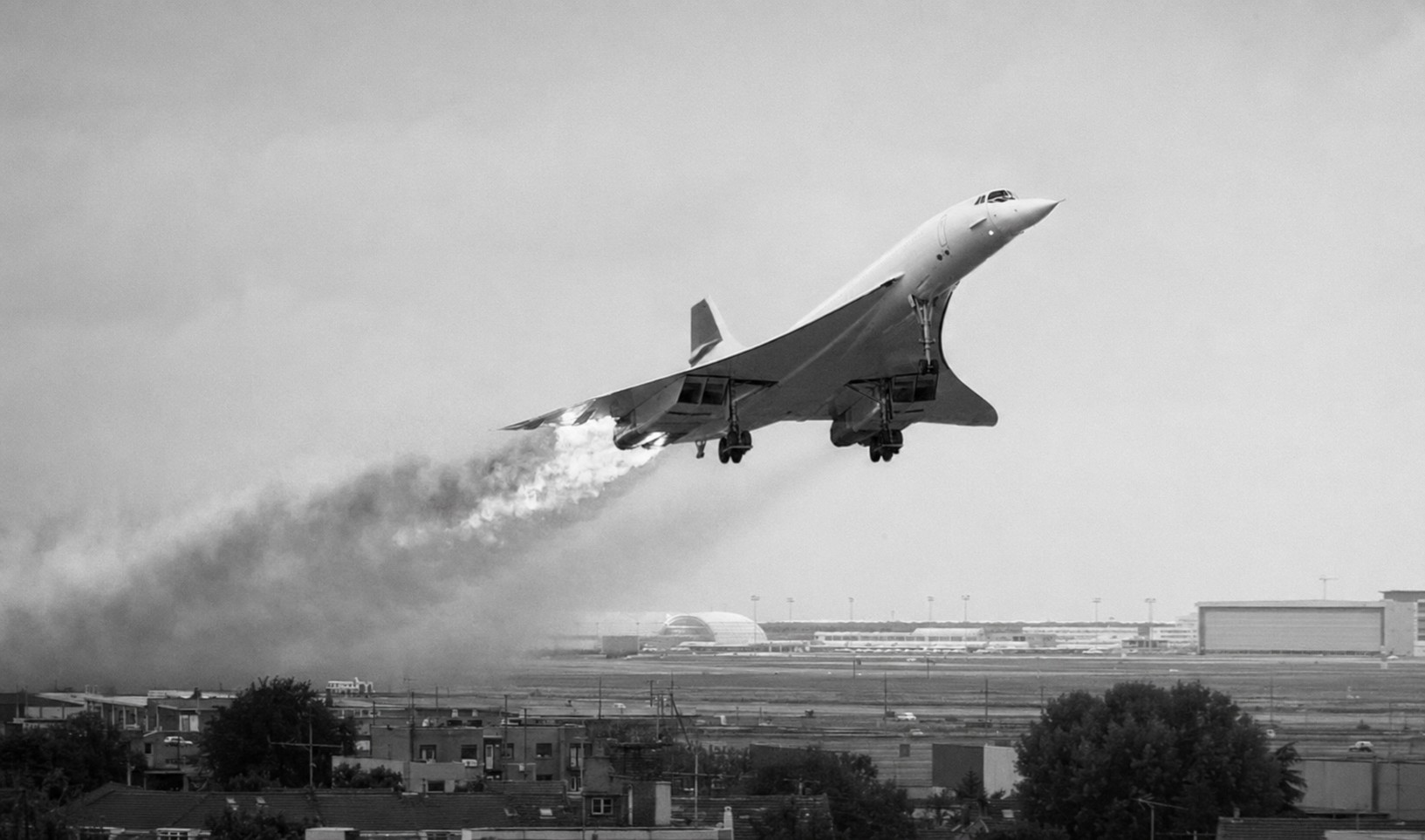
On 25 July 2000, Air France Flight 4590 crashed shortly after taking off from Paris Charles de Gaulle Airport, killing all 109 people aboard and four people on the ground. The disaster became the only fatal accident in Concorde’s history and marked the beginning of the end for commercial supersonic passenger travel.
The aircraft, registered F-BTSC, was operating a charter flight from Paris to New York. Its 100 passengers, most of them German tourists, were travelling to join a cruise in the United States. Nine crew members were also aboard.
Concorde had spent more than two decades as one of aviation’s most recognisable achievements. Capable of flying at more than twice the speed of sound, it could cross the Atlantic in around three and a half hours and had become associated with technological ambition, luxury and international prestige.

Disaster during take-off
Shortly before Flight 4590 began its take-off, a Continental Airlines DC-10 departing from the same runway had lost a metal strip from one of its engines.
As the Concorde accelerated along runway 26 Right, one of its tyres struck the debris at high speed. The tyre burst, sending fragments towards the underside of the aircraft’s left wing.
The impact caused a violent pressure wave inside a fuel tank, which ruptured and released a large quantity of fuel. The escaping fuel ignited, producing a long trail of flames beneath the aircraft and contributing to a loss of power in two engines.
By the time the crew became aware of the severity of the emergency, the Concorde had already passed the point at which take-off could safely be abandoned. The aircraft struggled to climb, while the landing gear could not be fully retracted.
The pilots attempted to keep the aircraft airborne and considered diverting to nearby Le Bourget Airport. However, the combination of fire, reduced engine power and increased drag made the Concorde increasingly difficult to control.
Less than two minutes after leaving the runway, Flight 4590 crashed into a hotel in Gonesse, north-east of Paris. Everyone aboard was killed, together with four people inside the hotel. Several others on the ground were injured.
The beginning of the end
The accident shattered Concorde’s reputation as an elite and exceptionally safe aircraft. Authorities grounded the remaining fleet while investigators examined the cause and engineers developed safety modifications.
Changes included stronger tyres, reinforced fuel tanks and improved protection for electrical systems around the landing gear. Concorde returned to commercial service in November 2001, but passenger confidence and demand had weakened.
Rising maintenance costs, the aviation downturn following the September 11 attacks and the aircraft’s limited commercial viability added to the pressure. Air France retired Concorde in May 2003, followed by British Airways later that year.
The crash of Flight 4590 therefore became more than an aviation disaster. It was the moment when the confidence surrounding one of the world’s greatest technological symbols was permanently broken—and when the supersonic age of passenger travel began its final descent.
Newshub Editorial in Europe – 25 July 2026

Ask NF GPT
If you have an account with ChatGPT you get deeper explanations,
background and context related to what you are reading.
Recent Comments