
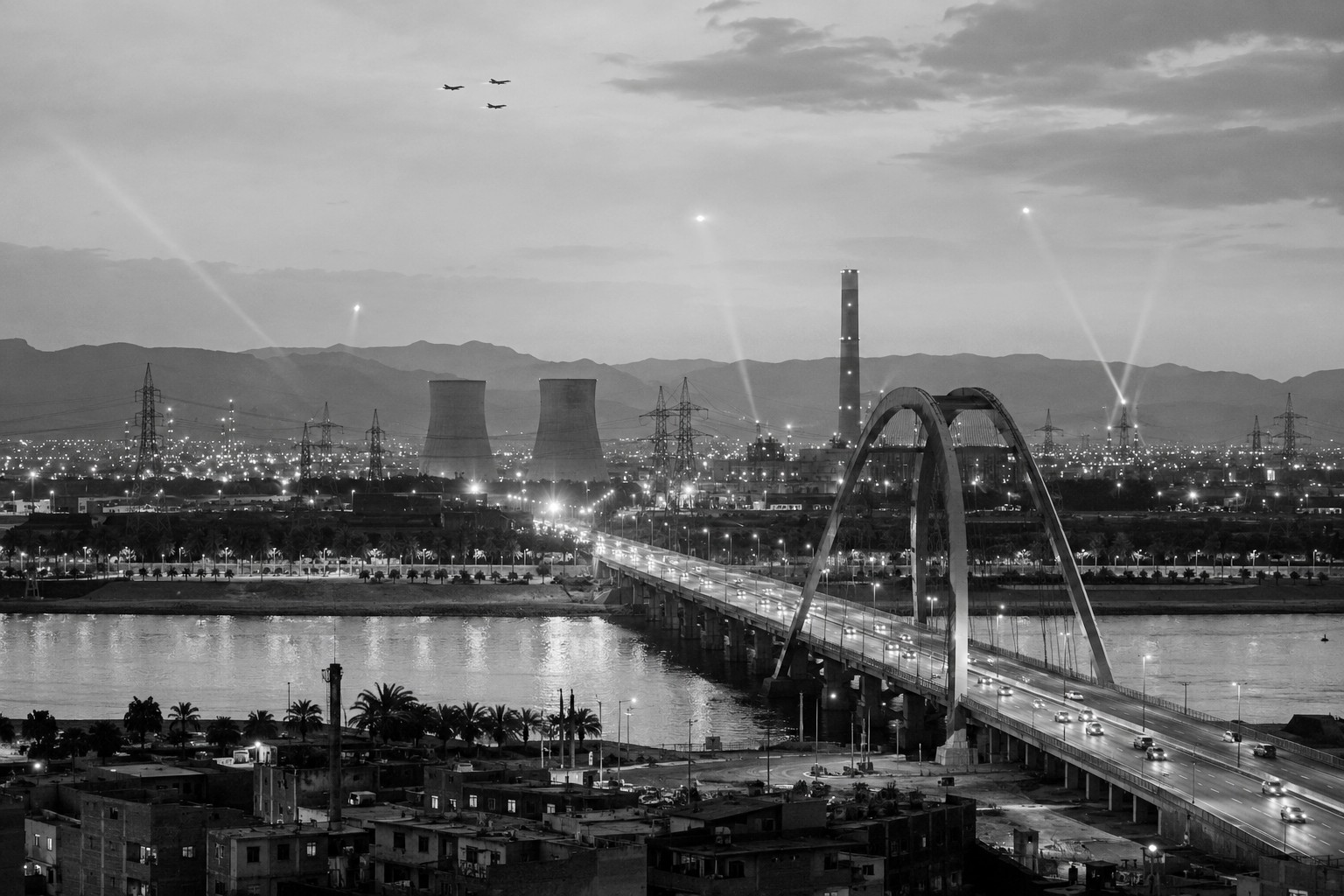
Iran has warned that it will respond in kind if the United States carries out President Donald Trump’s threat to destroy Iranian bridges and power plants in retaliation for attacks on shipping in the Strait of Hormuz, raising fears that the conflict could expand to civilian infrastructure across the region.
Trump threatens bridges and power plants
Trump said the United States would destroy one Iranian bridge or power plant every time Iran targeted a vessel travelling through the Strait of Hormuz with a missile, rocket, drone or other weapon.
The president presented the policy as a direct response intended to deter further attacks on commercial shipping through one of the world’s most important energy corridors. A significant share of internationally traded oil and liquefied natural gas normally passes through the narrow waterway.

Iran has argued that it possesses the right to control access to the strait during the conflict, while the United States and its allies maintain that the passage must remain open to international shipping.
Trump’s statement suggested that Washington could now widen its target selection beyond military facilities to infrastructure supporting Iran’s civilian population and economy.
Tehran promises reciprocal action
Iranian Foreign Minister Abbas Araghchi responded by declaring that Tehran’s defence doctrine was based on “an eye for an eye”. He warned that any attack on Iranian infrastructure would trigger what he described as a powerful and decisive response.
Iranian military officials separately said that carrying out the threat would expand the war both within the Middle East and potentially beyond the region.
Tehran has not publicly identified which facilities it might target in retaliation. However, Iran possesses missiles and drones capable of reaching American military installations and strategically important energy, transport and desalination infrastructure across several Gulf states.
The possibility of attacks on desalination plants is particularly alarming. Several countries in the region depend heavily on such facilities for their supply of drinking water, making any disruption potentially dangerous for civilian populations.
Risk of a wider infrastructure war
The exchange follows successive nights of American air strikes against targets inside Iran and continuing Iranian attacks on US positions and commercial vessels.
Legal experts and humanitarian organisations have warned that bridges, electrical networks and other civilian facilities are protected under international humanitarian law unless they are being used for a definite military purpose. Even when infrastructure has a military function, an attack must remain proportionate and precautions must be taken to minimise civilian harm.
Destroying power stations could affect hospitals, water systems, communications and emergency services far beyond the immediate target. Retaliatory attacks elsewhere could produce similar consequences for countries hosting American forces.
Energy markets feel the pressure
The escalating threats have added further pressure to international energy markets. Brent crude has moved above $95 a barrel amid fears that shipping through the Strait of Hormuz and the Red Sea could face prolonged disruption.
Iran-aligned Houthi forces in Yemen have also claimed attacks against Saudi oil tankers, threatening to create a second major pressure point at the Bab el-Mandeb Strait.
With both Washington and Tehran now openly threatening reciprocal attacks, the danger is that each strike will produce another response. What began as a campaign focused principally on military and nuclear targets could consequently develop into a broader war against the infrastructure on which millions of civilians depend.
Newshub Editorial in Middle East – 23 July 2026

Ask NF GPT
If you have an account with ChatGPT you get deeper explanations,
background and context related to what you are reading.
Recent Comments